China’s specialty coffee pioneer Seesaw falls in brutal price war
Seesaw once made Yunnan beans and polished café design the face of Chinese specialty coffee. Now the chain is down to 34 stores, a sharp warning for premium brands in a 9.9-yuan market.
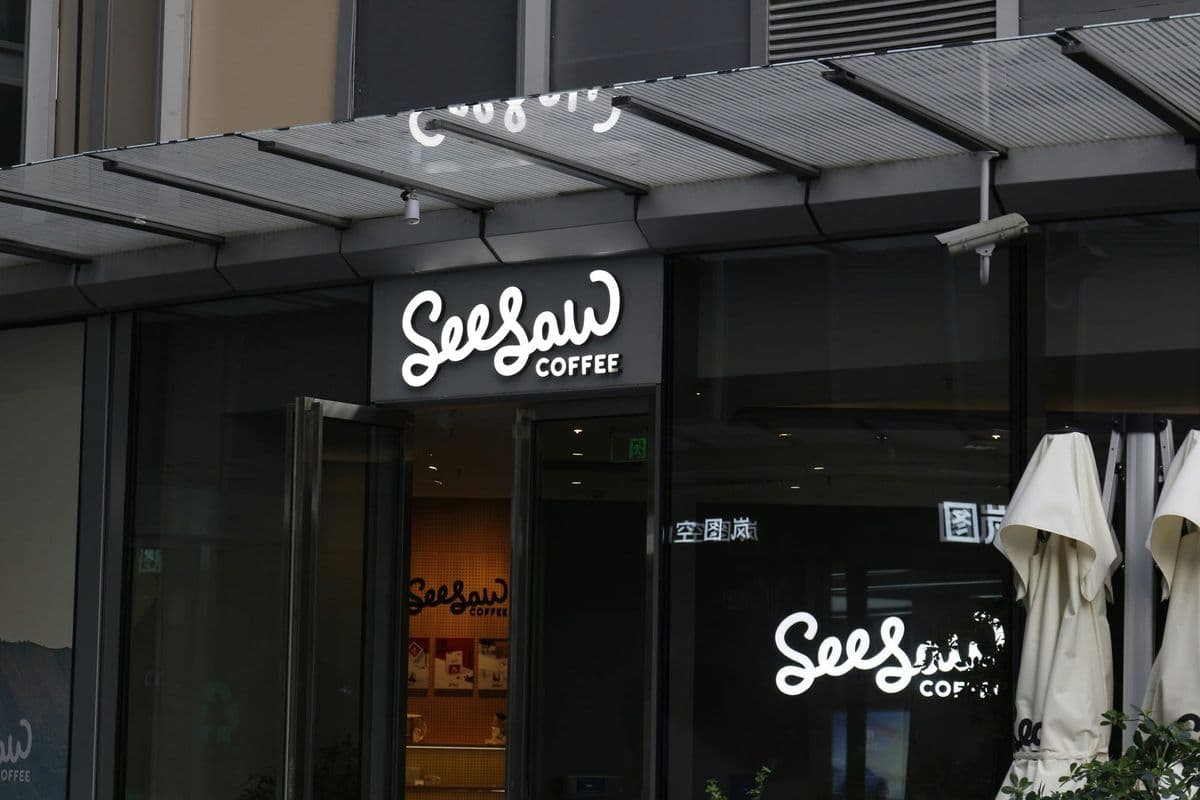
Seesaw once looked like the rare Chinese coffee chain that could turn specialty into a mass habit without giving up its identity. Founded in Shanghai in 2012, with its first store on Yuyuan Road, it built its name on single-origin coffee, Yunnan sourcing and a carefully designed café experience that stood apart from the speed-and-volume playbook.
That bet paid off fast. Over the next decade, Seesaw attracted hundreds of millions of yuan in investment, opened more than 130 stores and reached a valuation of about RMB 1 billion. The company’s funding path included a RMB 45 million A-round in 2017, an A+ round in 2021 with Heytea as a strategic investor, and an A++ round in 2022 led by Black Ant Capital with Cornerstone Capital participating. For a brand that was helping define what premium coffee could mean in China, that was a real ascent.

The problem was that the market Seesaw helped build moved underneath it. Luckin Coffee turned RMB 9.9 drinks into a national reference point, Cotti Coffee pushed even harder on ultra-low pricing and rapid expansion, and the broader branded coffee market became a scale contest. What once rewarded boutique credibility and a “designed” café atmosphere increasingly rewarded cheap drinks, quick turns and the ability to flood neighborhoods with stores.
Seesaw’s store count tells the story in hard numbers. One report in January 2025 said the chain had about 62 stores nationwide, down from 102 a year earlier. By June 2026, it was down to 34 stores in China. In the same stretch, the last Seesaw store in Chengdu closed on January 15, 2025, and Beijing lost its last location on January 26, 2025. Reports also said Shanghai Xishe Coffee Co. had entered bankruptcy review or faced creditor-filed bankruptcy liquidation petitions, while founder Wu Xiaomei was subject to consumption restrictions.
That is why Seesaw now reads as more than a distressed chain. It is a warning sign for the middle ground in Chinese coffee, the space between boutique specialty and mass-market chains. Seesaw was widely seen as an early specialty pioneer and a training ground for coffee talent, but in a market anchored to a 10-to-15-yuan price band, craftsmanship and ambiance have become harder to monetize on their own. Its decline suggests the category may be splitting into two camps, with less room left for the premium brand that still wants to behave like a café, not a discount engine.
This article was produced by Prism’s automated news system from verified source data, official records, and press releases, then run through automated quality and moderation checks before publishing. The system is built and supervised by the people who set the standards it runs under. Read our full AI policy.
Did this article answer your question?