Julius Meinl installs Austria’s first hydrogen-powered coffee roaster
Austria’s first hydrogen-powered roaster at Julius Meinl’s Ottakring site cut about 2 kilos of CO2 per batch and hints at a scalable, fossil-free roast path.
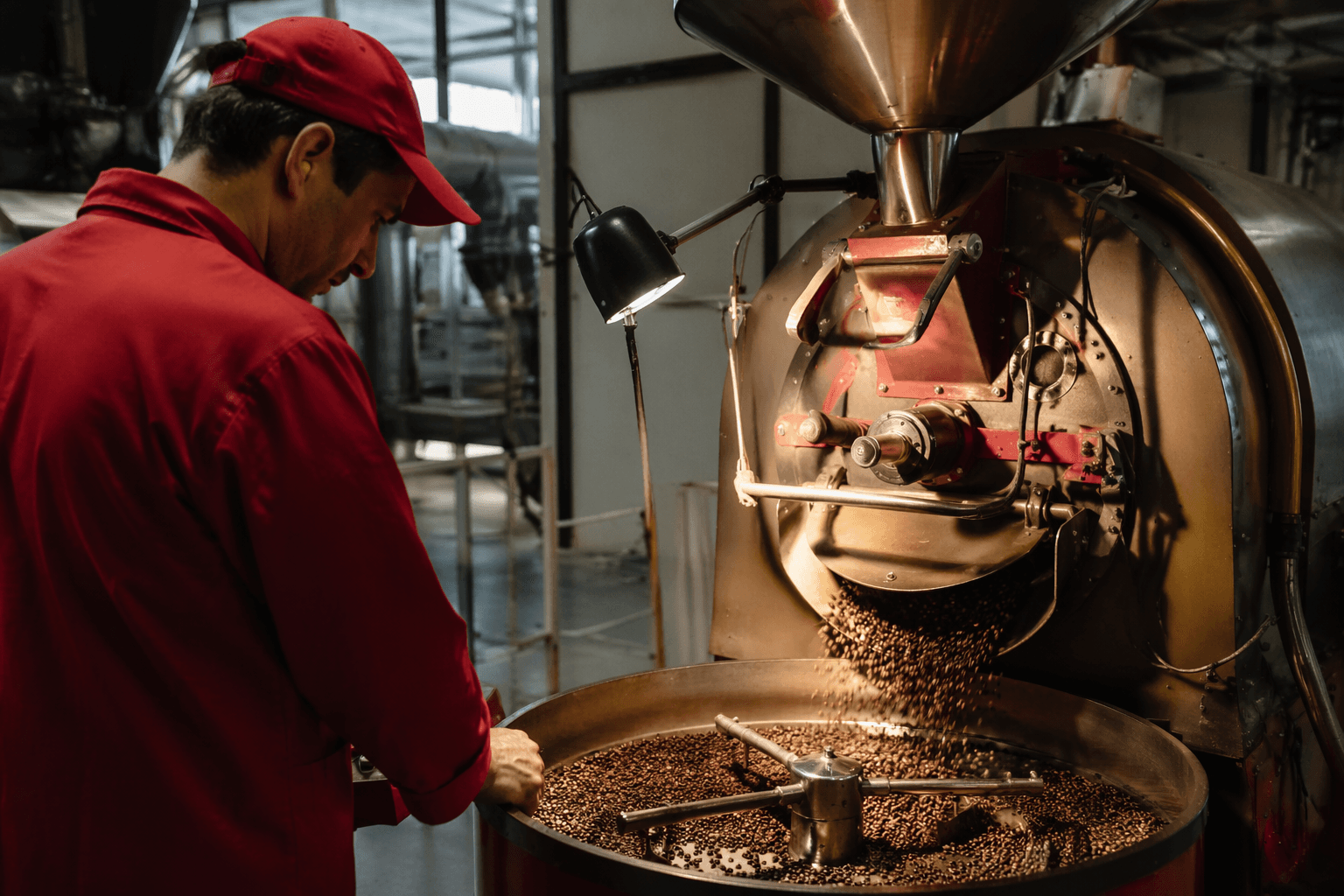
The practical question in Vienna was not whether a hydrogen roaster sounded clever, but whether it could actually roast coffee the way roasters need it roasted: consistently, at scale, and without blowing up energy costs. At Julius Meinl’s Ottakring facility, the answer arrived in the form of Austria’s first hydrogen-powered coffee roaster, a 12-kilogram Probat unit that ran on 100 percent green hydrogen and was described as CO2-free in operation.
The setup was as specific as the claim. Wien Energie supplied the hydrogen from its Simmering electrolysis plant, where renewable electricity produces the gas before it is transported in cylinders to Ottakring. The roaster reaches about 200°C and handles 12 kilograms of raw coffee per batch, far smaller than the industrial systems that can process about 400 kilograms at a time, but enough to test whether the technology can move beyond symbolism and into production reality.
The emissions case is the sharpest part of the story. Wien Energie said the process avoids about 2 kilograms of CO2 per roast compared with conventional liquefied-gas roasting at Julius Meinl in Vienna. If the system scales as expected, the company says the Vienna facility could save around 300 tonnes of CO2 a year. That matters in a segment where roasting is one of the most energy-intensive steps in coffee production, and where roasters typically rely on liquefied petroleum gas or natural gas.
The technical challenge is familiar to anyone who spends time around roast floors. The U.S. Environmental Protection Agency says coffee roasters generally operate between 370°C and 540°C, with roast times ranging from a few minutes to about 30 minutes, usually in direct- or indirect-fired drum systems. Julius Meinl and Wien Energie said the hydrogen project followed around 10 years of research and development, and that the roast result matched conventional systems. That is the real test for any hardware change in coffee: not whether it is novel, but whether the cup still lands where it should.
The infrastructure behind it is not small. Wien Energie’s Simmering plant opened on April 8, 2024, as a 3 MW electrolyzer that can produce up to 1,300 kilograms of green hydrogen per day, backed by an investment of about 10 million euros. PROBAT had already signaled where the category might go when it showed a hydrogen-powered P05 shop roaster in Emmerich, Germany, in September 2022, with industrial adaptations still under development. For Julius Meinl, which has been sourcing and roasting coffee since 1862, the move reads less like a one-off stunt than an attempt to prove that roast quality and climate responsibility can sit in the same drum.
This article was produced by Prism’s automated news system from verified source data, official records, and press releases, then run through automated quality and moderation checks before publishing. The system is built and supervised by the people who set the standards it runs under. Read our full AI policy.
Did this article answer your question?