Kenangan Coffee plots global expansion after surpassing 1,000 stores
Kenangan Coffee has turned a fast Indonesian rise into a test of exportable café format, with Australia now the brand’s first non-Asian proving ground.
Australia is the real stress test
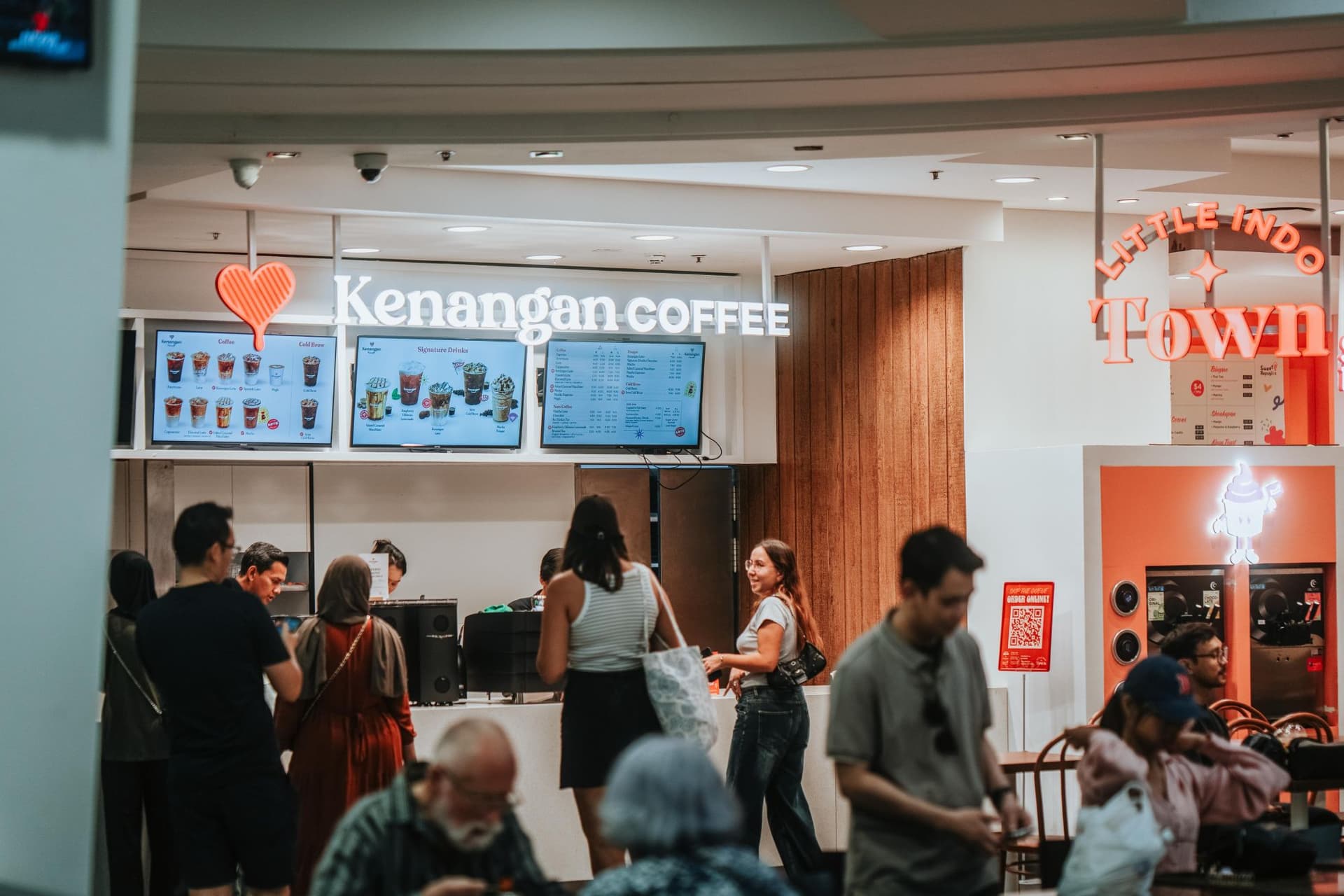
Kenangan Coffee’s jump into Australia is more than another ribbon-cutting. It is the moment the Indonesian chain has to prove that its speed-driven, app-enabled coffee model can hold up outside Asia, in a market with deep café habits and fierce local expectations. The first Australian store opened in Sydney on April 14, 2025 inside a Westfield shopping mall, and the brand has already outlined a second site in Melbourne, a sign that the company is treating the country as a serious beachhead rather than a one-off experiment.

Winnie Nawei, who leads Kenangan Coffee Australia, has become the face of that push. In the profile that mapped the brand’s next phase, Australia was framed as Kenangan’s first market beyond Asia, which makes every store decision feel bigger than usual. If the concept can win there, it gives the chain a blueprint for moving from a regional darling to a global coffee operator.

From Indonesian startup to 1,000-store chain
Kenangan Coffee, known in Indonesia as Kopi Kenangan, was founded in 2017 by Edward Tirtanata, James Prananto, and Cynthia Chaerunnisa. In less than a decade, the company says it has passed 1,000 global locations, a pace that puts it in a very different class from the average independent-born café brand. Much of that growth still sits in Indonesia, where the chain built the operating muscle that made its expansion possible.
The company’s financial rise helped fuel that scale. On December 27, 2021, Kopi Kenangan raised US$96 million in a Series C round that valued it at more than US$1 billion, with Tybourne Capital Management leading the deal and Horizons Ventures and B Capital among the backers. At the time, reporting put total funding above US$240 million, and the company described the round as making it Southeast Asia’s first food-and-beverage unicorn. That kind of capital base matters because the brand is not expanding cautiously. It is building a platform.
The model that travels
What makes Kenangan interesting is not just how fast it grew in Indonesia, but how deliberately the company has packaged itself for export. Reporting describes a tech-forward, high-speed service model and an app-enabled grab-and-go format, which is a very different proposition from a lingering, seat-yourself café. The company’s stores are appearing in malls and transit-heavy retail centers, where foot traffic is dense and customers are already conditioned to move quickly.
That format decision is part of the story. Kenangan’s first stores abroad have been placed in places like Suria KLCC in Kuala Lumpur, Raffles City Shopping Centre in Singapore, SM Mall of Asia’s North Entertainment Mall in the Philippines, Pacific Mall in Tagore Garden in Delhi, and a Westfield mall in Sydney. The pattern suggests a brand that is betting on convenience, visibility, and repeat visits, rather than trying to win by recreating a full-service third-place café in every market.
The rollout across Asia came fast
Kenangan’s overseas expansion has moved in a clear sequence. The first international store opened in Malaysia on October 17, 2022 at Suria KLCC in Kuala Lumpur, followed by Singapore on September 26, 2023 at Raffles City Shopping Centre. The Philippines came next on November 12, 2024 at SM Mall of Asia’s North Entertainment Mall, then India in April 2025 at Pacific Mall, Tagore Garden, Delhi.
That cadence matters because it shows the brand learning market by market while keeping the core formula intact. India was especially ambitious: reporting said Kenangan planned to open more than 10 stores there by the end of 2025, with a longer-term target of 50. Australia followed close behind, which suggests the chain is not waiting years between tests. It is moving quickly enough to see which markets support the concept and which require a different playbook.
Indonesia is still the engine room
Even with the international push, Indonesia remains the center of gravity. Kenangan’s own reporting in 2024 said it had more than 900 outlets in Indonesia and set a target of 2,000 Indonesian stores by 2027. That is an important clue to how the company sees expansion: overseas growth is not a replacement for domestic scale, but an extension of it.
That domestic base gives the chain a laboratory for format tweaks, operating discipline, and product consistency before it exports anything abroad. It also gives investors a more convincing story. A brand that can keep growing at home while opening in Kuala Lumpur, Singapore, Manila, Delhi, and Sydney looks less like a novelty and more like a platform company using coffee as its vehicle.
What comes next
Kenangan’s rise sits inside a larger wave of Asian coffee brands pushing beyond home markets, alongside names such as Luckin Coffee, theVenti, and % Arabica. But Kenangan’s challenge is sharper than simple expansion. It has to show that an Indonesian, data-driven, grab-and-go café can win on the other side of the Pacific Rim, where independent cafés, local chains, and entrenched habits all raise the bar.
That is why the Sydney shop matters so much. It is not just the brand’s first Australian address, and not just its first non-Asian market. It is the place where Kenangan has to prove that the formula which worked in Indonesia and then across Southeast and South Asia can still feel native, fast, and worth repeating in a market that already knows what good coffee looks like.
This article was produced by Prism’s automated news system from verified source data, official records, and press releases, then run through automated quality and moderation checks before publishing. The system is built and supervised by the people who set the standards it runs under. Read our full AI policy.
Did this article answer your question?