Nicaragua coffee output seen falling as El Niño and costs rise
Nicaragua’s 2026/27 coffee crop is forecast at about 2.4 million bags as fertilizer costs jump 25% and El Niño threatens grain filling. Roasters may face tighter origin choices.
Nicaragua’s next crop is looking softer just as green coffee buyers are trying to lock in supply. USDA’s Foreign Agricultural Service now sees 2026/27 production at about 2.4 million 60-kilogram bags, with exports slipping to 2.25 million bags, and the pressure points are familiar to anyone tracking Central America: weather risk, higher input costs, and a supply chain that has less margin for error.
The biggest near-term threat is rainfall. FAS said farmers reported good flowering in March and April 2026, but warned that a high probability of El Niño in the second half of the year could cut grain filling, quality, and yield. The report also flagged Nicaragua’s canícula, the mid-summer dry spell that can break up the rainy season in Central America, as a specific risk for coffee in the months when cherries need consistent moisture. At the same time, fertilizer costs are expected to rise about 25%, in part because of shipping disruptions in the Strait of Hormuz, a jump that could force growers to scale back applications just when trees need nutrition most.
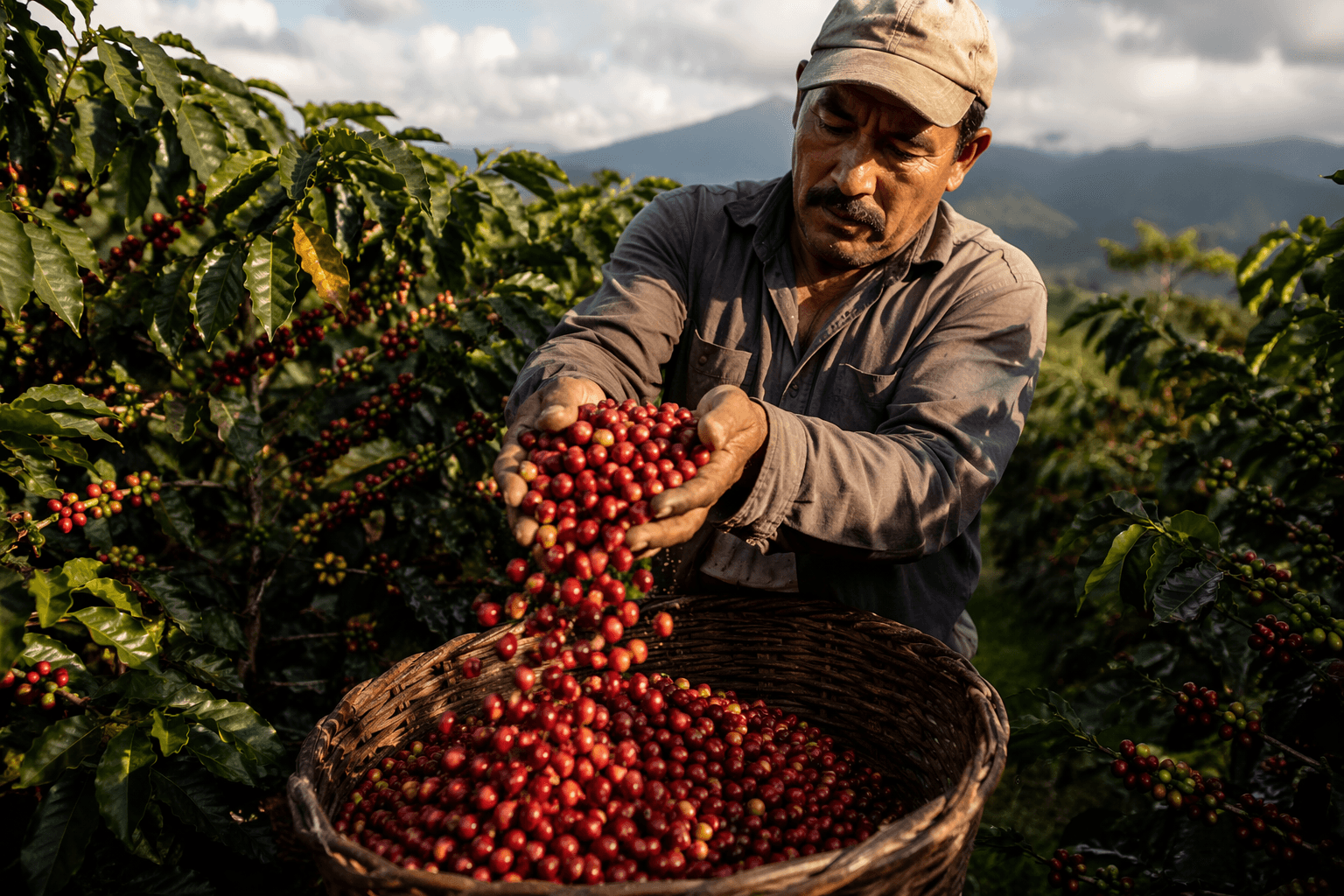
That cost squeeze is already visible in the numbers. FAS estimated Nicaragua’s 2025/26 crop at 2.56 million bags, down 4% from the prior year, after an extended canícula hurt grain filling in some low-altitude regions. Exporters still paid up to $290 per bag for exportable coffee during that harvest, a sign of how hard the market had to lean to secure supply. Earlier USDA projections had been more optimistic, with 2025/26 output seen at 2.58 million bags, helped by higher fertilizer use and a more balanced rainy season.
The acreage picture is not offering much relief. Planted coffee area is expected to hold at 143,000 hectares, while harvested area is projected to edge down to 141,000 hectares as labor shortages persist. More than 600,000 Nicaraguans, about 10% of the population, have left the country since 2018, and that migration has tightened the workforce for picking and field maintenance. The sector is still working through the long tail of the 2013 coffee leaf rust outbreak, after growers replanted about 20,000 hectares of arabica but never fully caught up with the ideal renovation pace.
For roasters and specialty importers, the real signal is not just smaller output in Nicaragua. It is the way weather, labor, and fertilizer inflation are converging with Brazil’s projected 23% jump in arabica production, which FAS says could create the largest surplus in five years. If that surplus pushes global prices lower, Nicaragua’s farmers could be squeezed from both sides, with less room to invest in the field and more reason for buyers to start substituting origins before the shortage shows up in the cup.
This article was produced by Prism’s automated news system from verified source data, official records, and press releases, then run through automated quality and moderation checks before publishing. The system is built and supervised by the people who set the standards it runs under. Read our full AI policy.
Know something we missed? Have a correction or additional information?
Submit a Tip