Specialty coffee overtakes traditional brew among younger U.S. adults
Nearly half of U.S. adults drink specialty coffee daily, and younger drinkers are pushing cold, espresso-based and ready-to-drink formats ahead of traditional brew.
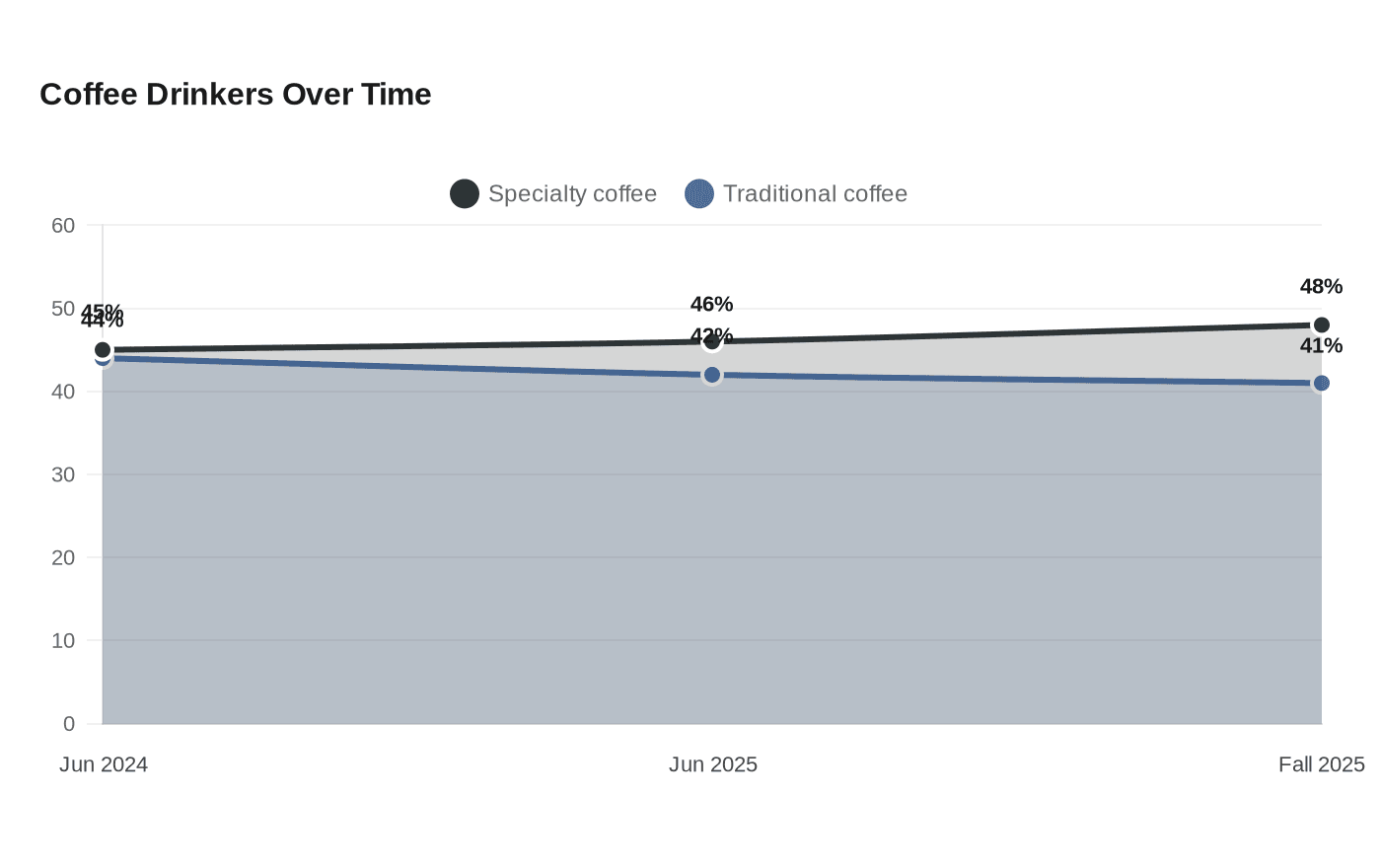
Specialty coffee has crossed a consumer threshold in the United States, with nearly half of adults now drinking it every day while traditional coffee stands at 42%. The bigger story is not just premiumization, but how younger drinkers are pulling the category forward through cold, espresso-based and ready-to-drink formats that promise a clearer flavor payoff.
That shift is strongest among younger adults. People ages 25 to 39 posted the highest past-week specialty coffee penetration at 64%, and the 18 to 24 cohort is also leaning specialty over traditional coffee. Hispanic American and Asian American consumers remain among the most engaged audiences, while the Northeast and West continue to lead regionally. The momentum has built quickly: in June 2024, 45% of American adults had specialty coffee in the past day, then 46% did in June 2025, and the fall 2025 NCDT pushed that figure to a record 48%, compared with 44%, 42% and 41% for traditional coffee across those same checks.
The category’s reach has also widened. The National Coffee Association says its 2026 Specialty Coffee Report draws on Spring 2026 NCDT data and sits inside the longest-running study of U.S. coffee consumption, beverage preferences and consumer behavior. The report tracks flavor preferences, roast level, competing beverage penetration and additive usage, which reflects how specialty coffee is being measured as a complete drinking system, not just a bean-quality contest. In practice, that umbrella now includes premium brewed coffee, lattes and cappuccinos, cold brew, frozen beverages and ready-to-drink cans and bottles.

Consumer behavior is following convenience. The 2025 Specialty Coffee Report found past-day specialty drinkers were more likely to have coffee prepared out of home than past-day traditional coffee drinkers, 35% versus 20%, even though 74% still made it at home. It also found 43% of Americans drank espresso-based beverages in the past week and 28% drank non-espresso-based beverages. Ready-to-drink had become the third most popular preparation method among past-day specialty coffee drinkers, up more than 83% since 2023.
Cold and iced formats are winning share as well. The fall 2025 NCDT release said cold, iced and frozen blended coffee accounted for 31% of all coffee consumed in the June survey, up from 23% in January 2025. Among out-of-home buyers, 59% used drive-throughs and 36% ordered through an app, a sign that speed and portability now matter as much as sourcing and roast.
Bill Murray, the NCA’s president and CEO, has tied the rise to coffee meeting evolving needs and preferences, while Peter Giuliano of the Specialty Coffee Association has pointed to the NCDT as one of the best gauges of consumer sentiment. That is where the next fight sits: not in abstract notions of luxury, but in cups that deliver flavor fast, travel well and fit the way younger Americans already buy coffee.
This article was produced by Prism’s automated news system from verified source data, official records, and press releases, then run through automated quality and moderation checks before publishing. The system is built and supervised by the people who set the standards it runs under. Read our full AI policy.
Did this article answer your question?