Turkish study finds date and olive seed drink mimics coffee
A Turkish study says a caffeine-free date-and-olive-seed brew came surprisingly close to Turkish coffee, but still trailed the real thing in sensory appeal.
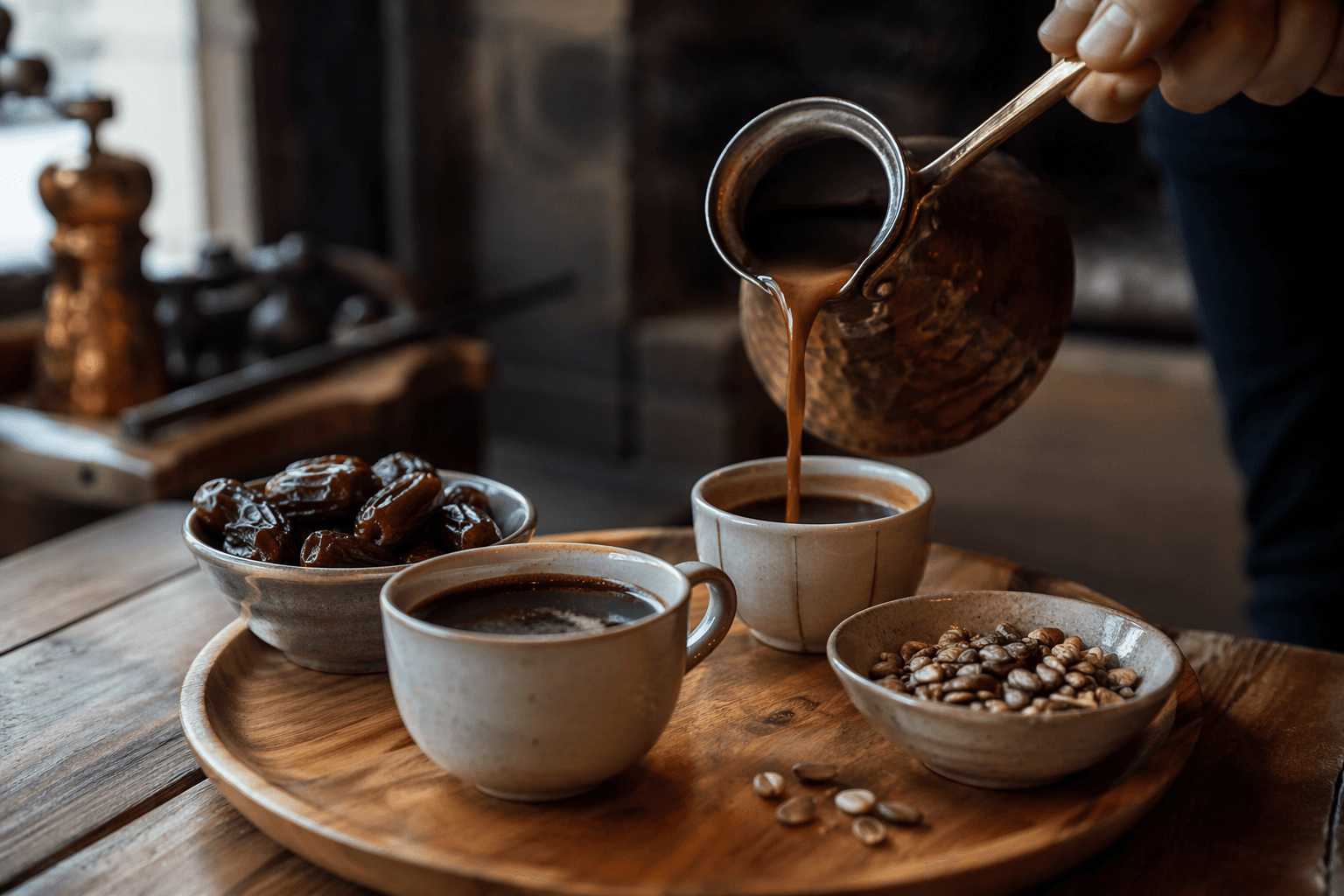
A roasted drink made from date seeds and olive seeds got close enough to Turkish coffee to raise a practical question for caffeine-avoiders: is this a true stand-in, or just coffee-adjacent? In controlled testing, the blend matched much of coffee’s look and mouthfeel well enough to land just behind Turkish coffee, while also bringing lower acidity and higher antioxidant activity to the table.
The study, titled Optimization and comprehensive investigation of coffee from date seeds and olive seeds: an alternative to Turkish coffee, was conducted by Ayşe Nur Çakı, Ezgi Kalkan and Medeni Maskan. Published online-first on January 27, 2026 in the Journal of Food Measurement and Characterization, it says olive seeds were used for the first time in a coffee formulation. The researchers used response surface methodology and a mixture design to optimize the drink at 7.35 g of date seeds and 4.64 g of olive seeds.
That formula produced an experimental total phenolics content of 0.207 mg GAE/g dry solids, radical scavenging activity of 84.86%, acidity of 12.80 mL NaOH/100 g DS and foam volume of 3.7 mL. The paper reports 2.4 times higher antioxidant activity and significantly reduced acidity than Turkish coffee, giving the brew a clear nutritional and sensory pitch beyond novelty. For drink developers, the numbers matter because they suggest a product that can behave like coffee without depending on coffee beans at all.
Taste still drew a boundary. Sensory evaluation ranked the optimized drink second only to Turkish coffee across all sensory attributes, and its purchase intention score came in at 4.42 out of 7, which the authors interpret as roughly “I can buy the product.” That places the drink in a promising middle ground: familiar enough to attract interest, but not yet strong enough to displace the cultural standard it imitates.

That cultural standard is part of the story. UNESCO added Turkish coffee culture and tradition to its Intangible Cultural Heritage list in 2013, describing it as a communal practice tied to hospitality, friendship and coffee-house life. Against that backdrop, a date-and-olive-seed brew is not just another functional beverage. It is a test of whether upcycled agricultural byproducts from Turkey can deliver something close enough to coffee’s flavor, body and appearance to matter, while still reminding drinkers why Turkish coffee remains the benchmark.
This article was produced by Prism’s automated news system from verified source data, official records, and press releases, then run through automated quality and moderation checks before publishing. The system is built and supervised by the people who set the standards it runs under. Read our full AI policy.
Did this article answer your question?