Vietnam coffee production forecast to rise for third straight year
Vietnam's green coffee output was forecast to reach 32.5 million bags in 2026/27, a third straight annual gain that could ease robusta costs.
Vietnam’s green coffee production was forecast to rise 2.5 percent to 32.5 million 60-kilogram bags in marketing year 2026/27, marking a third straight year of growth. The same outlook put exports at 28.95 million bags and domestic consumption at 5 million bags, keeping the country firmly at the center of the global robusta trade.
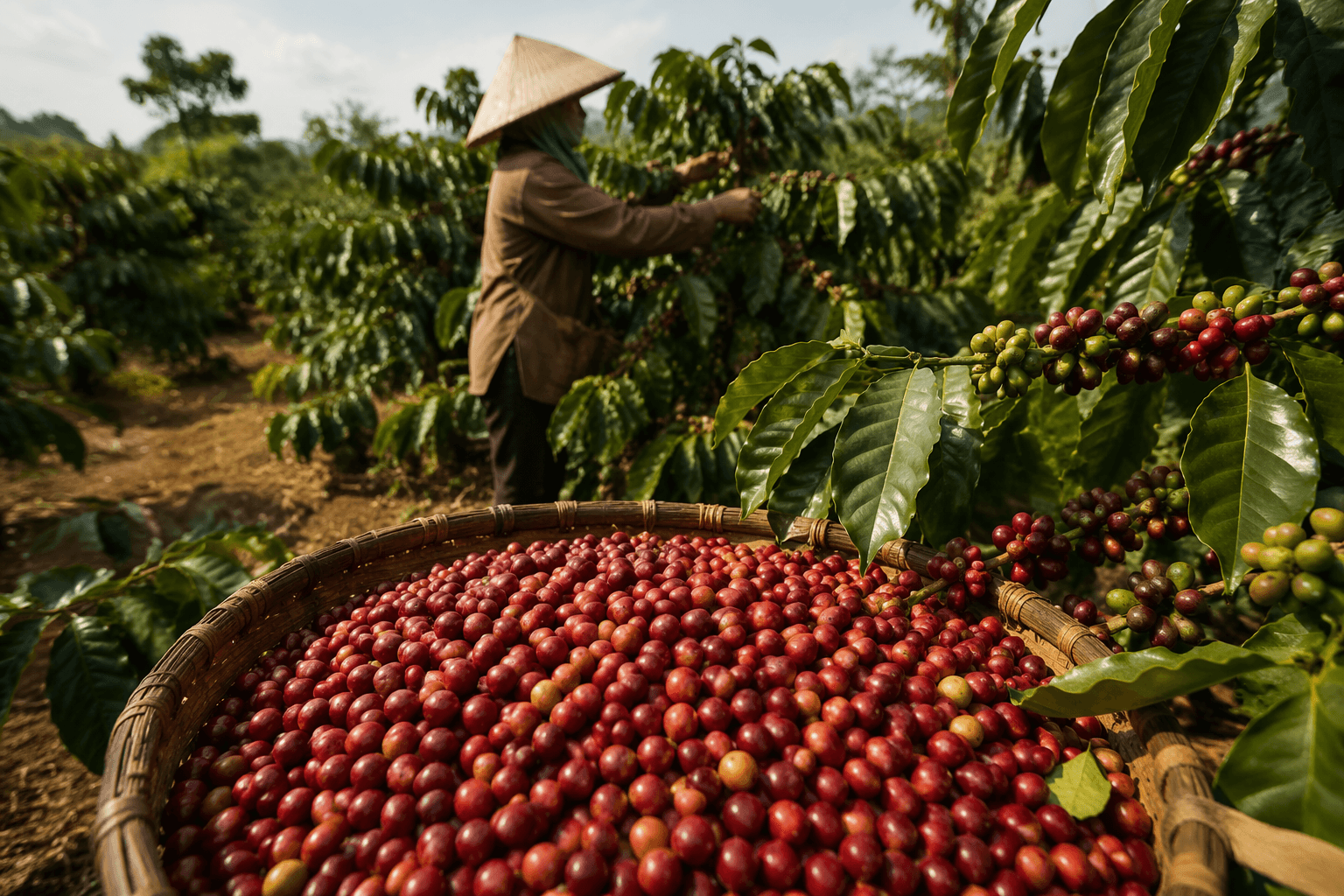
The driver was price. High coffee prices in 2024 and 2025 pushed farmers to expand robusta output, and that response was still showing up in the 2026/27 outlook. Even as prices have eased from recent peaks, farmers, traders and exporters have also been releasing stocks, a move that supports near-term export flows and helps explain why Vietnam remains such a powerful swing factor in the coffee balance sheet.
For roasters, the practical effect is not just bigger supply on paper. More Vietnamese robusta can change blend strategy first, because it gives large roasters and value-focused brands more room to lean into robusta-heavy formulas without paying the kind of premiums seen during the sharpest price spikes. That matters in instant coffee, where Vietnam is one of the most important origins in the world and where raw bean economics flow straight into retail margins.
The same dynamics reach espresso programs, especially at the entry level. When robusta supply is looser, roasters have more flexibility to hold down costs in house blends, supermarket SKUs and café programs built around lower price points. That does not mean arabica loses its place, but it can narrow the gap between higher-end sourcing stories and the budget-driven blends that anchor a lot of volume.
The export outlook also suggests the added crop is not staying at origin. With shipments forecast to climb to 28.95 million bags, the extra coffee is likely to land where global buyers feel it fastest: in blend contracts, soluble coffee production and commercial espresso lines that depend on dependable, price-sensitive supply. Domestic consumption rising to 5 million bags will absorb some volume, but the larger story is still the export machine.

That makes Vietnam a useful read on where robusta pricing may be headed over the next 6 to 12 months. If production keeps outrunning expectations, roasters could see a friendlier buying environment for blends and instant coffee inputs, while the strongest pressure would fall on producers who had been counting on the tight, expensive market of the last two seasons.
This article was produced by Prism’s automated news system from verified source data, official records, and press releases, then run through automated quality and moderation checks before publishing. The system is built and supervised by the people who set the standards it runs under. Read our full AI policy.
Did this article answer your question?