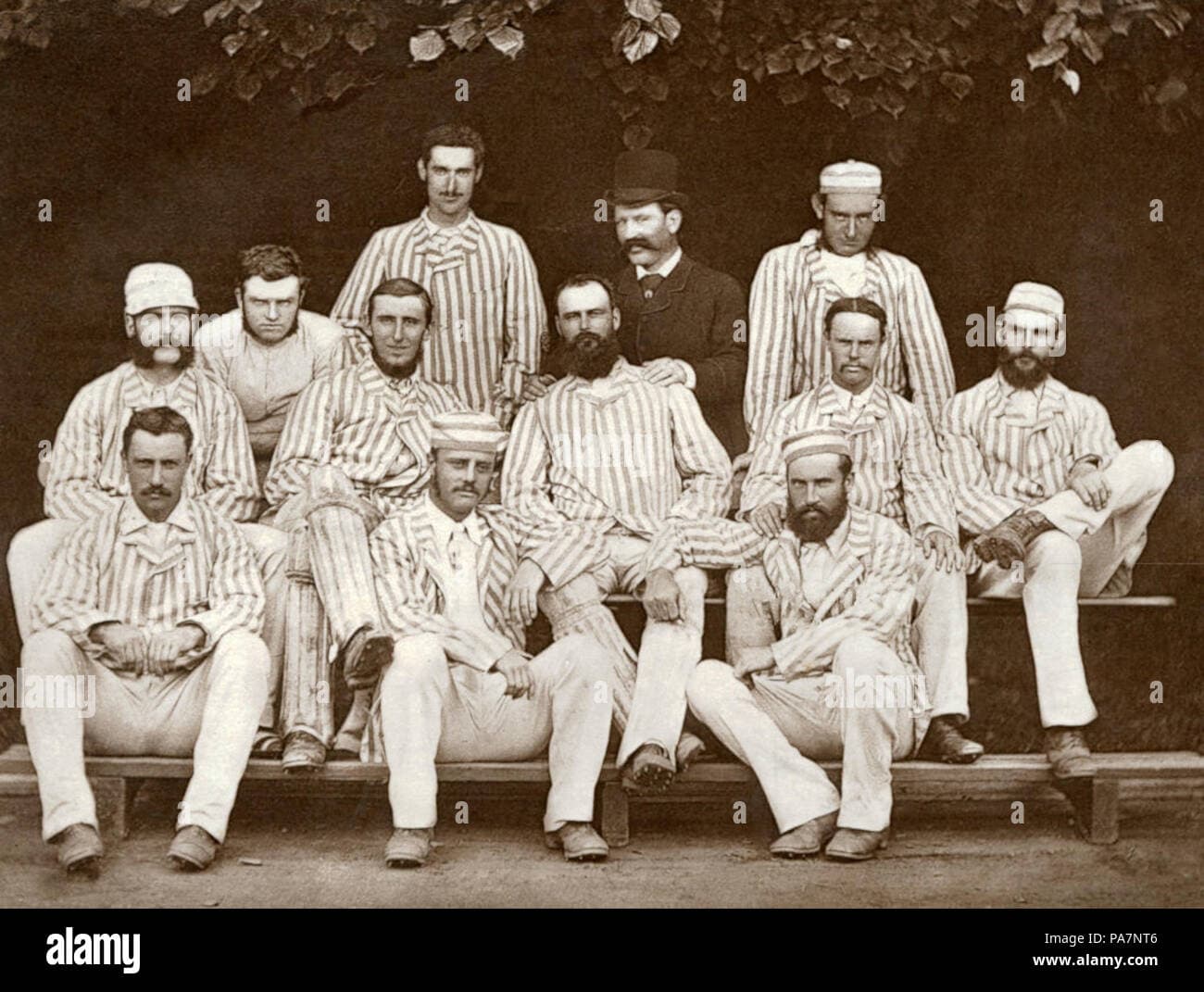
Cricket roots shaped Missouri’s Spink family and sports journalism rise
Cricket did not vanish in St. Louis, it helped train the Spinks, whose newspaper careers carried the game’s habits into Missouri sports writing.

Cricket is one of St. Louis’s quiet origin stories. Before baseball became the city’s louder identity, the Spink brothers were already moving through the culture of bat-and-ball sport as cricket enthusiasts, and that background did not disappear when they turned toward the American game. It followed them into the newsroom, where Alfred H. Spink became the clearest bridge between cricket’s club world and Missouri’s rising sports media culture.
Cricket before baseball took over
The most useful way to read Missouri cricket history is not as a separate, sealed-off pastime, but as part of the same social current that fed baseball, newspapers, and organized sport. The Society for American Baseball Research biography of Alfred H. Spink makes that link explicit: the Spink brothers were once cricket enthusiasts before they adapted to baseball. That detail matters because it places cricket at the beginning of a longer Missouri sports story, not at its margins.
In St. Louis, cricket was more than a game played on the side. It was part of the habits, clubs, and conversation that shaped how athletic life was understood. The city’s sporting culture did not spring fully formed from baseball diamonds alone. It grew through people who already knew how to follow a match, talk about play, and treat sport as something worth recording with care.
Alfred H. Spink and the St. Louis transition
Alfred H. Spink’s move to St. Louis in 1875, when he followed his brother Billy to work in the city, gives the story its clearest date and place. He did not arrive as a detached observer. He arrived inside a family network already connected to sport, and he entered a city where those connections could be turned into a career.
His early St. Louis work was in newspapers, not on a playing field. The biography places him at the St. Louis Post, a rival to the St. Louis Globe-Democrat, which shows how closely his sports life became tied to the press. That path is important because it turns cricket from a memory of play into a training ground for sportswriting. Alfred stayed close to organized sport through journalism, carrying the instincts of a cricket watcher into the machinery of daily reporting.
That is where Missouri’s hidden-origin story really begins. Cricket taught timing, scoring, club culture, and the value of steady observation. Newspapers gave those habits a public voice. Alfred H. Spink stood at the point where those two worlds met, and St. Louis gave him the setting to make that connection matter.
The Spink family and the rise of sports media
The Spink name became bigger than one man. Alfred’s family belonged to the wider newspaper culture that eventually produced The Sporting News, and that larger family network helped shape the city’s influence on American sport. The Baseball Hall of Fame notes that J. G. Taylor Spink turned that paper into the publication often called the Bible of Baseball, a description that shows how far the family’s media reach extended.
Taken together, those facts explain why the Spinks belong in Missouri cricket history as much as in baseball history. Their cricket background was not a detour before “real” sport began. It was part of the intellectual and cultural equipment they brought into journalism. Once they were inside the newspaper world, that equipment helped define how sport was covered, organized, and given authority.
St. Louis mattered because it was a place where sport and storytelling could reinforce one another. Cricket club habits encouraged structure, record-keeping, and rivalry. Newspaper work demanded deadlines, consistency, and an audience hungry for interpretation. The Spinks moved between those worlds, and in doing so they helped normalize the idea that sport deserved specialized coverage, not just passing mention.
Why cricket belongs in Missouri’s sports DNA
For Missouri readers, the Spink story changes the way cricket history looks. It is not only about clubs, pitches, or imported customs. It is also about the men who took cricket’s disciplined way of seeing sport and converted it into a journalism tradition that would shape baseball coverage for generations. Alfred H. Spink is the key figure because his life shows that transition in one clear arc: cricket enthusiast, St. Louis newspaper man, chronicler of organized sport.
That arc helps explain why St. Louis became such an important center for interpreting American sport. The city did not just play games. It produced voices that learned how to frame them. The habits formed in cricket clubs and carried into newsrooms helped create the editorial confidence that later made Missouri sports writing nationally influential.
The best hidden-origin stories are the ones that change what you think you are looking at. In St. Louis, cricket was never only a game on the field. Through the Spink brothers, and especially Alfred H. Spink, it became part of the city’s sports language, its newspaper culture, and the rise of a style of reporting that would define baseball long after cricket had faded from the spotlight.
This article was produced by Prism’s automated news system from verified source data, official records, and press releases, then run through automated quality and moderation checks before publishing. The system is built and supervised by the people who set the standards it runs under. Read our full AI policy.
Did this article answer your question?