Baton Rouge crochet group stitches together generations through weekly craft sessions
Baton Rouge’s Threadheads shows how weekly crochet circles turn beginners into makers and keep older techniques alive, one stitch, one lesson, one regular session at a time.
A weekly crochet circle with a built-in classroom
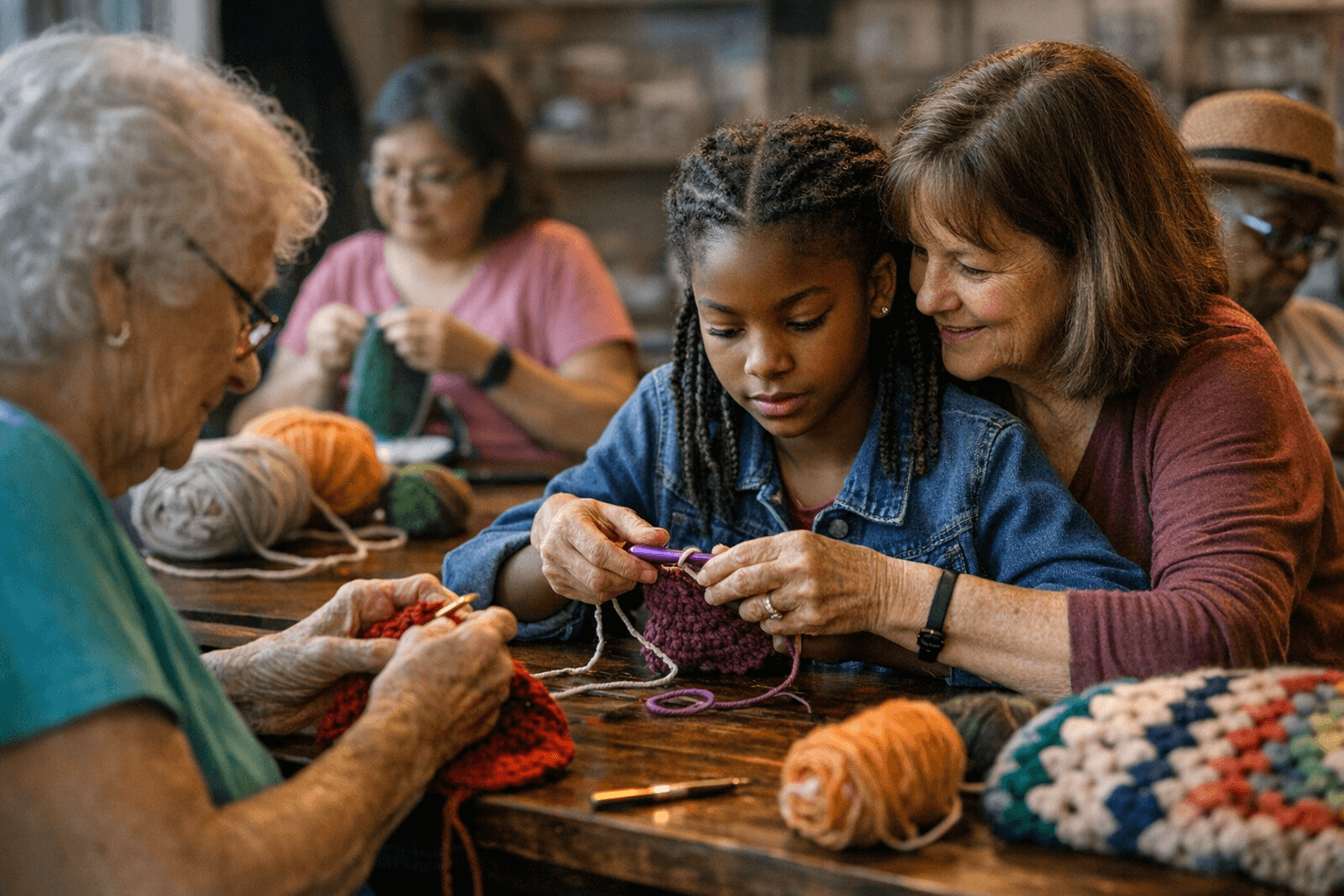
Threadheads is the kind of gathering that makes crocheting feel bigger than a solo craft bag and a hook case. At the East Baton Rouge Parish Library’s Greenwell Springs Road Regional Branch Library, the group welcomes everyone from first-timers to experts, and that mix is exactly why it works as a skill-sharing space. Newer crocheters get a place to ask basic questions without slowing anyone down, while experienced makers get a reason to keep showing, teaching, and problem-solving out loud.
The group meets once a week and has been running for at least 10 years, tracing its roots back to the Scotlandville branch. Library materials say it typically draws about 8 to 12 people, which is small enough for real conversation and large enough for ideas to keep moving from one lap to another. Anne Brown, the organizer, says some newer members become highly skilled over time, a reminder that these sessions are not just social. They are a working pipeline from beginner stitches to confident makers.
Why the setting matters
The Greenwell Springs Road Regional Branch Library gives Threadheads room to breathe. The branch is listed at 32,644 square feet and holds 140,000 items, which means the crochet group sits inside a major public resource, not a tucked-away hobby corner. That scale matters because it reinforces the idea that crochet belongs in civic life, alongside books, programs, and other community learning.
Libraries are especially strong homes for this kind of group because they lower the barrier to entry. You do not have to own a studio, rent a classroom, or know anyone in advance. You just show up with yarn and curiosity, and the room does the rest. For a craft that can be quietly intimidating at the start, that access changes everything.
What gets transferred in the room
Intergenerational crochet groups work best when the exchange is practical, not performative. In a room like Threadheads, beginners can learn tension, stitch counting, pattern reading, and how to recover from mistakes without frogging an entire project in despair. Experienced crocheters, meanwhile, keep their own knowledge sharp by explaining techniques out loud and demonstrating them in real time.
That exchange also preserves the kind of knowledge that is easy to lose when crochet happens only online. A pattern video can show a motion, but it cannot notice that your chain is twisting or that your gauge has drifted. In a weekly group, those tiny corrections happen naturally, and they add up fast. That is one reason Anne Brown’s note about newer members becoming highly skilled over time feels so important: the group is not just welcoming, it is effective.
A Baton Rouge fiber scene that keeps widening
Threadheads is part of a broader local fiber-arts momentum. Micah Smith, who started her Baton Rouge yarn line Fleur De Stitch’d in 2019 after returning to the city in 2018, has helped push that momentum outward through events and community building. Fleur De Stitch’d launched the first Baton Rouge Fiber Arts and Makers Festival in spring 2022, giving local makers a bigger public stage and giving newer crocheters a place to see how far the craft can go.
Smith has said she wants younger generations to find someone in the fiber-arts community who can teach them. That goal lines up neatly with what groups like Threadheads already do every week. A beginner who starts by learning a chain stitch at a library table can eventually step into yarn choosing, color planning, and more ambitious builds with confidence, especially when the surrounding scene includes festivals, local yarn makers, and people who are actively trying to hand down what they know.
What makes the model replicable
The appeal of Threadheads is not just that it exists, but that the structure is easy to understand and worth copying. A regular time, a welcoming public space, and a mix of skill levels create a setting where people learn from each other instead of waiting for formal instruction to catch up. That is especially useful in crochet, where progress often depends on seeing a stitch done correctly, then trying it again with someone nearby.
The most transferable parts of the model are simple:
- Keep the meeting regular, so learning compounds from week to week.
- Make the space open to both brand-new crocheters and seasoned makers.
- Let the group size stay manageable, like Threadheads’ typical 8 to 12 attendees, so questions can actually get answered.
- Treat finished pieces, unfinished swatches, and in-progress troubleshooting as equally valid reasons to come.
Those pieces help explain why a group can last for a decade and still feel fresh. The format gives beginners a clear place to start, while longtime crocheters get to pass on technique in a way that feels natural rather than formal.
Baton Rouge has done this before
Threadheads is not the city’s only example of crochet doubling as community infrastructure. The Louisiana Folklife Program says Crafting for a Cause began around 2010 with two or three women learning to crochet from Linden Langberg. That origin story matters because it shows a longer Baton Rouge tradition of fiber arts serving both social and charitable purposes, with the teaching itself becoming part of the group’s purpose.
Taken together, these groups show how crochet can do more than fill spare time. In Baton Rouge, it has become a way to gather people, keep techniques alive, and pass skill across generations in a setting that feels both casual and durable. The weekly rhythm at Threadheads, the growth of the local yarn scene, and the legacy of groups like Crafting for a Cause all point to the same truth: in this city, crochet is not just something people make. It is one of the ways they keep a community stitched together.
This article was produced by Prism’s automated news system from verified source data, official records, and press releases, then run through automated quality and moderation checks before publishing. The system is built and supervised by the people who set the standards it runs under. Read our full AI policy.
Did this article answer your question?