Chunky Crochet Frog Amigurumi Pattern Offers Fast, Beginner-Friendly Charm
This palm-sized frog turns a quick amigurumi session into a finished toy in under an hour, with puff-stitch legs and bubble eyes doing most of the charm work.
A small frog with a big payoff
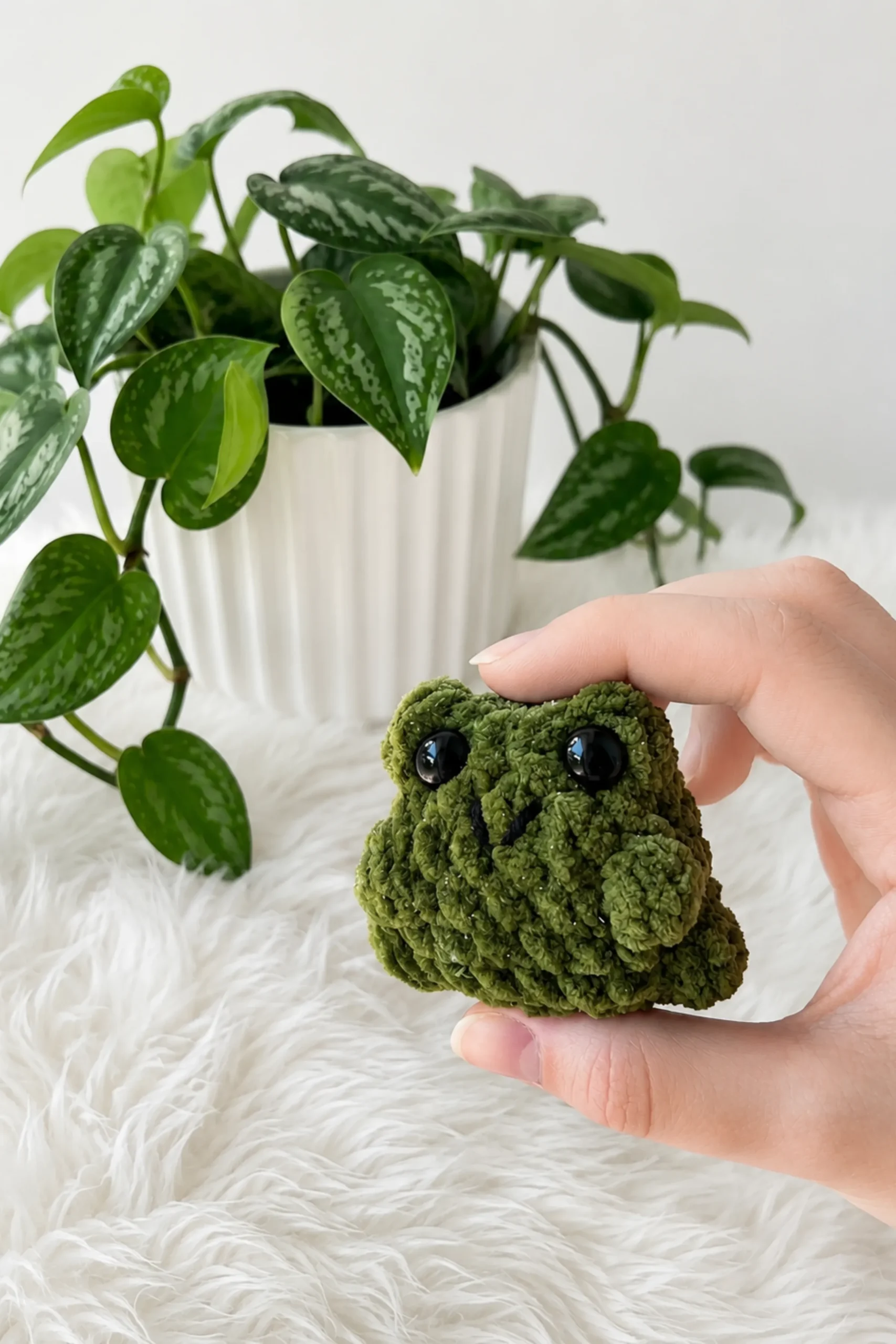
Martha Miller’s chunky crochet frog pattern hits a sweet spot that beginner amigurumi makers are always chasing: it looks like a designed toy, but it does not demand a marathon of shaping, sewing, or second-guessing. The finished frog is palm-sized, plush, and just a little grumpy-looking in the best possible way, with bubble eyes and puff-stitch legs giving it personality right away. That combination matters because the toy feels complete fast, which is exactly why this kind of project gets made instead of bookmarked and forgotten.
The appeal is immediate. You are not building a complicated plush with dozens of parts that slowly becomes recognizable over several evenings. You are making one compact character with a clear face, a soft body, and details placed where they have the most visual impact. The result is the kind of amigurumi that can sit on a desk, ride in a coat pocket, or tuck into a plant shelf as a tiny guardian without looking overly cutesy or overly fussy.
Why this frog is so beginner-friendly
The construction keeps the learning curve low. The pattern is built as one continuous piece, uses a single hook, and relies on a handful of basic stitches, so the process stays manageable even if this is one of your first stuffed projects. That matters in amigurumi, where too many seams or attachments can turn a cute idea into a stalled WIP.
The frog also works as a confidence builder because the visual payoff arrives quickly. The pattern is said to be workable in under an hour, which makes it a strong choice when you want a last-minute gift, a desk companion, or simply the satisfaction of finishing something before the day ends. For newer crocheters, that kind of quick win can be more motivating than a larger project that takes days before it starts to resemble anything.
There is another beginner advantage here: the design does a lot with very little. The puff-stitch legs bring texture and shape without requiring advanced sculpting, while the eye bumps give the face expression without complicated assembly. Even if you are still getting comfortable with tension and stuffing, the frog is engineered to look intentional.
Materials that keep the project simple
The supply list is short and practical. You need bulky velvet or chenille-style yarn, a 3.5 mm hook, 8 mm safety eyes, polyester fiberfill, and a small amount of black and pink yarn for embroidery. That is a friendly materials list for anyone who wants a finished object without hunting down specialty tools or obscure notions.
The yarn choice does a lot of heavy lifting. Bulky plush yarn gives the frog its soft, cushiony body and helps the finished shape read as chunky and cuddly. The safety eyes and tiny embroidery details keep the face clean and modern, which is part of why the toy feels like a polished design instead of a simple blob with eyes attached.
The pattern is written in US terminology and encourages tight stitches so the stuffing stays hidden. That detail is especially useful in amigurumi, where loose tension can leave gaps and reveal fiberfill. If you keep your stitches snug, the frog’s round shape and compact charm come through much more cleanly.
What the puff stitches change
Puff stitches are the feature that make this frog stand out. In crochet, puff stitch is a standard texture used to create raised, dimensional fabric, and here it gives the legs a fuzzy, rounded look that instantly separates the project from a plain single-crochet build. The texture reads from across the room, which is a big reason the finished frog feels more character-rich than its stitch count might suggest.
Yarnspirations notes that puff-stitch construction can vary, and that flexibility helps explain why the texture can be adapted to different looks. In this frog, the stitch lands in the sweet spot between decorative and approachable: noticeable enough to matter, simple enough to keep the project beginner-friendly. The legs end up doing more than just supporting the body, they become part of the expression.
That concentrated design is the real trick. Instead of scattering visual interest across every part of the toy, the pattern focuses on the puff-stitch legs and the bubble eyes. The frog ends up looking expressive, soft, and slightly cheeky without needing complex color changes or advanced shaping.
Amigurumi’s appeal runs deeper than cute
Amigurumi refers to small stuffed yarn creatures made by knitting or crocheting, and that definition helps explain why this frog lands so well. The format is already built around compact, giftable, display-ready objects, so a project like this fits naturally into modern crochet habits. You are making something small enough to finish, but still substantial enough to feel like a real make.
The wider Japanese design context also fits the frog’s look. Britannica describes traditional Japanese artistic taste as valuing delicacy, exquisiteness of form, and simplicity, and those qualities show up here in a very practical way. The frog is not overloaded with detail; it is clean, compact, and deliberate, which is exactly why it reads so clearly.
That balance between cute and restrained is part of what makes amigurumi so enduring. A tiny frog with expressive eyes and textured legs feels playful without tipping into babyish, so it can work as a desk buddy, a shelf accent, or a pocket-sized gift that feels personal.
Why quick plush patterns keep winning
The larger crochet community makes the success of a pattern like this even easier to understand. The Craft Yarn Council says more than 50 million people know how to knit, crochet, and craft with yarn, which is a huge audience looking for satisfying projects at every skill level. Yarnspirations says it offers more than 10,000 free crochet and knitting patterns, a reminder of how crowded and beginner-friendly the pattern landscape has become.
In that environment, the projects that rise to the top usually offer one of two things: a very clear use case or a very fast, satisfying finish. This frog manages both. It is quick, it is charming, and it gives newer crocheters a finished character with enough personality to feel like an achievement rather than an exercise.
For anyone wanting a project that looks more polished than its difficulty suggests, this chunky frog delivers exactly that. It gives you a small, sturdy, highly giftable result, and it does so before the motivation has time to fade.
This article was produced by Prism’s automated news system from verified source data, official records, and press releases, then run through automated quality and moderation checks before publishing. The system is built and supervised by the people who set the standards it runs under. Read our full AI policy.
Did this article answer your question?