Crochet Bridges Generations as Craft Resurgence Spans Ages
Crochet is moving through families, charity, and heritage sites at once, with younger makers joining a craft that still carries Irish memory and practical value.
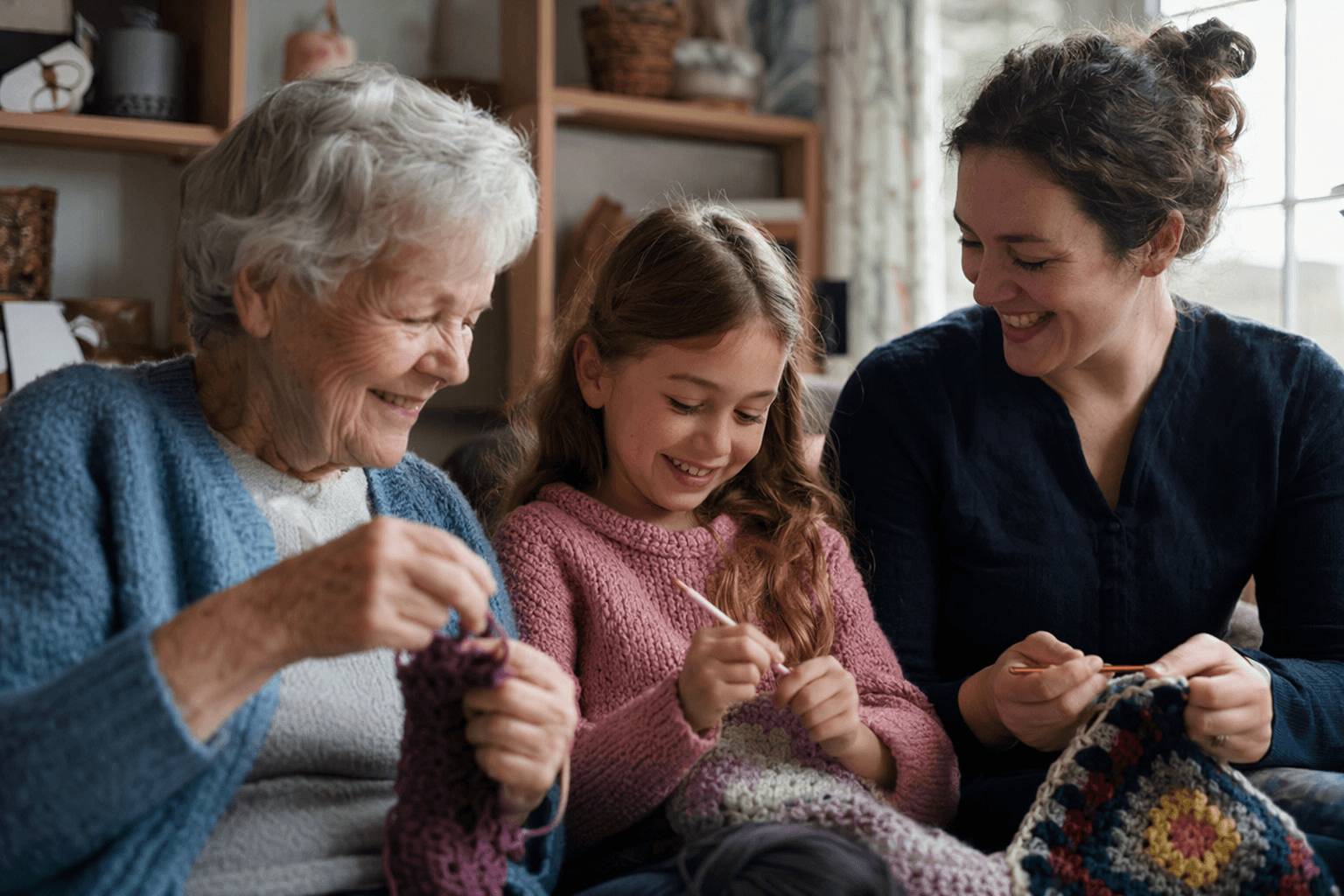
Crochet is not just hanging on as a nostalgic pastime. It is showing up in family hands, charity drives, museum workshops, and living heritage sites, with a reach that now spans older makers, younger daily crafters, and communities that still treat the hook as a tool for survival, memory, and making.
From famine relief to living heritage
Crochet developed in the 19th century from chain-stitch embroidery, shifting the stitch from needle work to work done with a hook. That change mattered in Ireland, where the craft was introduced in the late 1840s as a famine-relief measure during a crisis that, between 1845 and 1852, killed about one million people and pushed emigration to around two million. In that setting, crochet was not decorative first and practical second. It was a way to earn, trade, and stay afloat.
Irish crochet lace grew from Venetian lace traditions and became a major export in the 19th century. Teaching spread especially during and after the Great Famine, and the lace that came out of that period carried both skill and survival in every motif. After mechanization in the late 1800s and early 1900s slowed the work, the craft faded, then briefly surged again in the 1960s with the help of fashion designer Sybil Connolly. Today, Irish crochet lace is recognized as living cultural heritage and still survives in small hubs such as Dublin, Cork, Limerick, Monaghan, Clones, Youghal, Kenmare, and Headford.
That history gives modern crochet its depth. When a granny square, lace edging, or baby blanket moves from one generation to the next, it is carrying a technique that once helped families endure famine and later helped preserve regional identity.
Why the resurgence looks bigger than nostalgia
The modern crochet revival is measurable, and the scale is hard to ignore. The Craft Yarn Council says more than 50 million people know how to knit, crochet, or craft with yarn. Its survey materials also show that 84% of respondents crochet or knit at least three to four times a week, while 58% do so daily. Among younger consumers ages 18 to 34, 53% crochet or knit daily, a number that explains why this craft is not fading into a purely older demographic.
A 2024 yarn consumer survey cited by Craft Industry Alliance adds another important layer. It drew more than 7,000 responses, found an average age of 58 and a median age of 59, and still reported that 73% of respondents crochet and 58% do both knitting and crochet. Put together, those numbers show a community that is older overall but still being replenished by younger hands. That is the real bridge between generations: older makers are not the only ones keeping the stitch alive, and younger makers are not arriving as a novelty. They are becoming part of the daily rhythm.
What people are making, and why it matters
The strongest thread running through today’s crochet culture is usefulness. The Craft Yarn Council says six in ten crocheters and knitters made a project for charity in the prior year, most commonly hats, scarves, and baby blankets. That matters because it explains why crochet keeps finding new audiences: it is fast enough to finish, useful enough to donate, and satisfying enough to keep going.
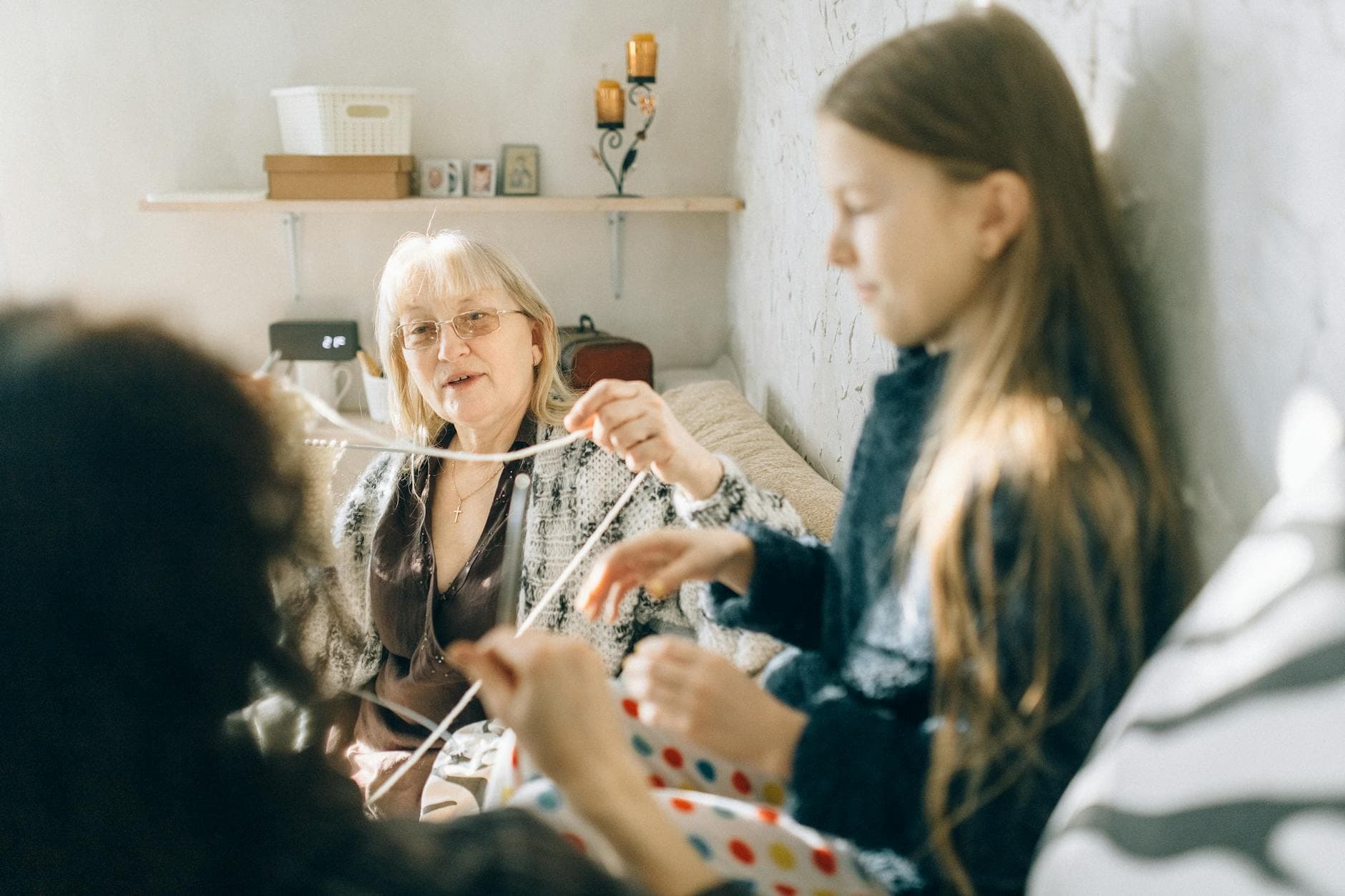
That practical payoff is one reason the craft crosses age groups so easily. A child can learn a basic chain, a parent can work a scarf on the couch, and a grandparent can turn the same skills into gifts for a shelter or a hospital ward. The project may be small, but the result is immediate and easy to feel in daily life, which is exactly why crochet remains such a reliable entry point for new makers.
- hats that warm fast and use manageable yardage
- scarves that teach repetition and even tension
- baby blankets that show how simple stitches can become heirloom pieces
For anyone looking to understand the appeal in concrete terms, the best first projects are the ones that finish quickly and stay in use:
Those projects do more than teach technique. They also explain why crochet travels so well from one generation to the next. A useful object gives the lesson a purpose, and a purpose makes the stitch easier to remember.
The craft as art, science, and shared teaching
Crochet’s revival is not limited to household items and charity tables. It also shows up in art and education, where the hook becomes a way to explore form, math, and collaboration. The Smithsonian’s Hyperbolic Crochet Coral Reef project began in 2003 and brought together more than 800 people through related workshop activity, including hundreds in Washington, D.C. area workshops. That project, led by Margaret Wertheim and Christine Wertheim through the Institute for Figuring, turned crochet into a public language for science and environmental imagination.
What makes that project important to the broader story is not just scale. It shows how crochet can move from a kitchen table to a museum space without losing its handmade core. The same looping structure that builds a scarf can also model coral, texture, and complex geometry. In that sense, crochet remains one of the rare crafts that can be both intimate and expansive at the same time.
Why the bridge between generations is holding
Crochet keeps resurfacing because it does several things at once. It preserves older methods, it adapts to new uses, and it offers immediate results in a culture that still rewards speed and utility. That combination explains why Irish lace survives as heritage, why charity projects still rely on the craft, and why younger adults are crocheting daily alongside older makers who have been at it for decades.
The result is a craft with an unusually strong emotional and practical backbone. It carries famine-era history, 20th-century revival, modern survey data, and museum-level experimentation all in one looped thread. That is why crochet continues to bridge generations so effectively: it remembers where it came from, works well in the present, and still leaves room for the next maker to pick up the hook.
This article was produced by Prism’s automated news system from verified source data, official records, and press releases, then run through automated quality and moderation checks before publishing. The system is built and supervised by the people who set the standards it runs under. Read our full AI policy.
Did this article answer your question?