Crochet coral reef turns math, art and activism into one project
A simple increase pattern turns yarn into hyperbolic forms, and the coral reef project uses that stitch logic for math, climate art and community making.
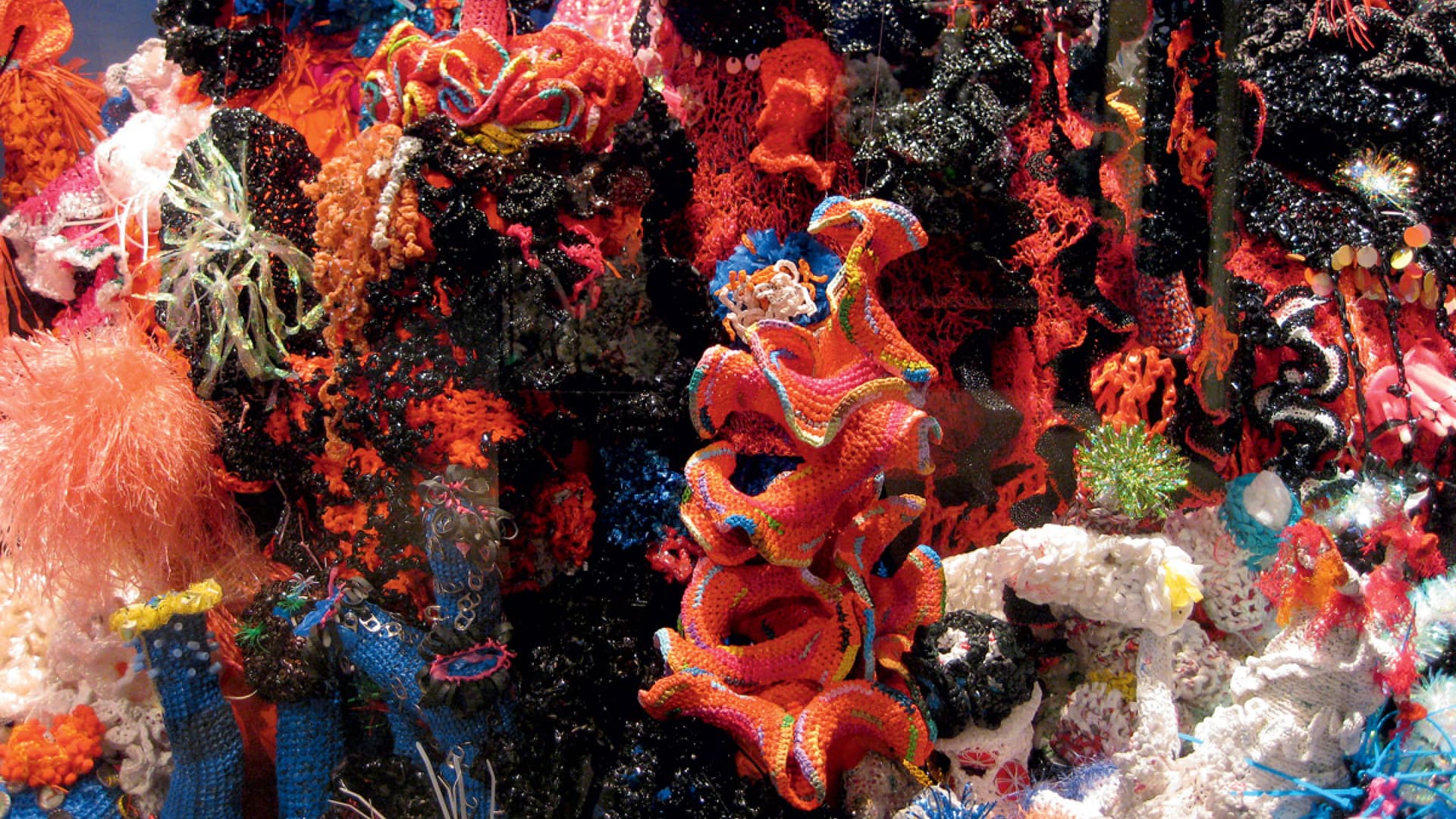
Crochet is one of the few crafts that can make an abstract idea feel physical in your hands. In the Hyperbolic Crochet Coral Reef, a simple habit familiar to any crocheter, repeating increases, creates the ripples and curls of hyperbolic geometry while also building a large-scale environmental artwork. That is why the project has traveled so well across museums and communities: it speaks at once to stitchers, math lovers, and anyone thinking about the fragile future of coral reefs.
How a stitch becomes geometry
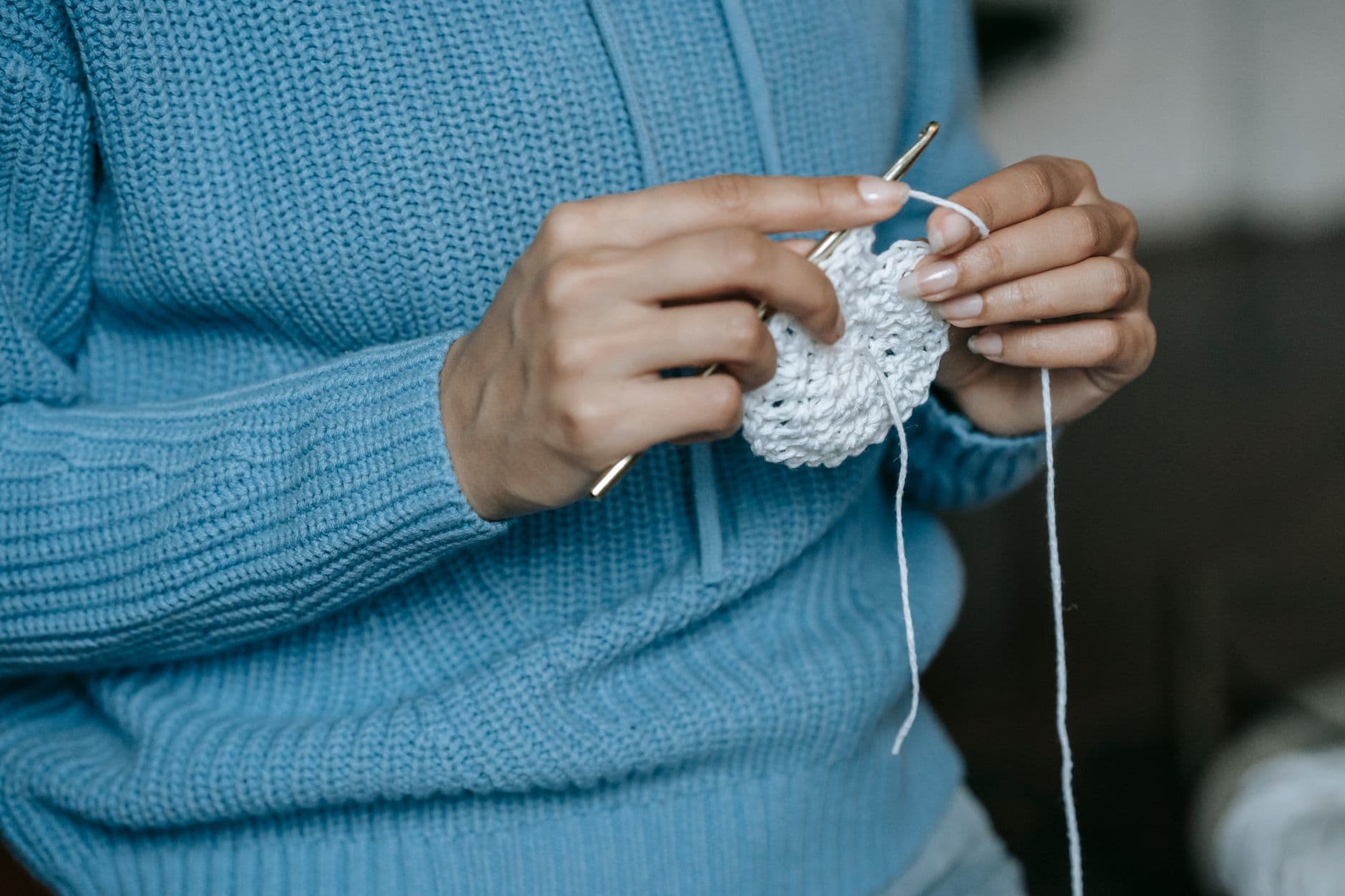
If you have ever watched a flat round start to cup, you already know the basic mechanism behind hyperbolic crochet. When increases are repeated in a consistent way, the fabric cannot stay flat, so it naturally ruffles and bends into curled forms that echo non-Euclidean geometry. That makes the reef project unusually useful for crocheters, because it turns a concept that can feel remote in diagrams into something you can hold, shape, and compare row by row.
The project’s strength is that it does not treat crochet as decoration alone. The crochet structure itself becomes the lesson, with the yarn showing how growth patterns create complex surfaces that resemble living reef forms. For a maker, that is a rare kind of insight: the same hook-and-yarn technique used for garments and blankets becomes a way to model math, biology, and form in one continuous practice.
From solo making to shared artwork
The Crochet Coral Reef is hosted by the Institute For Figuring, a Los Angeles-based organization devoted to the poetic and aesthetic dimensions of science and mathematics. The project is described on its own site as an artwork responding to climate change and as a global community-based exercise in applied mathematics and evolutionary theory. That framing matters because it places crochet inside a larger conversation about how makers can translate scientific ideas into a tactile, collaborative language.
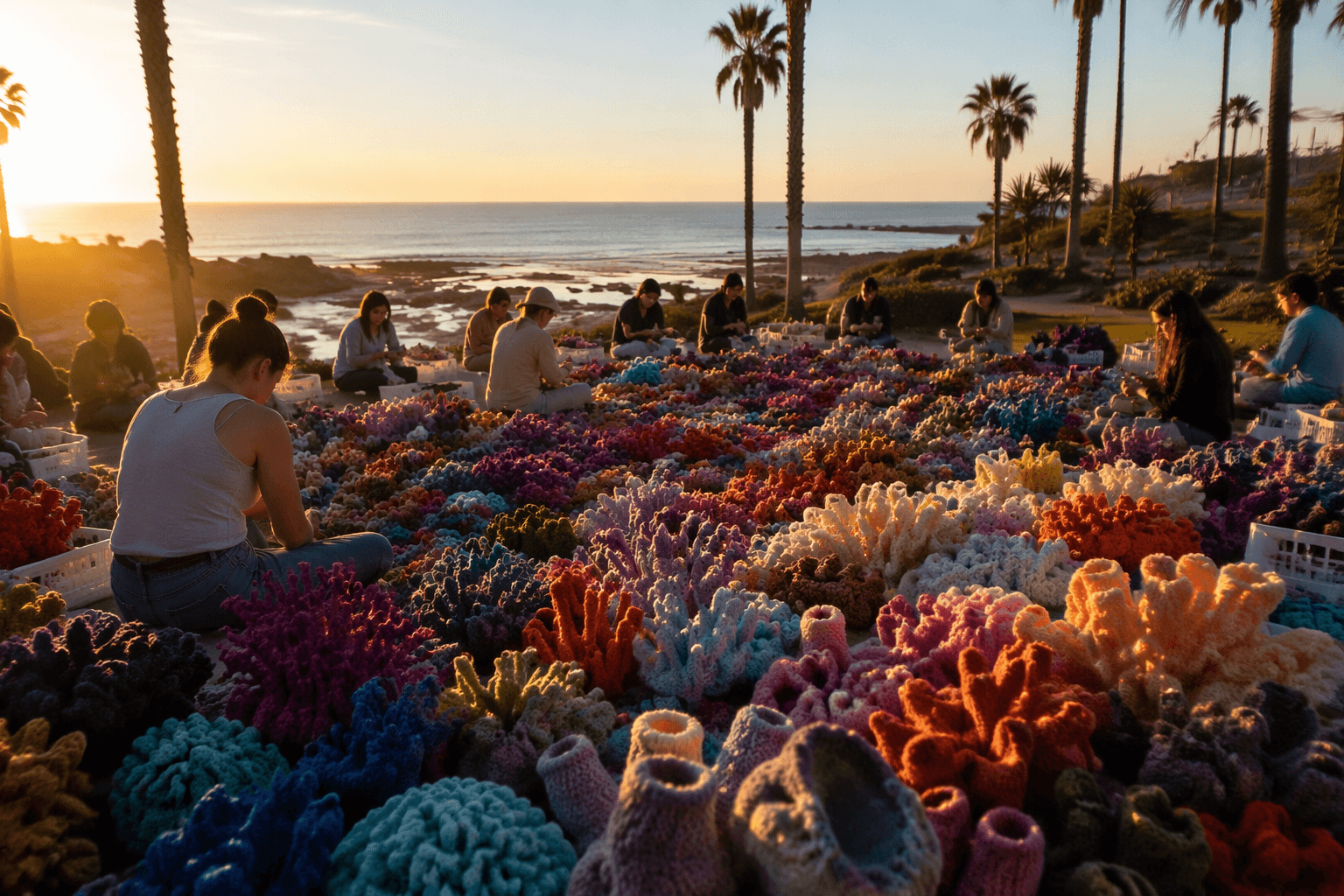
Scale is part of what makes the project stand out in fiber art. More than 800 people have contributed pieces, turning the reef into a communal work rather than a single-author installation. For crocheters, that opens up a different model of participation: not just finishing a personal project, but adding a reef fragment to a collective body of work that can be exhibited, studied, and discussed.
The community aspect is also practical. The Institute For Figuring hosts workshops and lectures to teach hyperbolic crochet techniques and the mathematics behind the project, making the form approachable even if the geometry sounds intimidating at first. That kind of teaching setup helps explain why the reef has lasted well beyond a single exhibition cycle. It is not only something to view, but something to learn and repeat.
Why the museum context matters
The Hyperbolic Crochet Coral Reef was shown at the Smithsonian’s National Museum of Natural History in the Sant Ocean Hall Focus Gallery from October 16, 2010, to April 24, 2011. Smithsonian Ocean notes that visitors saw both the main installation and a Toxic Reef made from trash materials. The installation included plastic bags, cable ties, video tape, and plastic debris, which gave the exhibit a second layer of meaning: beauty built out of waste.
That contrast is one reason the project lands so powerfully with fiber artists. Crochet is usually associated with softness, comfort, and handmade care, but here it is used to confront environmental damage with deliberate material choices. The Toxic Reef does not simply decorate the main reef, it pushes the message further, showing how discarded plastics can stand in for damaged marine environments while still relying on the same hand-building logic that makes crochet so accessible.
The Smithsonian show was not an isolated stop. Before arriving in Washington, D.C., the project had already traveled through London, New York, and Chicago. That trail matters because it shows how readily fiber art can cross from local making circles into museum contexts without losing the intimacy of the stitch. The piece remains rooted in handwork, even when it fills a major gallery.
A reef that keeps growing
The project began in 2005, which gives its later museum presentation a long arc rather than a one-off debut. Museum of Arts and Design marked its tenth anniversary with Crochet Coral Reef: TOXIC SEAS, on view from September 15, 2016, to January 22, 2017. That continued attention shows the reef has staying power as both an art project and a teaching tool.
By 2024, The New York Times was describing the work as sometimes like an environmental version of the AIDS quilt, a comparison that fits the project’s volunteer-driven structure and collective memory. The analogy helps frame what crocheters are seeing: a living archive of individual pieces that gain force when assembled together. In that sense, the reef is not just an exhibition object, but a model for how craft communities can process crisis through shared making.
For crocheters, the project’s appeal is easy to understand. It begins with a familiar stitch habit, repeats it into an unfamiliar shape, and ends up making hyperbolic geometry tangible. From there, it expands into climate storytelling, museum-scale installation, and a shared body of work that shows how far a hook and yarn can go when the stitch itself becomes the idea.
This article was produced by Prism’s automated news system from verified source data, official records, and press releases, then run through automated quality and moderation checks before publishing. The system is built and supervised by the people who set the standards it runs under. Read our full AI policy.
Did this article answer your question?