Crochet plants bring maintenance-free greenery to desks and shelves
Crochet plants turn yarn into desk-ready greenery that never wilts, with patterns ranging from playful amigurumi pots to realistic succulents and beginner cactus makes.
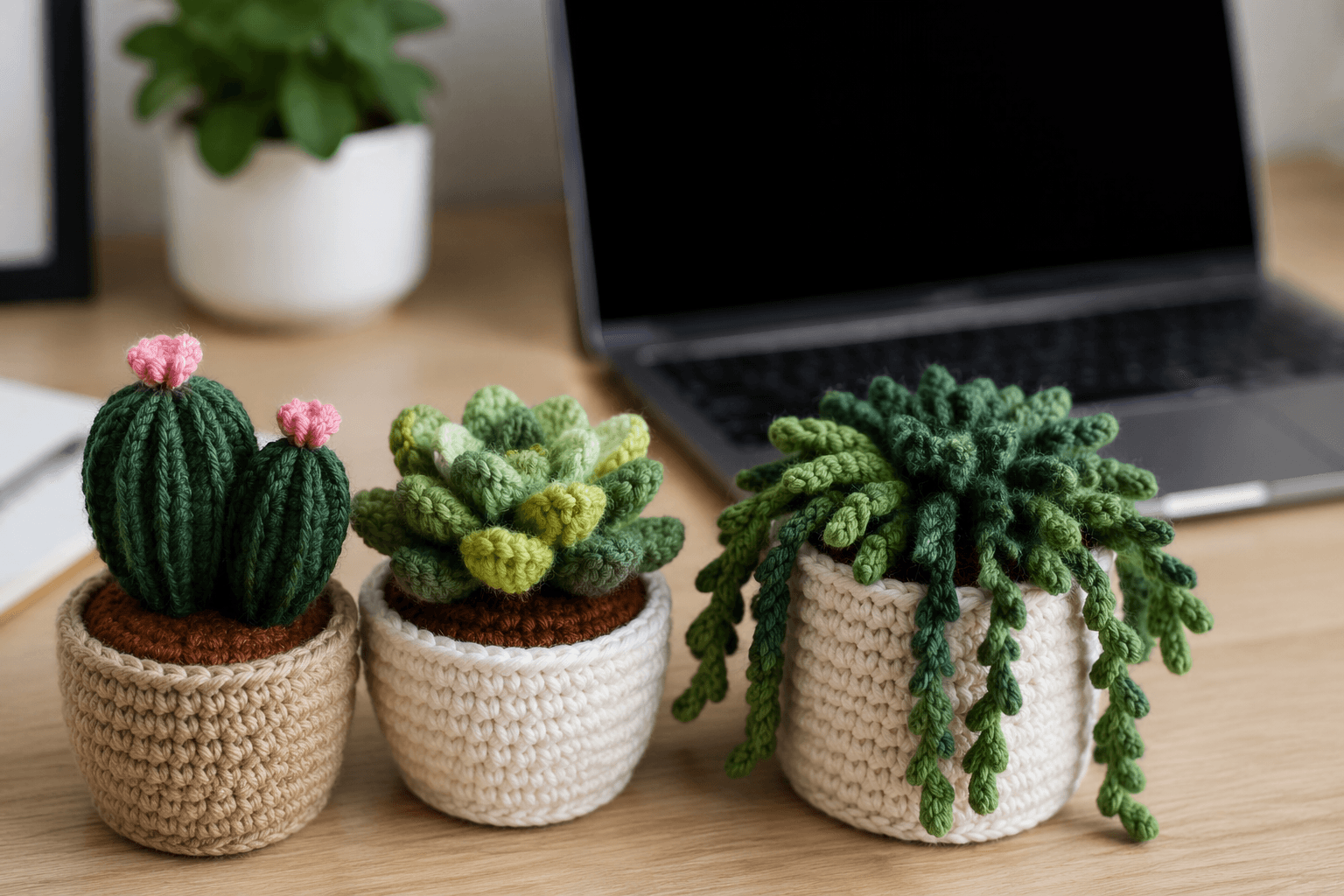
Crochet plants have found their sweet spot between decor and play. They deliver the look of greenery without watering, sunlight, or the risk of a plant fading on your shelf, and that is exactly why they keep showing up as desk pieces, shelf accents, and handmade gifts.
Why the category keeps growing
The appeal starts with the simplest promise: crochet plants never wilt, never need light, and can be made in any style, color, or scale you want. That flexibility makes the category useful for crocheters who want something decorative, something giftable, or something small and satisfying between larger projects.
It also gives makers a chance to work in the techniques that make amigurumi so rewarding. Shaping, texture, and miniature construction all matter here, which means a crochet cactus or potted sprout can feel like a tiny study in fiber sculpture as much as a finished decor piece. For anyone who likes the idea of permanent greenery without maintenance, the finished object is only half the fun.
The 1001Patterns roundup leans playful and shelf-friendly
1001Patterns published its 19 Free Crochet Plant Patterns for Cute & Zero-Care Greenery on July 2, 2026, and the mix makes the point quickly. These are not just abstract plant ideas, but small objects built for desks, shelves, and gift bags, with the roundup framing them as charming room accents that bring in color without adding work.
The collection moves through several distinct looks:
- Mini Sprout Buddy, a small plant in a smiling white pot with two leaves
- A cactus in a bright orange pot with a flower
- A Marimo Terrarium pattern with three tiny crochet balls
- Barrel Cactus Cutie topped with a colorful bloom
That range matters because it shows how broad crochet greenery can be. Some pieces lean whimsical, some lean more realistic, and some sit right in the middle, but all of them use the same basic draw for makers: a low-maintenance object with personality that can be scaled up or down to suit a desk, bookshelf, or windowsill.
Beginner cactus patterns make the idea easy to try
The category is not reserved for advanced shape work. Ravelry listings make clear that even cactus projects can be approachable, with one Cactus Amigurumi pattern labeled beginner skill level, using a 3.5 mm hook and including a small pot and materials list.
Another beginner cactus pattern, Betty the Beginner Cactus, is described as having little to no sewing, finishing at about 5 inches long, and including a full-length video tutorial. That combination gives newer crocheters a clear path into the niche without a complicated assembly process.
A third cactus pattern listed there finishes at approximately 7 inches tall and uses about 130 yards of yarn, which shows how these makes can scale from compact desk decor to a slightly larger statement piece. Together, those patterns show why cactus projects are so popular in amigurumi circles: they are cute, structured, and easier to keep tidy than a full botanical basket.
Realism, gifts, and boho decor keep the niche moving
The botanical crochet trend is wider than cacti alone. Sarah Maker published its free crochet plant, cactus, and succulent roundup on August 4, 2023, and updated it on June 11, 2024, with a simple idea that still resonates: these are ideal for anyone who loves greenery but struggles to keep plants alive. That framing gives the category a strong home-decor angle, especially for people who want something leafy on a shelf without the upkeep of a live houseplant.
Wilmade’s crochet plant roundup, updated on June 2, 2026, pushes the realism angle further, noting that some of these patterns are convincing enough to make people do a double-take. That matters in a home-decor context because not every maker wants a cartoon cactus. Some want a succulent that reads as stylish and slightly surprising at first glance, then becomes a conversation piece once visitors realize it is crocheted.
The rest of the ecosystem reflects that same flexibility. AllFreeCrochet.com describes plant-hanger patterns as fast to make and a fit for boho decor and housewarming gifts, which places crochet plants in the same orbit as other easy home-refresh projects. LoveCrafts also groups crochet flowers among its popular crochet patterns, reinforcing that botanical makes remain a visible part of what crocheters are reaching for when they want something seasonal, giftable, or visually fresh.
The niche also extends across designers and pattern brands such as Samantha Meador, Sarah Stearns, Jess Coppom, Jennifer Renaud, Wilma, Luna Crochet Designs, FarmFoodFamily, and Make & Do Crew. Their presence in the same corner of the craft world shows how broad the plant theme has become, from practical no-sew pieces to more sculpted, realistic takes.
That is the real strength of crochet plants: they turn leftover green, brown, and floral yarn into permanent decor with a little attitude. Whether the goal is a smiling mini sprout on a desk, a realistic succulent for a shelf, or a fast gift for someone who has never kept a real plant alive, the appeal is the same, and it fits neatly into the handmade spaces crocheters are already making their own.
This article was produced by Prism’s automated news system from verified source data, official records, and press releases, then run through automated quality and moderation checks before publishing. The system is built and supervised by the people who set the standards it runs under. Read our full AI policy.
Did this article answer your question?