Crochet Snail Plant Holder Pattern Turns Planters Into Amigurumi Decor
A plain planter becomes a tiny snail scene in this three-part amigurumi build. It is part decor, part crochet project, and fully shelf-ready.
A planter that becomes a scene
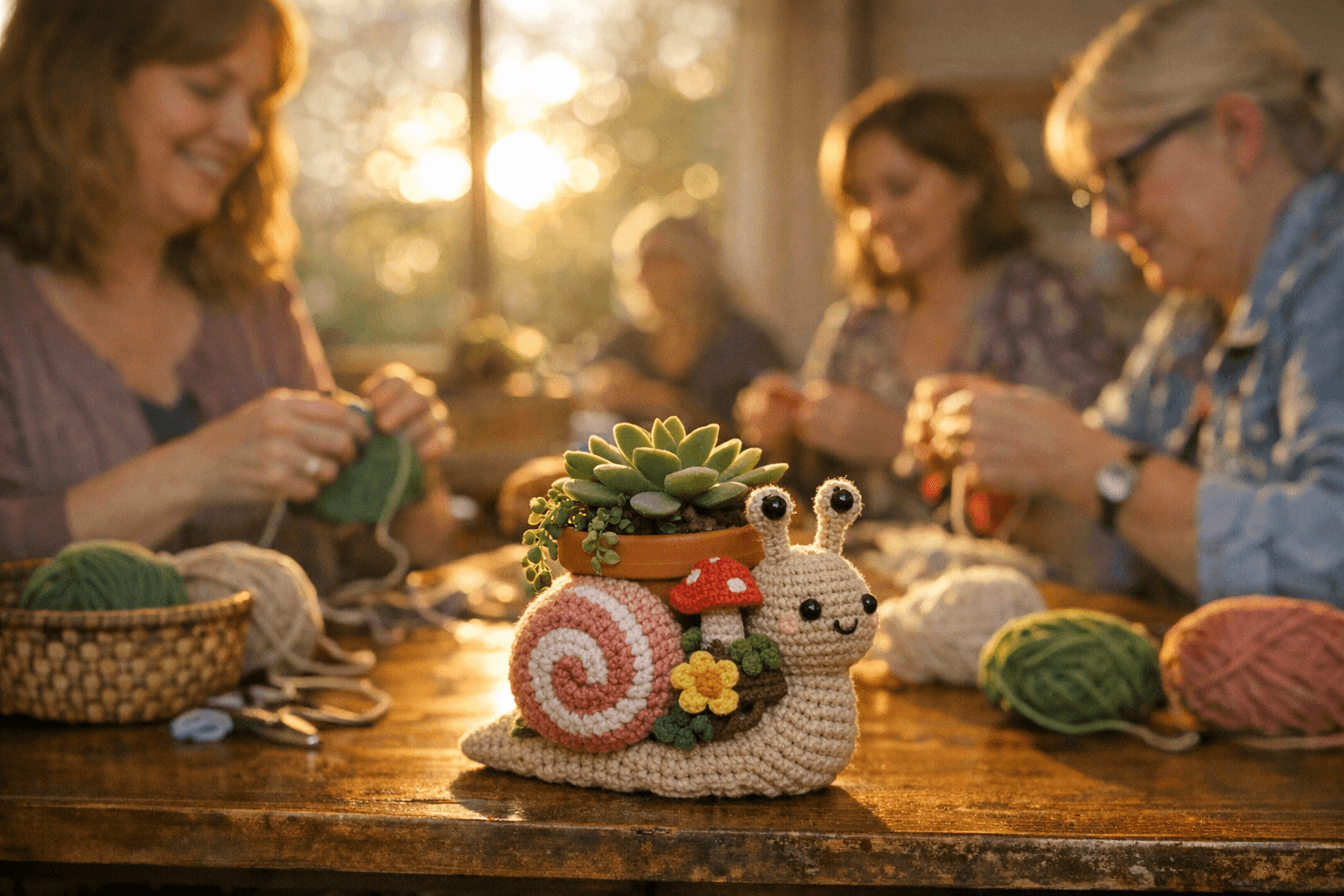
The real appeal of this snail pattern is not just the snail itself, but the way it transforms an ordinary houseplant into a three-part display. Instead of a separate plush sitting nearby, the pot cover, snail, and shells work together as one themed object, so the planter reads like a finished little set piece.
That is what gives the pattern its strongest hook. It sits right at the crossover between home decor and amigurumi, where a familiar plant becomes the base for something playful, useful, and easy to show off on a desk, shelf, or windowsill. At about 5 inches tall and 4.5 inches wide, it is small enough to live comfortably in the home but distinct enough to catch the eye immediately.
Why the design works so well
Jennifer Percival, the designer behind Crochet to Play, frames the pattern for plant lovers and brings that point of view into the project itself. She describes how she has kept plants in the house and gotten better at caring for them over time, which gives the design a lived-in feel rather than the usual novelty-only vibe.
That matters because crochet patterns built around something readers already own can feel more compelling than standalone plush releases. A snail plush is cute on its own, but a snail that stages a plant holder has a job to do, and that utility gives the project more staying power. It becomes part of the room, not just part of the yarn pile.
The snail theme also lands in a sweet spot. It is quirky without being strange, and the shape gives plenty of room for color choices in the shell and the pot cover. For makers who like home-decor pieces with personality, this one offers the kind of visual payoff that makes a project feel fresh even when the motif is familiar.
How the pattern is built
The construction is simple to understand but still clever in execution. The finished planter is crocheted in three parts: a pot cover, a snail, and shells. Those pieces are then sewn together, which is what creates the final decorative arrangement and keeps the whole project looking intentional rather than improvised.
That build gives the pattern a stronger identity than a single amigurumi figure would have. The shell detail, the pot cover, and the snail body each have their place, and the combination makes the planter feel curated. It is the kind of design that rewards neat assembly and thoughtful color choices, especially if you want the snail to read clearly at a glance.
The pattern is available as an instant download, so it fits easily into a maker’s queue. It also includes written instructions with step-by-step photos, which is a big plus for anyone who wants visual guidance while working through the shaping and assembly.
Materials that keep it approachable
One of the reasons this project feels accessible is the materials list. It uses worsted-weight yarn, G and E hooks, stuffing, safety eyes, a stitch marker, and embroidery thread or black yarn for the details. Nothing about that supply list feels obscure or overly specialized, which keeps the project in the sweet spot for everyday crocheting.
The designer also positions it as suitable for a beginning-to-intermediate crocheter. That is an important detail, because the pattern offers enough shaping to stay interesting without pushing into intimidating territory. If you already know your way around basic amigurumi construction, the project should feel manageable while still giving you a polished decorative result.
For makers who like a quick win, that balance is especially appealing. The body of the piece is compact, the components are few, and the final object has a clear purpose. It is the kind of pattern that can be finished without feeling like a massive commitment, while still producing something that looks intentional on display.
- Worsted-weight yarn keeps the build familiar and easy to source.
- G and E hooks suggest a small, controlled fabric that suits amigurumi shaping.
- Safety eyes and embroidery details give the snail its character without overcomplicating the work.
- The step-by-step photos make the PDF especially useful for visual learners.
Free post, printable PDF, and broader pattern ecosystem
Crochet to Play offers the pattern as both a free blog post and an ad-free printable PDF, which gives makers two ways in. If you want to try the project casually, the free version lowers the barrier. If you prefer a cleaner working copy, the printable PDF is there as a more polished option.
That release also fits into a broader pattern ecosystem. Crochet to Play says it offers printable versions of free patterns and premium patterns and e-books through Etsy, Ravelry, LoveCrafts, and Amigurumi.com. In other words, this snail holder is part of a larger approach to pattern sharing, not a one-off experiment.
For readers who follow crochet pattern development, that matters. It shows a designer building across multiple formats and platforms, which is increasingly common in the craft world. The project feels current because it is designed to be flexible, easy to access, and easy to make in the format that suits the crocheter best.
A niche that already has traction
The snail planter idea is not appearing out of nowhere. Ravelry already lists a 2020 Snail Planter Pot Friend by Michelle Estrada, described as beginner friendly, and a 2021 Snail Planter by Porsha Dawn Parker sized to fit a 6-inch pot. That history shows there is already an audience for snail-based plant holders in crochet decor.
Taken together, those earlier patterns and this new release point to a small but real niche: plant-themed amigurumi that doubles as decor. The format makes sense because it brings together several crochet interests at once, including cute characters, practical home display, and the satisfaction of making something that changes the look of a room.
That is why this pattern feels stronger than a simple plush launch. It stages an object people already use, adds a charming amigurumi twist, and delivers a finished piece that looks at home beside real plants. In a crowded crochet market, that mix of function, personality, and display value is exactly what makes a pattern stick.
This article was produced by Prism’s automated news system from verified source data, official records, and press releases, then run through automated quality and moderation checks before publishing. The system is built and supervised by the people who set the standards it runs under. Read our full AI policy.
Did this article answer your question?