Fibonacci-Inspired Spiral Seashell Crochet Pattern Blends Math and Beauty
A testing-only seashell pattern turns Fibonacci growth into a softer, more natural curve, and the math lesson carries beyond shells.
A seashell that grows like nature
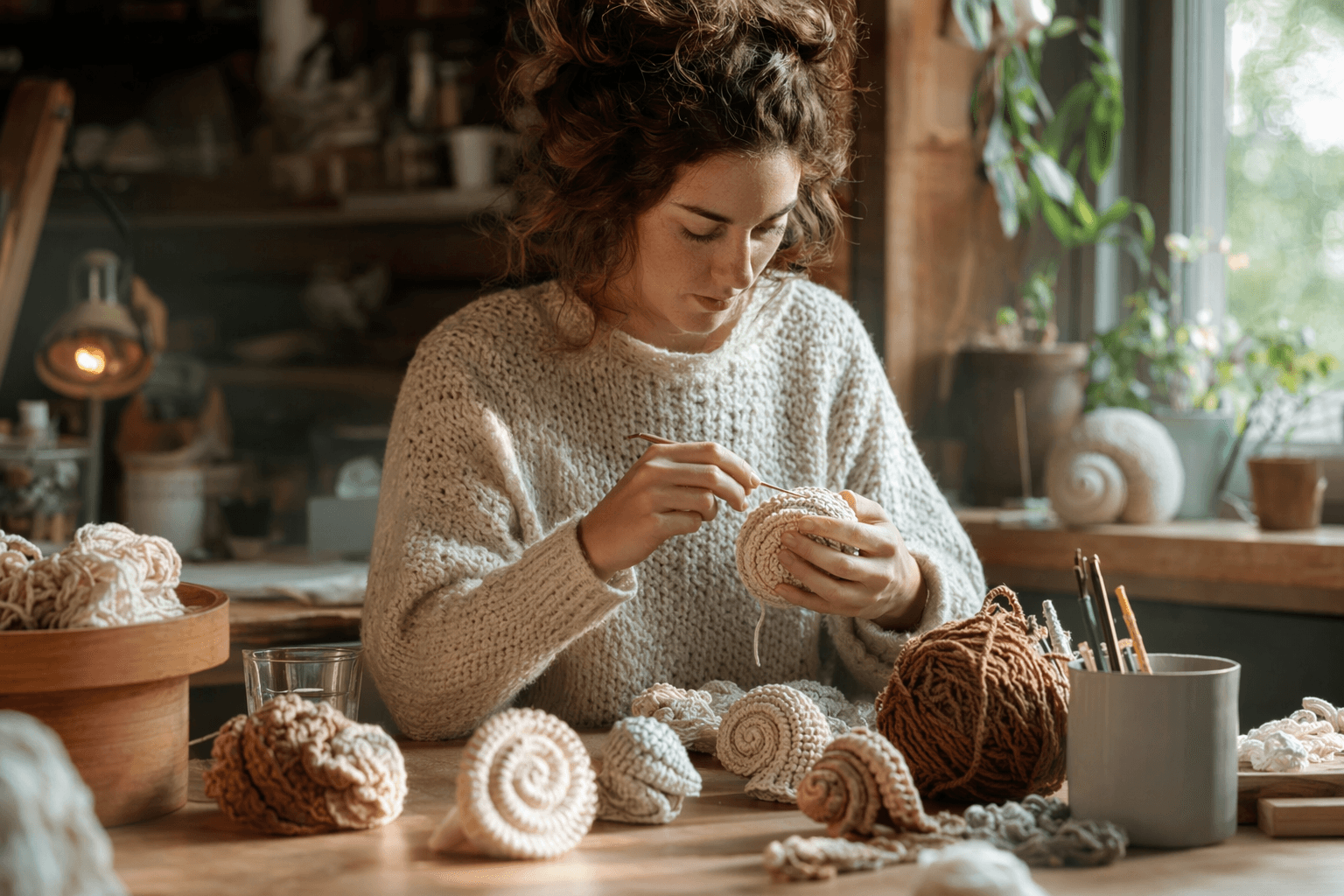
Start Crochet’s Spiral Seashell Crochet Pattern turns a decorative make into a miniature lesson in shape. Published on April 28, 2026 and still in testing, the page says the PDF version will be released once testing is complete, so this is both a pattern preview and a shaping tutorial.
How the Fibonacci sequence changes the line
Start Crochet explains the Fibonacci sequence as each number being the sum of the two before it, using 1, 1, 2, 3, 5, 8, 13, 21 as the example. Instead of increasing at a fixed rate, the shell grows by that rising pattern, and that growth makes the edge feel organic rather than mechanically round. The article notes that the example stops at 8 for the pattern demonstration, which keeps the idea approachable even before the finished PDF is out.
In a standard spiral or flat circular motif, increases usually arrive at steady intervals, so the outline stays even and predictable. Fibonacci-based shaping changes the cadence, and that shift is what gives the shell its slightly curved, more fluid profile. If you have ever watched a motif move from stiff geometry into something that feels alive, this is the kind of stitch planning that makes it happen.
Why shells are the perfect match
The appeal is not just aesthetic. According to the University of Oxford, seashells are well modeled by logarithmic spirals, and shell shapes have long appeared as art forms, jewelry, currency, musical instruments, and even bathroom sinks. That broad cultural footprint helps explain why a crochet shell can feel instantly recognizable even when it is built from a math rule.
Oxford’s shell research also treats shells as scientific records, valuable for studying development, pattern formation, evolutionary processes, and biomineralization. Taken together, shells tell a 540 million year-long story of mollusks, which gives a small crochet motif unexpected depth. The spiral itself was called spira mirabilis, the miraculous spiral, by Jacob Bernoulli, a name that still fits the way these forms balance order and surprise.
A beginner-friendly pattern with room to grow
Start Crochet places the shell in its beginner-friendly crochet pattern index, and that is part of why the page already feels useful even without the finished PDF. It is framed as a decorative seashell crochet pattern for beginners, but it also works as a tiny study in shaping, so you can use it as a standalone motif, an educational demonstration, or an accent in something larger.
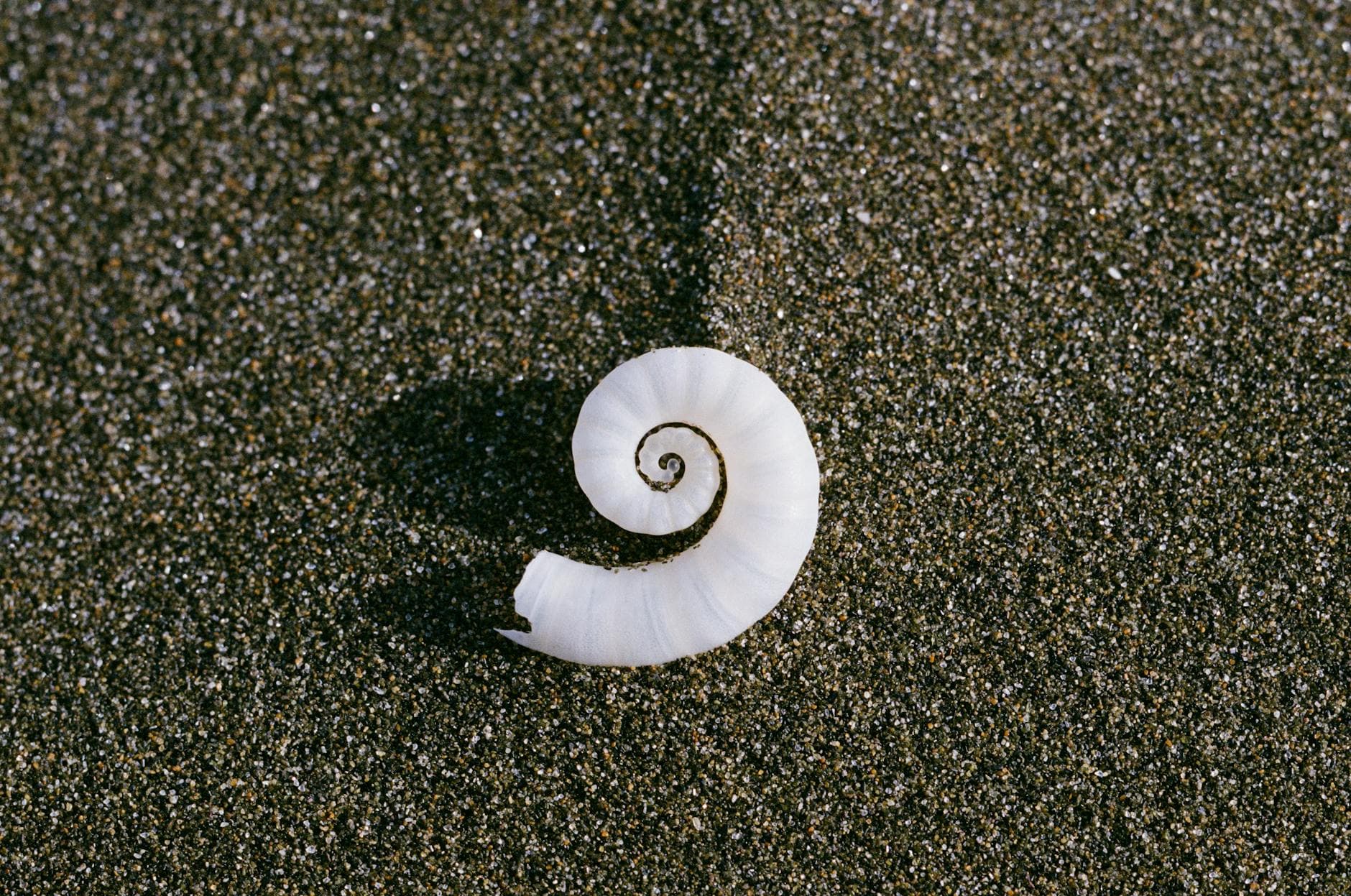
That accessibility matters because the technique is the story here. You are not just making a shell, you are learning how a growth pattern controls curvature, and that lesson transfers cleanly to sculptural crochet. Once you understand how the increases drive the line, you can reuse the same logic in petals, ridges, curled leaves, or any project that needs a form to feel assembled rather than stamped out.
A familiar idea with a long creative history
The Fibonacci connection has deep roots. Leonardo Pisano Bigollo, known as Fibonacci, published Liber Abaci in 1202 and helped introduce the sequence to the West. Since then, the numbers have become a shorthand for natural growth, and fiber artists have already used them as a design tool.
Interweave showed that in 2018 with a crochet piece on Fibonacci color striping, and its article points out that Fibonacci numbers appear in nature in leaves, flower petals, seashells, and honeybee family trees. That broader context matters because it places this shell pattern inside a real crochet tradition, not just a clever one-off. The numbers are not there as decoration, they are there as structure.
What you can take from the shaping
The useful takeaway is simple: when you want a crochet object to read as organic, let the increases follow a growth pattern instead of a rigid rhythm. Fibonacci-style shaping can soften a silhouette, make a curve feel more natural, and help a small motif suggest the larger logic of shells and flowers.
- Use the idea for sculptural motifs that need a gentle swell rather than a perfect circle.
- Try it in accent pieces where the shape itself is the feature.
- Borrow the sequence for color work too, since the same math has already proven useful in striping.
Start Crochet’s seashell is still awaiting its final PDF, but the lesson is already complete: a few numbers can turn a simple crochet motif into something that looks like it grew that way all along.
This article was produced by Prism’s automated news system from verified source data, official records, and press releases, then run through automated quality and moderation checks before publishing. The system is built and supervised by the people who set the standards it runs under. Read our full AI policy.
Did this article answer your question?