Mangaluru Woman Turns Accident Recovery Into Thriving Crochet Business
Bedridden for nearly a year after a 2016 spinal cord injury, Poornima K's Crochet on Wheels found its breakthrough product in 14-inch amigurumi figurines of Lord Krishna and Lord Ram.
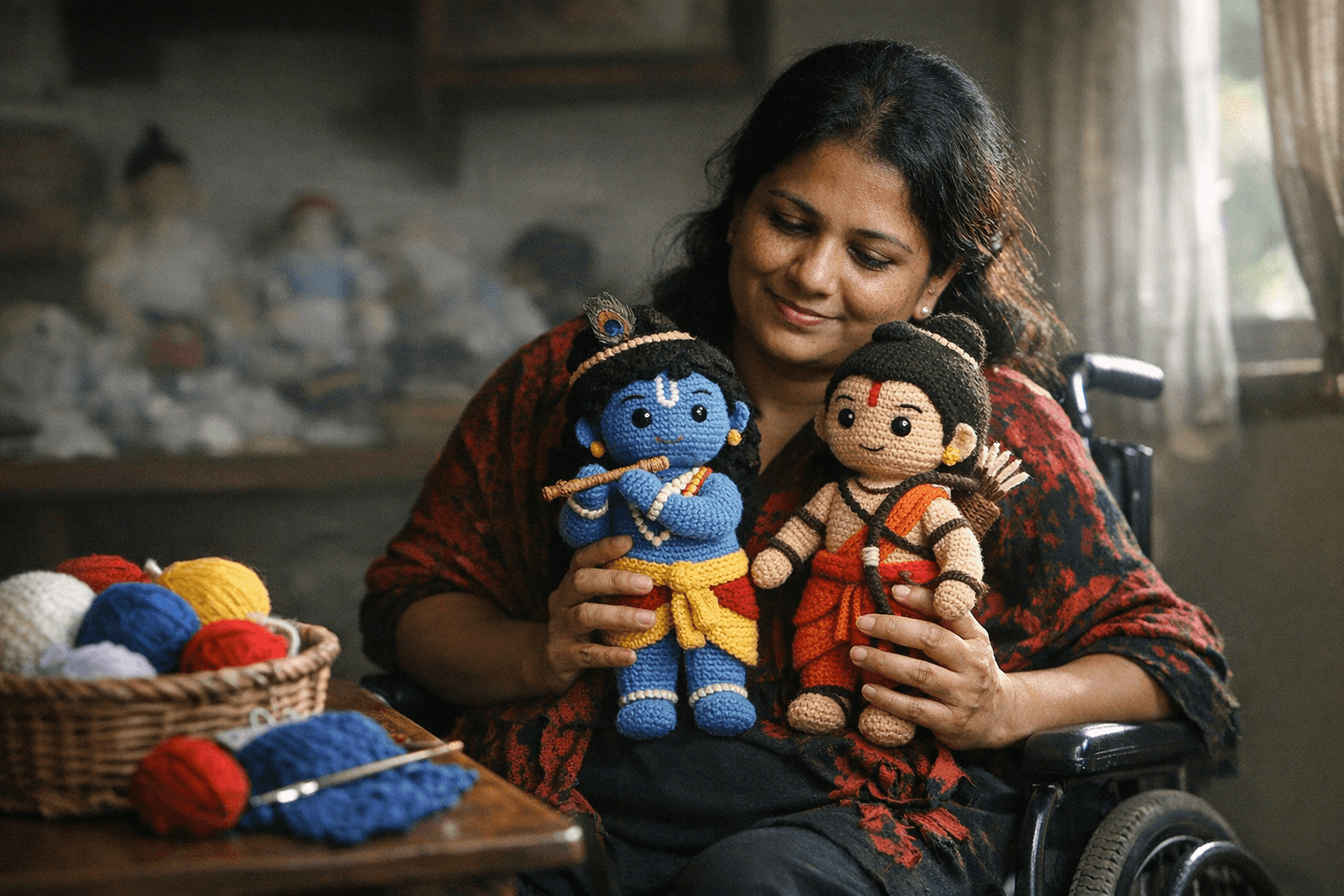
The product that turned Poornima K's recovery practice into a functioning business was not the earrings, the coasters, or even the children's wear. It was a 14-inch crocheted Lord Krishna.
Poornima, a resident of Perabe in Dakshina Kannada district, was in a car-truck collision near Nelamangala in 2016 while traveling from Mangaluru to Bengaluru. The crash left her with a severe spinal cord injury that confined her to bed for nearly a year. Depression and limited mobility followed throughout her recovery.
She picked up crochet as a therapeutic outlet. Poornima had held basic knowledge of the craft before the accident; during her extended bed rest, she turned to online tutorials to sharpen her technique. The structured, repeatable rhythm of working through rounds gave her something to improve upon during months when physical progress was slow and measurable gains were otherwise scarce.
By 2021, that practice had a name: Crochet on Wheels. Her early product selection followed the natural path of a building crafter, starting with simple wearable items before expanding into earrings, coasters, and children's toys. The full pivot came when she moved into amigurumi, the Japanese technique of constructing small three-dimensional stuffed figures from tightly worked crocheted rounds.
"I realised amigurumi had great demand. My figurines became instant hits," Poornima said. Her 14-inch figurines of Lord Krishna and Lord Ram drew steady orders and earned her a reputation distinct from the broader handmade accessories market. Crochet on Wheels now carries a range that spans divine dolls, decorative items, sweaters, and children's wear.
The business arc is instructive: Poornima did not launch with a full catalog. She started small, watched what customers responded to, and concentrated her energy there. The amigurumi line was not a planned differentiation strategy. It was market feedback acted upon.
FIVE THINGS TO DO THIS WEEK IF YOU WANT TO SELL
Photograph your three strongest pieces in natural light before creating any listing; a clean, uncluttered background does more for perceived value than any filter. Choose one sales channel and give it a full 30 days before opening another. Produce a small batch of five to ten units of your single best item before diversifying your range. Track one metric each week: saves or direct inquiries on that listing, not follower counts. Let that number, not personal preference, decide what you make next. Poornima's amigurumi breakthrough was customer-directed, not catalog-planned, and that is precisely why it held.
This article was produced by Prism’s automated news system from verified source data, official records, and press releases, then run through automated quality and moderation checks before publishing. The system is built and supervised by the people who set the standards it runs under. Read our full AI policy.
Know something we missed? Have a correction or additional information?
Submit a Tip