Moss stitch projects turn leftover yarn into cozy crochet favorites
Moss stitch turns single crochet and chain repeats into polished fabric, making leftover yarn useful for blankets, scarves, cowls, and cozy gifts.
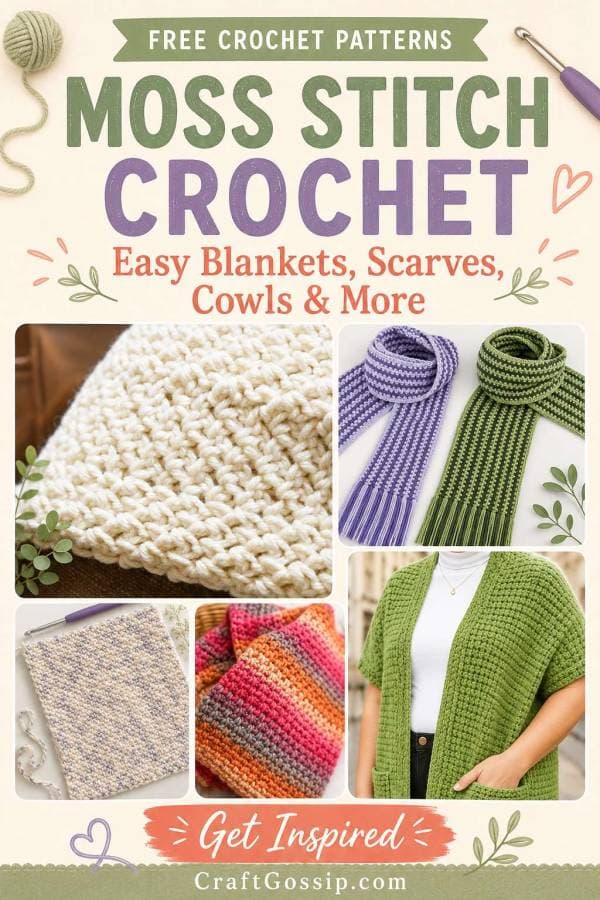
Moss stitch has a way of making the humblest yarn look intentional. In CraftGossip’s July 3, 2026 roundup, Shellie Wilson frames it as a quiet favorite: simple to memorize, woven-looking in the finished fabric, and especially friendly when you want a relaxing project instead of a fussy one. That combination is why crocheters keep reaching for it when they want something polished without giving up the rhythm of a repeat.
Why moss stitch keeps winning over crocheters
The stitch shows up under more than one name, and that matters when you are scanning patterns or comparing notes with other makers. Moss stitch is also commonly called granite stitch, linen stitch, or woven stitch, but the structure stays the same: a repeat of chain stitches and single crochet stitches. Once you know that, the texture becomes easy to spot, whether it appears in a blanket, a cowl, or a pair of mittens.
That easy repeat is also what makes the stitch so useful for everyday crocheting. It gives fabric enough movement and texture to feel finished, but it does not demand the kind of constant stitch counting that can make a project feel like homework. Wilson’s roundup leans into that balance, showing moss stitch as the kind of workhorse texture crocheters return to when they want visual interest without drama.
Built from the basics you already know
Moss stitch is not complicated to learn because it is built from two of the first motions most crocheters practice: chain stitch and single crochet. The Craft Yarn Council’s beginner single crochet lesson underlines how far those basics can go, noting that single crochet practice can already become scarves, hats, pillows, bags, and other useful pieces. That same foundation is exactly why moss stitch feels so approachable. If you can chain and single crochet, you already have the building blocks.
The Craft Yarn Council also connects those first stitches to something bigger. Its beginner block lesson uses a 7-inch by 9-inch practice piece and links that exercise to Warm Up America!, the organization that joins blocks into afghans for people in need. That gives moss stitch a broader context than pretty fabric alone. A stitch sequence that begins as a small practice square can scale up into a blanket with a purpose.
Blankets are where the texture really settles in
The roundup points toward several blanket formats because moss stitch behaves especially well at larger scale. Yarnspirations’ Moss Stitch Blanket, published in July 2023, is a free beginner-friendly throw worked in alternating single crochet and chain stitches. It measures about 50 inches by 60 inches, excluding fringe, which makes it a practical sofa blanket size rather than a tiny sampler.
Daisy Farm Crafts’ Modern Moss Stitch Blanket, published in 2019, shows another side of the stitch: drape. The pattern notes that the base chain should be even and about 2 inches longer than the desired width because the first row shrinks, a useful reminder for anyone planning a blanket that needs to land at a specific size. That small adjustment tells you a lot about the stitch itself. Moss stitch settles in after the first row, which is part of why it looks so tidy once it is worked up.
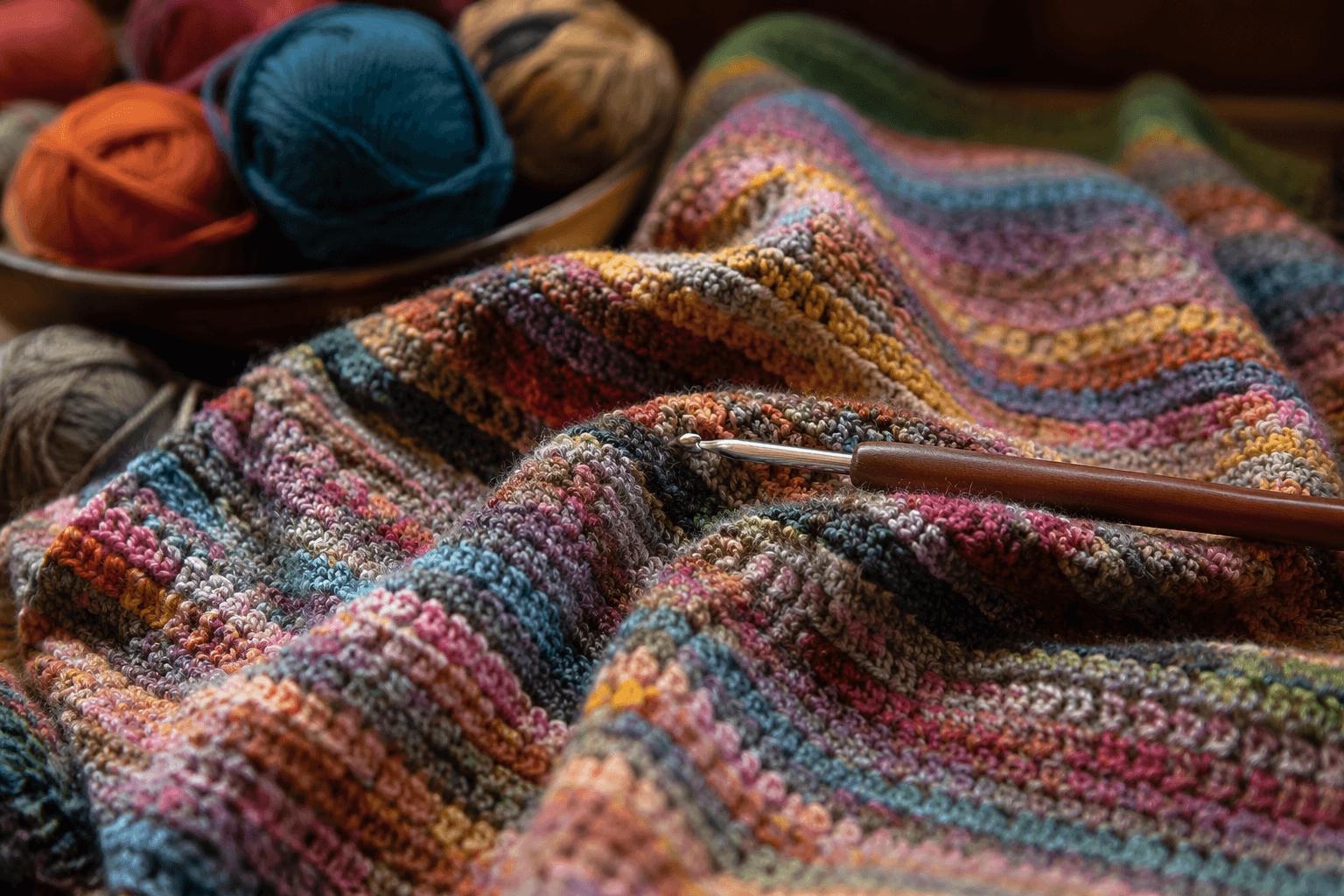
CraftGossip’s September 8, 2021 feature, Moss Stitch in a Square Blanket, takes the texture in a different direction by working from the center outward. The piece is written in English U.S. terminology, which helps when a crocheter wants a square-format project with the same calm rhythm. Between the center-out construction and the familiar repeat, the stitch proves it can handle more than one blanket geometry without losing its appeal.
Small accessories show how adaptable it really is
The CraftGossip roundup does not stop at throws. It also points readers toward scarves, cowls, and mittens, and those categories make sense once you look at how moss stitch behaves in wearable projects. The fabric reads as textured and thoughtful without becoming bulky or overly ornate, which is exactly what you want in pieces that sit close to the neck or hands.
CraftGossip’s 2019 Moss Stitch Mittens post makes that practical side even clearer. The mittens are described as easy to put together and finished with decorative ribbed cuffs, a combination that keeps the project approachable while still giving it a polished edge. In a mitten, moss stitch does not need to compete with a complicated shape. It just needs to add cozy structure, and it does that well.
Scarves and cowls benefit from the same quality. The stitch creates a steady, even look that turns a simple shape into something that feels designed rather than improvised. That is part of the appeal for makers who like projects with a clear rhythm: once the repeat is set, the texture does the work.
Why leftover yarn fits moss stitch so well
Wilson’s roundup also makes a practical case for moss stitch as a stash-buster. Those odd balls and leftover skeins that never seem to match anything else can suddenly become useful once they are put into this repeat. Because the texture depends more on the structure of the stitch than on elaborate patterning, it can carry small yarn changes without losing its identity.
That is a useful trait for crocheters who want to turn scraps into something that looks coordinated. A moss stitch blanket can absorb leftover yarn and still read as one cohesive piece, especially when the colors are chosen with a little intention. The same is true for cowls, scarves, and mittens: the stitch gives the yarn a frame.
The real strength of moss stitch is that it lives comfortably between plain fabric and showy stitchwork. It is easy enough to memorize, flexible enough for blankets and accessories, and sturdy enough to make leftover yarn feel like a plan instead of a compromise. That is why the odd balls keep finding their way back to moss stitch, where they settle into cozy, useful fabric and stop looking like leftovers at all.
This article was produced by Prism’s automated news system from verified source data, official records, and press releases, then run through automated quality and moderation checks before publishing. The system is built and supervised by the people who set the standards it runs under. Read our full AI policy.
Did this article answer your question?