Quick Crochet Scrubbie Dish Cloth Blends Cotton and Nylon Scrubbing Power
Cotton outside and nylon inside give this scrubbie dish cloth real cleaning bite, making it a fast, low-cost kitchen make you will actually use.
A dish cloth that scrubs like it means it
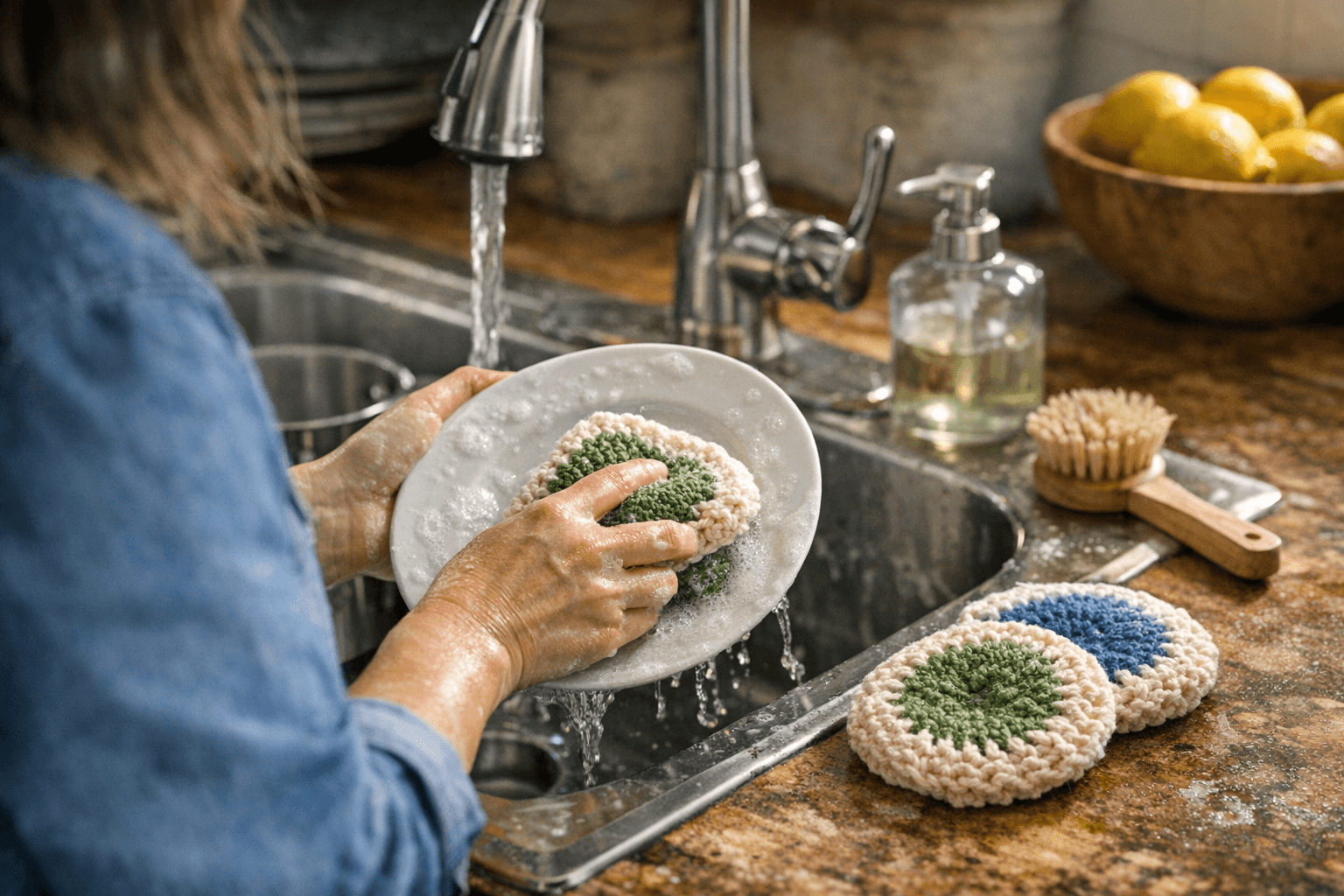
A standard crochet dishcloth can wipe a counter, but this one is built to do more than mop up spills. The cotton-and-nylon construction gives it the feel of a cloth and the bite of a scrubber, which means it can handle everyday washing-up without being relegated to the back of a drawer. That matters in a real kitchen, where the best handmade tools are the ones that replace something disposable and earn their keep from the first use.
Shellie Wilson’s CraftGossip review spotlights exactly that kind of project: a small, practical make that is easy to finish, low on yarn commitment, and useful the moment it leaves the hook. Instead of being decorative for decoration’s sake, the scrubbie dish cloth is designed for daily jobs. It is the kind of pattern that makes sense if you want a quick win, a cleaner sink area, and a handmade replacement for the plastic-based scrubbers that so often get tossed after a short life.
Why the cotton-plus-nylon build works
The appeal here is not just that the project is cute or clever. It is that the construction solves a kitchen problem in a very simple way. Cotton brings the absorbency and familiar feel of a dishcloth, while the nylon scrubbie center adds texture that helps lift stuck-on grime. Together, they create a tool that can wipe, scrub, and rinse without asking you to choose between softness and cleaning power.
That combination is what makes this pattern stand out among more decorative crochet releases. A lot of kitchen crochet looks lovely on a hook and still ends up underused. This one has a direct payoff: it can sit by the sink, handle dishes and counters, and replace a disposable scrubber with something reusable. For crocheters who like projects that actually slot into daily routines, that is the difference between a nice idea and a pattern worth queueing right away.
What you need to make it
CraftBits keeps the material list refreshingly straightforward. The project calls for crochet cotton, a size G hook, and a nylon scrubbie, and it describes the make as an easy crochet pattern. That matters because practical projects can still feel fussy if the setup is complicated. Here, the material list is lean enough that the barrier to starting stays low.
- Crochet cotton
- Size G hook
- Nylon scrubbie
That short list also makes the pattern friendly to stash-busting. If you have cotton leftovers that are too small for a larger project, this is the kind of make that lets those scraps do useful work. The result feels efficient in a way crocheters tend to appreciate: a quick project, modest materials, and a finished object that goes straight into circulation instead of waiting for a special occasion.
Why scrubbies keep showing up in crochet roundups
This is not just a one-off novelty. Simply Collectible Crochet has described scrubbies as easy, quick, and functional projects, and that is exactly the lane this dish cloth occupies. Dishcloths and dish scrubbies have become steady favorites because they combine short make time with a clear purpose. You can finish one without committing to a long weekend of work, and you know precisely where it belongs once it is done.
That practical bent also explains why these projects tend to feel satisfying even when they are simple. A scrubbie is never just a shape experiment or a texture exercise. It solves a familiar household chore, and it does so in a way that feels a little more thoughtful than grabbing another throwaway sponge. For makers who prefer visible usefulness over shelf décor, that is a strong draw.
A small step toward a lower-waste kitchen
The sustainability angle is part of the story too. Wild & Stone notes that dishcloths made from natural fibres such as cotton or cellulose offer a lower-waste alternative to traditional sponges, and that they are biodegradable and compostable at the end of life. That gives a handmade cotton-based kitchen tool a bigger appeal than simple practicality alone. It is not just reusable; it is also aligned with a lower-waste approach to everyday cleaning.
Apartment Therapy adds another useful layer here: washable dishcloths can be tossed in the washing machine, and washing them with whites makes a hot-water, bleach-friendly cycle possible when needed. In other words, the logic of a handmade kitchen cloth is not abstract. It is easy to care for, easy to refresh, and built for repeat use. That repeatability is exactly what makes a crochet scrubbie feel like a smart household swap rather than a sentimental craft object.
Why this pattern belongs in your queue
The best thing about this scrubbie dish cloth is how little it asks of you and how much it gives back. It is compact, easy, and made from materials that do a real job in the kitchen. It finishes quickly, uses a small amount of cotton, and turns a simple crochet session into something that can live next to the sink and stay useful for a long time.
It also hits a sweet spot that a lot of crocheters are looking for right now: low-pressure, low-cost, and immediately practical. You get the satisfaction of making something by hand, but you also get the everyday benefit of replacing a disposable scrubber with a reusable tool that can wash, scrub, and keep working. In a craft landscape full of pretty projects, this one stands out because it is the one most likely to become part of the daily routine.
This article was produced by Prism’s automated news system from verified source data, official records, and press releases, then run through automated quality and moderation checks before publishing. The system is built and supervised by the people who set the standards it runs under. Read our full AI policy.
Did this article answer your question?