Singapore Teens Embrace Crocheting, Turning Craft Into Therapy and Community
Singapore’s teen crocheters are turning quick makes, plush textures and online community into a stress-relief habit with real staying power.
Beyond the granny stereotype
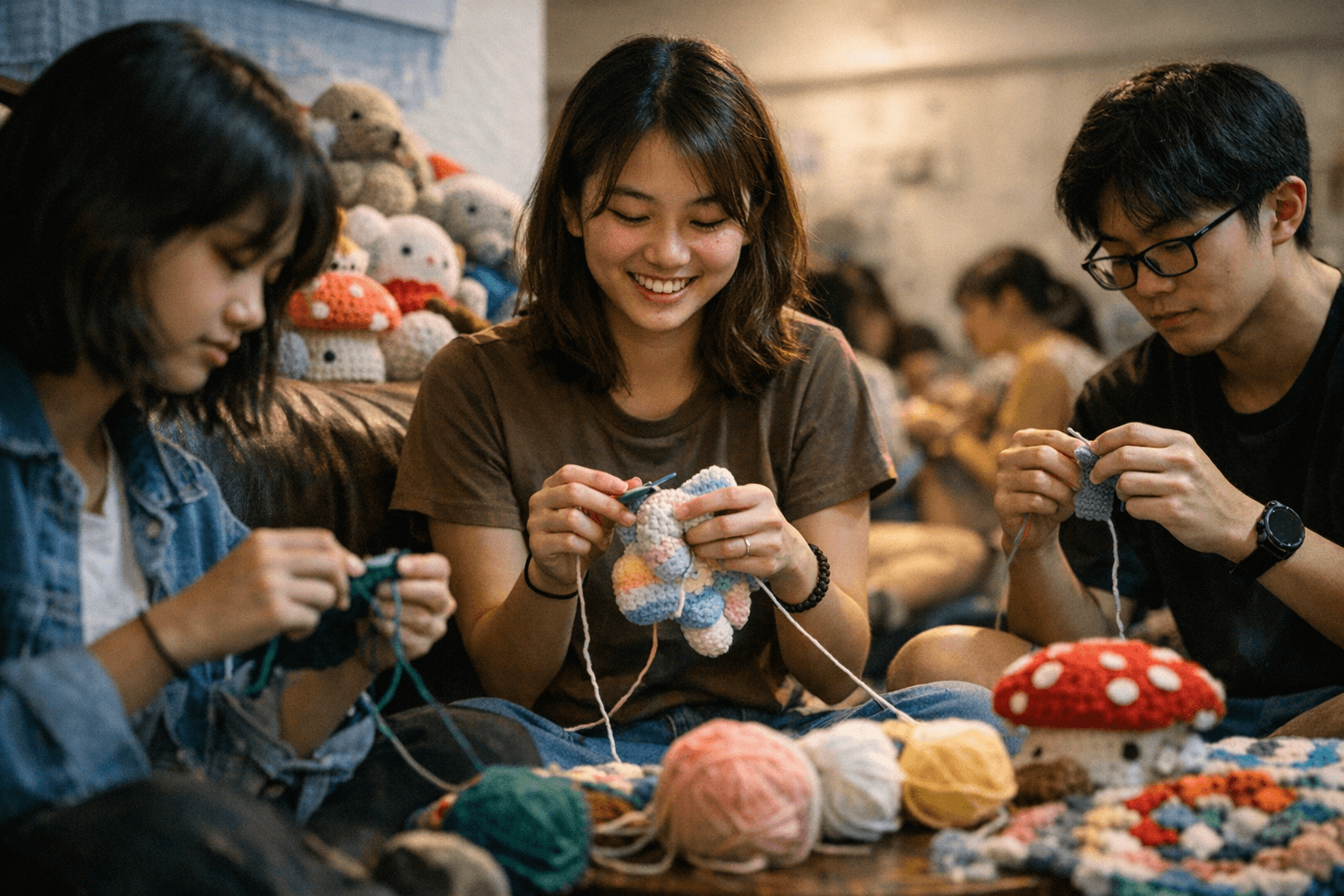
Crochet in Singapore is getting a full Gen Z reset. What once read as an old-fashioned pastime now shows up as plushies, Miffy dolls, mini skirts, crop tops, bags and other pieces that feel more street-ready than sentimental. The appeal is not just that the craft looks current, but that it gives teens something tangible to make, wear, gift and post.
That shift matters because crochet is offering more than a cute aesthetic. It is becoming a way to slow down, claim a social identity and build a circle around a shared skill, all while producing objects that fit neatly into today’s handmade-meets-fashion moment.
How teens found the hook
A lot of Singapore’s young crocheters came to the craft during Covid-19, when lockdowns and home-based learning left more room for DIY hobbies. Some kept going long after restrictions eased, which is part of why this feels less like a passing fad and more like a habit that stuck.
Take 18-year-old Soo Qian Rong, who learned from YouTube videos about two years ago. She now makes custom plushies and Miffy dolls as gifts, a very modern crochet entry point that blends beginner-friendly learning with highly shareable results. Nineteen-year-old Angela Liu Yik has been crocheting for around seven to eight years, since Secondary 1, and says following patterns is therapeutic, which captures exactly why the craft is resonating with teens who want something calming but still creative.
The learning curve helps too. Crochet is easy to pick up through free online tutorials, and the process rewards small wins early, whether that is a granny square, a tiny stuffed figure or a simple accessory. That low barrier is part of the draw for younger makers who want a hobby that feels achievable, not intimidating.
Crochet as a pressure valve
The emotional pull is backed by hard numbers. In a 2020 international survey by University of Wollongong researchers Pippa Burns and Rosemary Van Der Meer, crochet got 8,391 valid responses from people in 87 countries. The most common reasons people gave were creativity, at 82.1 percent, relaxation, at 78.5 percent, and a sense of accomplishment, at 75.2 percent.
That mix lands especially well in Singapore’s youth mental health context. The Institute of Mental Health’s National Youth Mental Health Study, released in September 2024, found that about 30.6 percent of Singapore residents aged 15 to 35 reported severe or extremely severe symptoms of depression, anxiety and/or stress. Against that backdrop, crochet fits neatly into the kind of low-cost, screen-light coping outlet many young people are searching for.
It also makes emotional sense. Crochet gives the hands something repetitive to do, the mind something to track, and the body a rhythm that feels different from scrolling or gaming. For teens managing school pressure, social expectations and constant digital noise, that can be a surprisingly effective reset.
The new crochet look is built for social media
Part of crochet’s teen appeal is that it now looks like fashion, not just craft. Younger Singaporeans are making pieces that line up with the wider slow-fashion conversation, choosing trendier projects such as mini skirts, crop tops, plushies, bags and clothes instead of only shawls or vintage-style items. The result is a craft that can signal taste as clearly as technique.
That visual edge travels well online, where handmade uniqueness is a major currency. A 2023 Singapore feature said crochet popularity had “skyrocketed” since the pandemic, driven by cosier clothing and the appeal of pieces that feel personal rather than mass-produced. In that same climate, Singapore crochet creator Hayley Sim had more than 27,000 Instagram followers by June 2022 and had sold a crochet bag for S$333, proof that handmade work can carry both cultural value and real market value.
The platform effect matters because crochet is highly postable. A finished plushie, bag or top reads quickly in a feed, and the making process itself offers plenty of satisfying visual moments. For a generation that lives online, crochet is one of the rare hobbies where the process and the outcome both perform well.
Why crochet feels more versatile than knitting
One reason crochet is winning over young makers is structure. The craft is more versatile than knitting for 3D shapes, which makes it especially suited to the kinds of objects teens actually want to make now: plushies, bags and clothes with shape, texture and personality. That flexibility helps explain why the trend keeps reaching into different corners of youth style.
It also changes what counts as a “starter project.” A beginner is not boxed into a scarf or blanket. A first project might be a tiny stuffed toy, a simple bag, a doll accessory or a small wearable that feels immediately useful or giftable. That broader utility is a big part of why crochet has become so sticky for younger makers.
A community that survived the pandemic
The social side is just as important as the craft itself. Jassandra Nay, who owns Memo’s Art House, says crochet had little presence in Singapore 12 years ago, but Covid-19 helped popularize it and create a lasting community of “pandemic crocheters.” That phrase captures something important: this is not only a revival, but a new local culture built by people who found the craft together at the same time.
Once a hobby becomes communal, it changes shape. Patterns get shared, finished pieces get traded online, and inspiration starts circulating between makers instead of flowing in from one direction. Crochet becomes less about solitary making and more about belonging, which is exactly why it has kept momentum after the lockdown years.
Singapore’s teen crochet scene now sits at the intersection of therapy, fashion and friendship. It is cheap enough to start, flexible enough to evolve and visual enough to live online, which makes it feel less like a throwback and more like a practical craft language for Gen Z.
This article was produced by Prism’s automated news system from verified source data, official records, and press releases, then run through automated quality and moderation checks before publishing. The system is built and supervised by the people who set the standards it runs under. Read our full AI policy.
Did this article answer your question?