Colton Engelbrecht Pulls 520-Kilogram Sumo Deadlift at Siberian Power Show
Engelbrecht's 520-kg sumo pull is more than double the deadlift that won the CrossFit Games Total event, and the straps on the bar have ignited a bigger debate than the number itself.
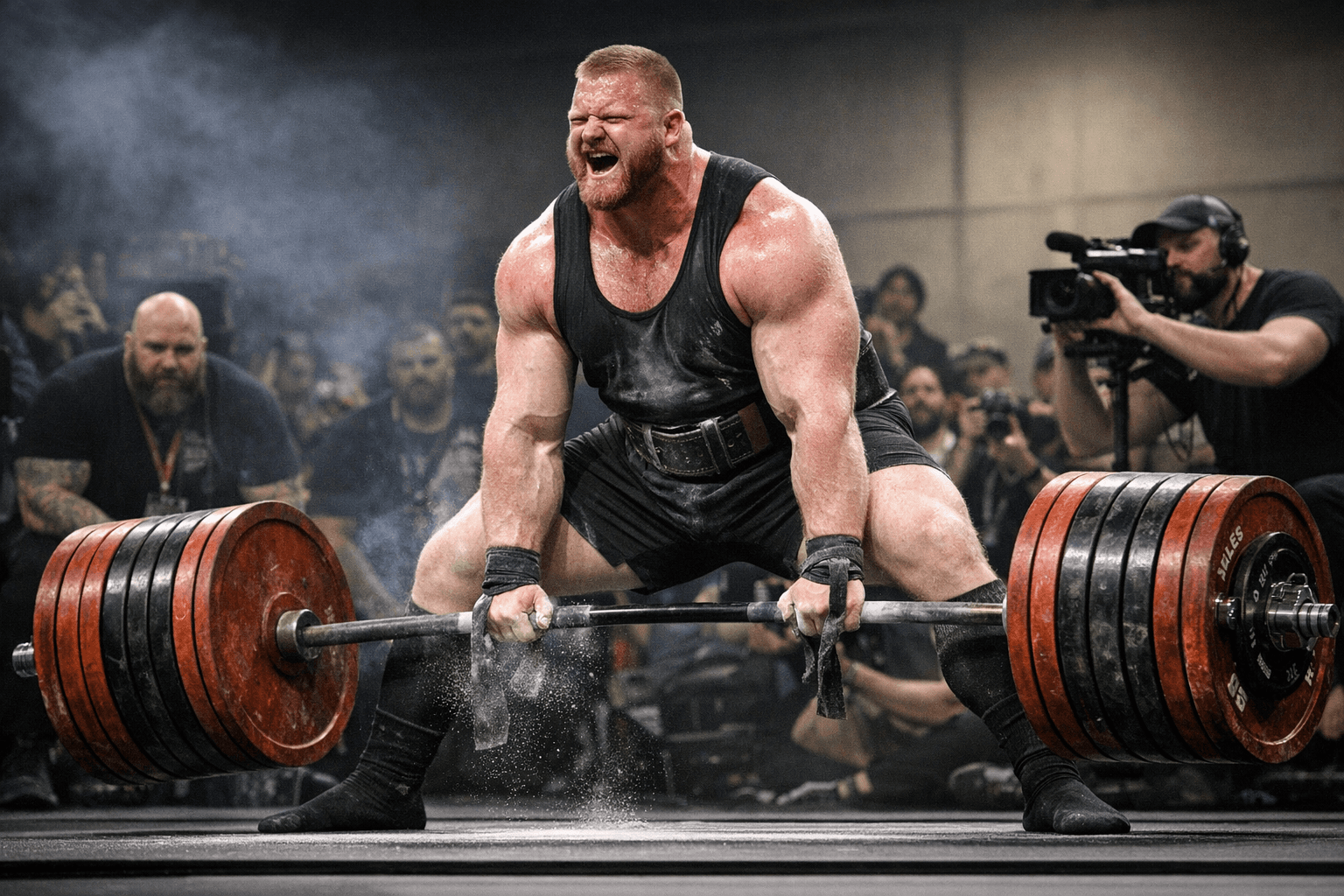
Twice the weight that topped the CrossFit Games deadlift event. That is the number CrossFit coaches and athletes have been circulating since South African powerlifter Colton Engelbrecht locked out a 520-kilogram (1,146.4-pound) sumo deadlift at the Siberian Power Show in Krasnoyarsk, Russia on March 28. Royce Dunne pulled 565 pounds (256 kg) to win the CrossFit Total deadlift at the CrossFit Games. Engelbrecht more than doubled it.
But the number is only part of the conversation. When Engelbrecht stepped to the bar with a lifting belt, lifting straps, and a sumo stance, he immediately placed his performance outside the rules of any sanctioned powerlifting federation. Straps are prohibited in official powerlifting competition, which means record-keeping bodies will not recognize the lift regardless of its magnitude. The footage has traveled widely, arriving in gym group chats alongside the same recurring question: does "unofficial" matter when the weight is this heavy?
For the CrossFit community, that framing has a familiar texture. Anyone who has watched judged standards decide Open workouts, who has seen a rep counted or voided based on hip crease depth or full elbow lockout, understands immediately why equipment rules are not a technicality. They are the architecture of the record. Engelbrecht's lift is extraordinary; it is also, by every federation definition, a training performance rather than a mark that enters the books.
Engelbrecht, who brands himself "THE LIMIT BREAKER" on social media, arrived at the Siberian Power Show as arguably the strongest raw powerlifter alive. He holds the all-time raw total world records in both the 110- and 125-kilogram weight classes, and previously achieved the heaviest raw-with-wraps total in powerlifting history at 1,200 kilograms, with a DOTS score of 689. His preparation for the Siberian Power Show already included a 500-kilogram sumo deadlift with straps for two reps. The 520-kilogram mark in Krasnoyarsk was progression, not a ceiling test.
The reception across the strength-fitness community has split predictably. One camp is processing the footage as pure inspiration: if a human spine can manage 520 kilograms, the posterior-chain development conversation inside functional fitness has new ceiling material. The other camp flags the straps immediately, noting that the lift occupies a separate category from the conventional deadlifts that appear in CrossFit strength phases and CrossFit Total attempts. Both reactions are circulating in the same box WhatsApp threads.
What the lift does for CrossFit programming is indirect but real. Heavy deadlift benchmarks, even those outside official competition, reshape how coaches frame strength ceilings and communicate progress to athletes chasing three-plate pulls. The 520-kilogram number now lives in that conversation whether the record books hold it or not.
Know something we missed? Have a correction or additional information?
Submit a Tip