Dr. Rhonda Patrick's Weekly Longevity Routine Includes Three Hours of CrossFit
Rhonda Patrick's longevity stack goes beyond supplements: she does three hours of CrossFit weekly, combining heavy barbell work with HIIT, Zone 2 runs, and sauna.

Dr. Rhonda Patrick holds a Ph.D. in biomedical science, with her research spanning micronutrients, inflammation, and DNA damage in aging. Her work bridges the gap between molecular biology and practical daily habits, focusing on how food, supplements, exercise, and environmental stressors like heat and cold shape long-term health and lifespan. Most people who follow her know her from the deep-dive science content. Fewer know what her actual week looks like on the gym floor. It turns out, a lot of it looks like ours.
Three Hours of CrossFit: The Foundation
In a video detailing her protocol, Dr. Patrick broke down her "CrossFit-type" strength training and cardio approach: "Typically, I'm doing a form of high-intensity interval training three times a week. Three times a week it's more of a CrossFit-type of training protocol where it's an hour-long and it involves strength training but it also incorporates a lot of high-intensity interval training as well."
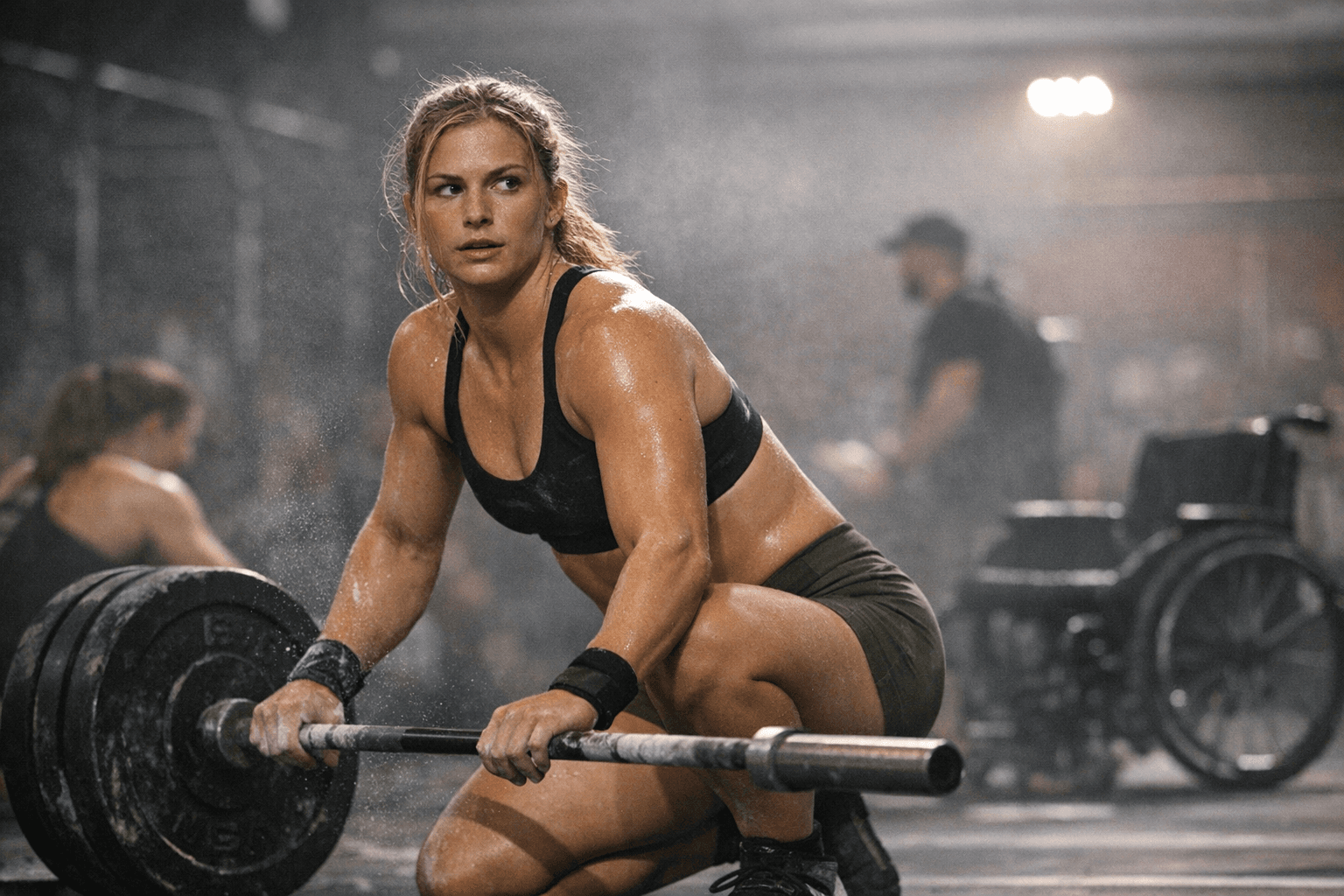
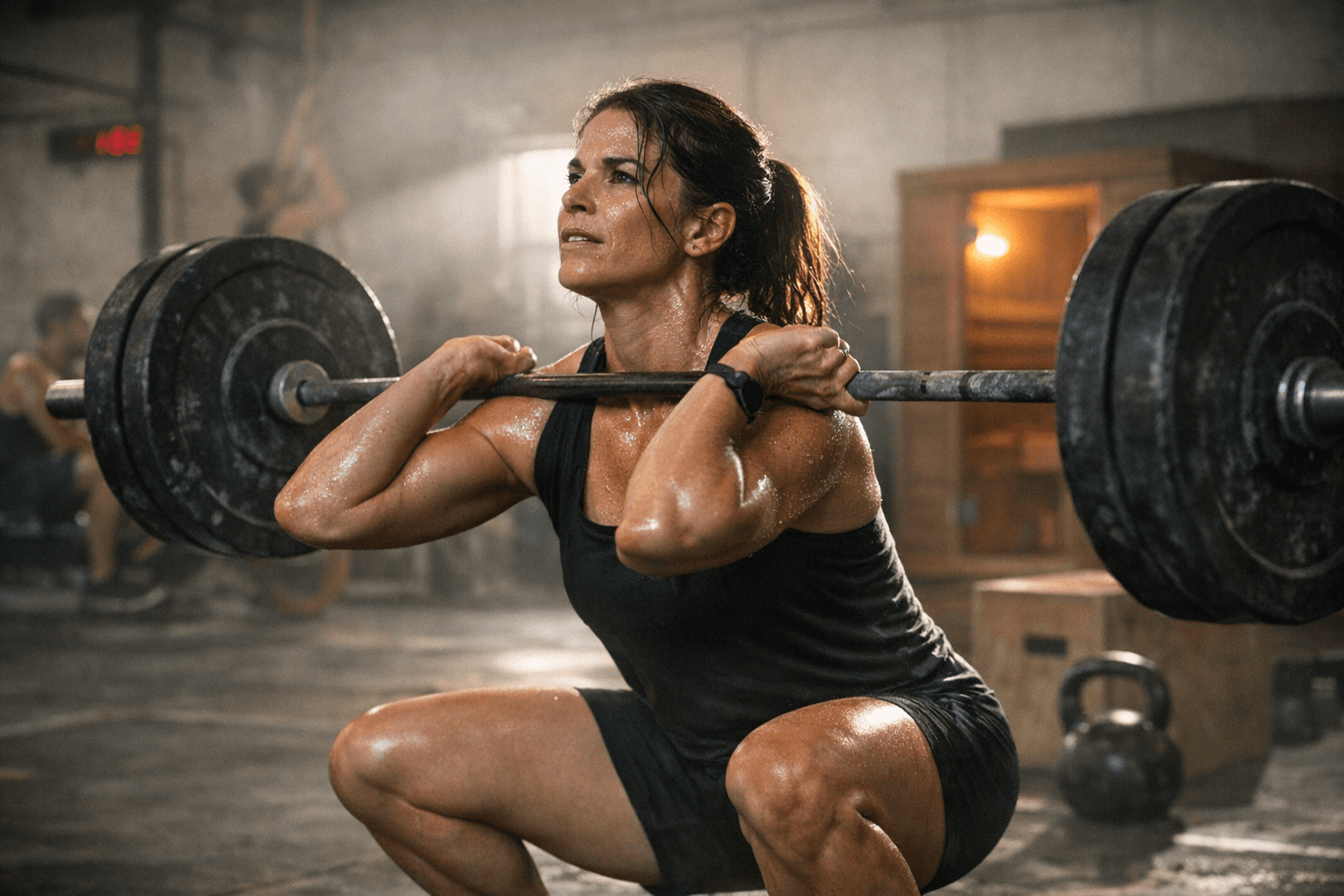
That's three hours of CrossFit per week, total, spread across three one-hour sessions. Each session follows a recognizable structure: the first half focuses on strength exercises including squats, deadlifts, pull-ups, and cleans, while the second half is aerobic HIIT combining biking, rowing, and sprinting with bodyweight or light-weight strength work.
In her weekly regimen, Rhonda dedicates the first 30 minutes of her one-hour sessions to exercises such as deadlifts, squats, cleans, front squats, and sometimes barbell or back squats. She enjoys deadlifts in particular and finds them manageable. Following this, she engages in a 30-minute HIIT session that often includes rowing and assault bikes.
She also utilizes the Peloton, push-ups, and dips: "I'll incorporate push-ups, squats, deadlifts as well. They'll be at lighter weights and I'll do more reps. Then I do them, there's multiple rounds of it. In that sense, if I'm doing a workout that has dips, then I'm definitely going I would say near-failure because the workout has me doing so many of them."
If this sounds like a hybrid WOD structure, that's because it essentially is one: a strength block, then a metabolic conditioning finish that leaves you wrecked. The difference is she's doing it with the explicit longevity goal of driving VO2 max up and maintaining muscle mass into her later decades.
Zone 2: The Other Half of the Cardio Equation
CrossFit three times a week isn't the whole cardio picture. She incorporates Zone 2 runs twice a week as well. This running covers about four to six miles weekly and also incorporates light activities like hikes and runs with family.
Zone 2 and high-intensity work aren't competing priorities for Patrick; they're complementary. She has cited research showing that each unit increase in VO2 max is associated with a 45-day increase in life expectancy, with no apparent upper limit to those gains. The aerobic base built through Zone 2 running supports recovery between CrossFit sessions and keeps the cardiovascular system working across multiple energy systems throughout the week.
The Sauna Protocol: Post-Workout Heat as Recovery
With respect to sauna, she prefers doing it after workouts: "Sometimes my HIIT workouts are just so intense that I do a sauna later in the night but I do actually like doing it right after my workout, oftentimes, I only do a sauna at 175 for 20 minutes because I'm already so hot and spent." Typically, she targets three or four sessions per week.
The logic here is straightforward if you've read her research content: heat shock proteins, activated by sauna use, help repair misfolded proteins and provide cellular protection against damage. The cardiovascular benefits are well-documented too, with heart rate during sauna use rising to around 150 beats per minute, comparable to moderate exercise, while also increasing plasma volume, blood flow to the heart, and improving endothelial function.
Regular sauna use has been linked to a 65-66% lower risk of dementia and Alzheimer's disease when practiced four to seven times weekly. For Patrick, sauna isn't a luxury after a hard WOD; it's a deliberate stressor layered on top of training to compound the adaptive response.
Diet: Whole Foods, Not Optimization Theater
Her dietary approach centers on three core pillars: optimizing micronutrient intake, consuming cruciferous vegetables for detoxification, and engaging in vigorous exercise. She emphasizes the importance of choline found in egg yolks for liver and muscle function and brain health, eating several eggs per day and explaining that dietary cholesterol isn't harmful in the context of a balanced, whole-food diet.
She emphasizes that supplements should support a healthy diet, not replace it. Her advice is to eat real food first and use a multivitamin as a safety net when life gets hectic. For anyone in the CrossFit community chasing performance, that's the right hierarchy: food as the primary fuel, supplementation as the backup system.
The Supplement Stack: Targeted and Evidence-Driven
Patrick's supplement approach is considerably more specific than the generic "take some fish oil" advice floating around most fitness circles.
Omega-3s are at the heart of her routine. She takes around 2,000 to 2,400 mg of EPA and DHA daily from high-quality fish oil, with the goal of keeping her omega-3 index above 8 percent, a level linked with stronger heart and brain health. Having an omega-3 index of 8% or higher is associated with a five-year increase in life expectancy compared to a low omega-3 index of 4% or less.
Creatine isn't viewed purely as an athletic supplement. She takes 5 grams of creatine monohydrate daily for both physical strength and mental clarity, noting that it helps the body produce more ATP, the primary energy source for muscles and the brain.
She takes about 4,000 to 6,000 IU of vitamin D3 each day, along with 100 mcg of vitamin K2 in the MK-7 form, aiming to keep her vitamin D levels between 40 and 60 ng/ml. This matters because 70% of Americans have insufficient vitamin D levels, and vitamin D functions as a steroid hormone regulating over 1,000 genes involved in immune function, brain health, and aging.
Magnesium ranks near the top of her daily essentials as well. She takes 120 mg of magnesium glycinate daily, mainly for sleep quality and brain recovery.
Why This Routine Actually Works
What makes Dr. Patrick's protocol worth paying attention to isn't any single element — it's the architecture. Her philosophy centers on the idea that longevity is not achieved through isolated interventions, but through a synergy of daily choices, optimal nutrition timing, supplements, and exercise.
She views exercise as one of the most direct levers for influencing biological age, improving VO2 max, stimulating mitochondrial renewal, and enhancing stress resilience. By integrating both high-intensity and moderate forms of training, she demonstrates that movement functions as a molecular reset, helping to keep the heart, brain, and muscles healthy.
Three hours of CrossFit per week, two Zone 2 runs, three to four sauna sessions, a whole-food diet anchored in protein and micronutrients, and a targeted supplement stack built around omega-3s, vitamin D, creatine, and magnesium. That's the complete picture. The specificity is the point: there's no vague "move more and eat well" in this framework. Every piece has a mechanism, and the mechanisms compound.
Know something we missed? Have a correction or additional information?
Submit a Tip