Three Common CrossFit Mobility Mistakes and How to Identify Them
Learn three common mobility mistakes CrossFitters make, how to spot them, and clear checks and fixes you can use at the gym.
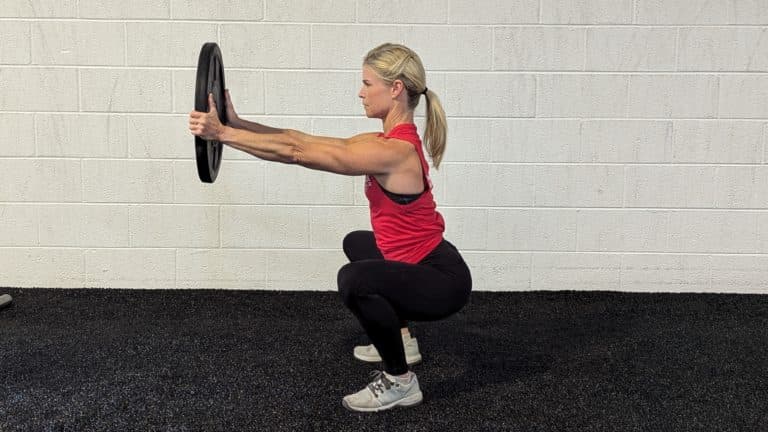
CrossFit demands mobility, but the fixes aren’t always what they seem. Below are the three most common mobility mistakes you’ll see in the box, how to identify each one on yourself or others, and practical steps to start fixing them with your coach or physio.
- Do simple screen checks in a non-fatigued state: ankle wall dorsiflexion, toe-touch/hinge tests, overhead reach with dowel, and single-leg squat.
- Watch for compensations, knee drift, rib flare, weight shift to one side, or the classic “I can touch my toes but my hinge is trash” pattern where the knee hyperextends to fake range (see item 2 for why that matters).
- Record a coach-led assessment and ask which joint/tissue is limiting the movement you care about (air squat, front squat, overhead squat).
- Prioritize targeted mobilizations and strengthen the adjacent joints once you know the source. A coach or physio should guide that plan.
1. Failing to test and identify the specific joint or tissue limitation
Mobility work that isn’t driven by assessment wastes time and can miss the real problem. As Zachary Long, DPT, puts it, “Mobility 101 outlines three frequent errors CrossFit athletes make when trying to improve mobility: (1) failing to test and identify the specific joint or tissue limitation (e.g.,”, start here. If you don’t know whether the restriction is coming from ankle dorsiflexion, thoracic extension, hip internal rotation, or a tight muscle/tendon, the drills you pick may never transfer to your lifts or gymnastics skills.
How to identify it:
Practical next steps:
- ThePTDC warns bluntly: “When you take someone who has hypermobile joints and implement aggressive static stretching, it's on par with having someone with a headache bang his/her head against a wall. It makes things worse.” Hypermobile athletes can appear flexible (even scoring high on a Beighton hypermobility score) yet lack controlled stiffness where it counts. They may “touch their toes” by hyperextending the knees or using other compensations, “These are the same folks who have terrible hip hinges on toe touch tests, yet can touch their toes without a problem; they just go to knee hyperextension to make it happen.”
- If a lifter can reach deep range but shows poor control, joint “wobble,” or recurrent pain when under load, suspect hypermobility rather than true tightness.
- Use the Beighton screen or a coach/physio assessment to quantify laxity.
- Replace blanket static stretching with stability-then-mobility work: stabilize adjacent joints, practice end-range control, and train “good” stiffness. As ThePTDC reminds us, “'Good' stiffness allows us to overpower 'bad' stiffness that's occurring in the wrong places, and it helps to transfer force as part of the kinetic chain. Static stretching can either be an opportunity to foster good stiffness or develop bad habits.”
- Use biased, controlled mobilizations (for example, hamstring stretches with hip rotation biases rather than passive end-range holds) and pair them with strengthening and motor control.
2. Applying one-size-fits-all static stretching, especially to hypermobile athletes
Not everyone benefits from aggressive static stretching. ThePTDC highlights a key clinical caution: “This excessively joint laxity is obviously much higher in females and younger populations, but, as Leon Chaitow and Judith DeLany discuss in Clinical Applications of Neuromuscular Techniques: Volume 1, it is also much higher in folks of African, Asian, and Arab origin.” In other words, joint laxity varies across people and populations, and that should change your approach.
Why this becomes a mistake:
How to identify it:
How to fix it:
- Look for speed-over-form patterns: rapid reps with shallow ranges, persistent weak points (e.g., lockout or hip drive), or unilateral asymmetries in single-leg testing. Foundation Physio reminds us that “Training errors are the most common cause of overuse injuries.” Over time these errors feed into overuse injuries: “This is extremely important when it comes to reducing overuse injuries, which are the most frequent by far in CrossFit.”
- Slow the process down. Zoar Fitness’s prescription is straightforward: “The solution is slowing down, literally & figuratively. [...] Slow them down, assign tempos, positional holds, percentage ‘technique’ work, mobility work and take time in non-fatigued environments to learn skills. Then layer slowly and never stop going back to the basics.”
- Program varied stances and unilateral work to load hips and glutes, and use tempo and positional work to “own” the range. Make technical days non-negotiable so you practice movement patterns without fatigue.
3. Letting movement-pattern and loading habits create neglected areas and overuse
Mobility problems often come from how you move, not only from how your tissues feel. Zoar Fitness gives a clear, real-world example: “An athlete who lacks the proper hinging mechanics to do fast Touch-N-Go deadlifts, so they don’t ‘own’ the range of motion. As a result, the hamstrings take less loading, and over time they atrophy and are used less and less. This is one practical example of how athletes can become ‘quad dominant’ over the course of several years.” When you rush, chase loads, or never practice skills outside of fatigue, you create chronic imbalances that show up as mobility limits or injuries later.
How to identify it:
How to fix it:
- Assessment-first: Screen ankles, hips, thoracic spine, and single-leg strength before adding mobility drills.
- Control-before-range: If someone’s range looks fine but their form breaks under load, emphasize stability and stiffness training.
- Tempo and technique: Add 3–5 sets of slow, controlled tempo reps or positional holds at light loads to expose which tissues are actually contributing (or not).
Practical checks you can run in a single session
Where coaching and physio fit in A good coach will catch many of these mistakes before they become chronic problems. As a City of Lakes CrossFit coach put it bluntly, “Look, people get hurt when they are doing the movement wrong.” That’s why Foundation Physio recommends combining technical training and preventive care: “Training with an injury that has not been properly assessed or treated can increase your chance of further injury or prolong the rehab process. Seeing a physiotherapist as a preventative strategy can not only reduce weeks of missed training but also improve performance if performance is limited by strength or mobility.” Use your coach for programming and motor pattern checks, and call a physio when screening shows tissue-level issues or persistent pain.
- Overland Park CrossFit reminds us: “Mobility: a term that is used often in the CrossFit community but is not practiced enough.” They highlight air squat, front squat and overhead squat as common problem movers and point athletes toward targeted mobilizations. “The air squat is one of the nine foundational movements in CrossFit and provides the basis for the more technical movements like the clean, snatch and overhead squat.”
- For mobility reading, Overland Park suggests: “If you have more questions about what mobility exercises you should be doing, a great reference besides your coach is the book titled Becoming a Supple Leopard by Dr. Kelly Starrett.”
- If you want programming that targets positions and neglected areas, Zoar Fitness markets ReStore (“Increase Mobility + Positions; Fix Asymmetries with Unilateral Work”) and ReFresh (“Improve Tendon + Joint Health; Prevent Injury & Address Neglected Areas”), though individual results vary and trainers differ on approach. Note their disclaimer: “ZOAR Fitness is not associated with CrossFit® in any way and opinions are separate from the CrossFit® brand.”
- For further physio-led prevention and rehab tips, Foundation Physio points to ongoing guidance and social resources, including: “For more information on injury prevention and exercise prescription, follow: @theliftingphysio.tina on Instagram!”
Quick resource list and useful references from the community
Closing practical wisdom Treat mobility like programming: assess first, individualize second, and practice slowly before you add speed or load. Test the joint or tissue, don’t just stretch whatever feels tight; stabilize before you chase range; and slow down to own the movement before you hit competition-level intensity. Get your coach and a physio on the team when in doubt, “Look, people get hurt when they are doing the movement wrong,” so fix the pattern, not just the pain. Apply those three checks at your next warm-up and you’ll spot problems earlier, save training time, and keep lifting for longer.
Know something we missed? Have a correction or additional information?
Submit a Tip