American YouTuber Says Cuba Trip Cut Short After 24 Hours in Havana
Nick Shirley said Cuban officials seized his camera gear in Havana, then watched him so closely that he left after one night by tricycle to the airport.

Nick Shirley said his first day in Havana began with gear being taken at the airport and ended with a late-night exit under watch, a trip that he described as less a travel vlog than a running encounter with Cuban security. The 24-year-old YouTuber said Cuban authorities seized his GoPro, stabilizer and Meta glasses on arrival, leaving him to film mostly on an iPhone and a small microphone.
Shirley said he entered Havana on April 30 with a visa for journalistic activity, a category recognized under U.S. travel rules, while Cuban authorities insisted it was a tourist visa. U.S. sanctions regulations list 12 authorized travel categories, and journalistic activity is one of them. That paperwork fight sat beside a sharper one over what Shirley was actually seeing on the ground.
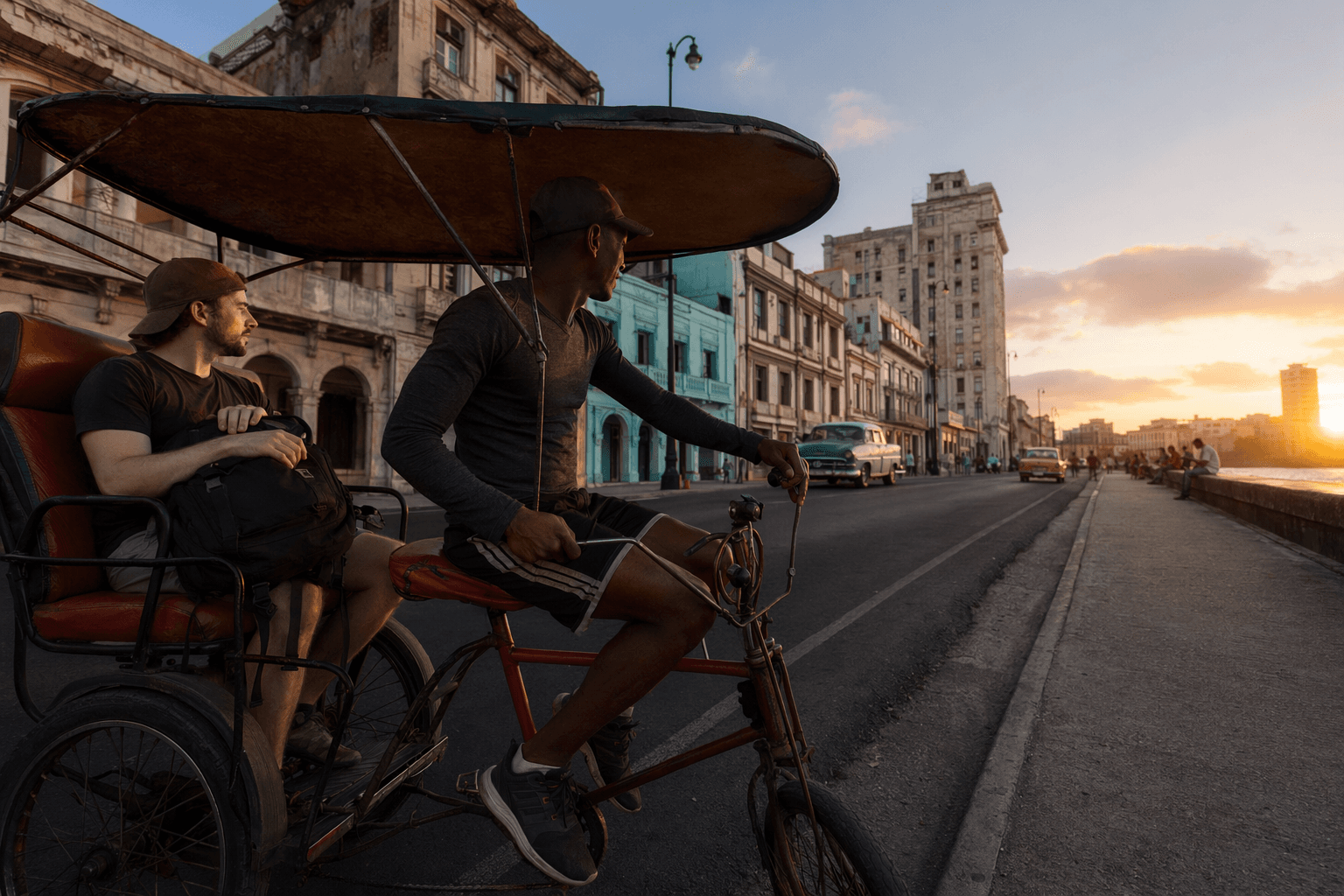
He described empty streets, collapsed buildings and sidewalks where trash was burning, casting Havana as a city under visible strain. One taxi driver, Shirley said, told him the number in the state gasoline queue was 1,200 and that fuel on the black market cost about $10 a liter, while monthly salaries were only about $14. Cuba’s official average monthly salary for 2024 was 5,839 Cuban pesos, which some outlets and economists have put at roughly $16 a month at informal exchange rates, a gap that has become a shorthand for the island’s economic squeeze.
The trip also turned into a story about who was watching whom. Shirley said he was accompanied by two Spanish-speaking bodyguards, and that one night a woman filmed him while he interviewed a citizen in a government hotel, prompting authorities to close in. He said a two-star general was waiting in the lobby when he tried to leave around 3 a.m., and that a message was sent to his bodyguard saying the president knew he was there and that he was being monitored. Shirley said he left Havana in a tricycle to the airport.
State-linked counter-media, including Razones de Cuba, pushed back hard, saying Shirley entered as a tourist and fabricated the account. Razones de Cuba said he left voluntarily on May 1. The dispute landed in a wider context that is difficult to ignore: the United Nations has warned that Cuba’s humanitarian situation is worsening under energy and fuel shortages, with acute effects on healthcare, water services and food distribution.
For Cuba-watchers, the story is not just about one creator’s Havana footage. It shows how quickly a foreign visitor’s camera can become a security issue in a country where Reporters Without Borders says press freedom remains the worst in Latin America and independent journalism still operates under severe limits.
This article was produced by Prism’s automated news system from verified source data, official records, and press releases, then run through automated quality and moderation checks before publishing. The system is built and supervised by the people who set the standards it runs under. Read our full AI policy.
Did this article answer your question?