CARICOM condemns pressure campaign on Cuba, warns of humanitarian crisis
CARICOM turned Cuba’s fuel crisis into a Caribbean security issue, warning that pressure on Havana is hurting regional students and could destabilize the whole zone.
CARICOM has pushed its Cuba policy beyond sympathy and into a regional challenge to Washington’s pressure campaign. In a May 27 statement, the Council for Foreign and Community Relations said the economic, commercial and financial measures imposed on Cuba were intensifying, warned that CARICOM nationals studying and living on the island were being affected, and condemned the obstruction of fuel supplies as a driver of a grave humanitarian crisis.
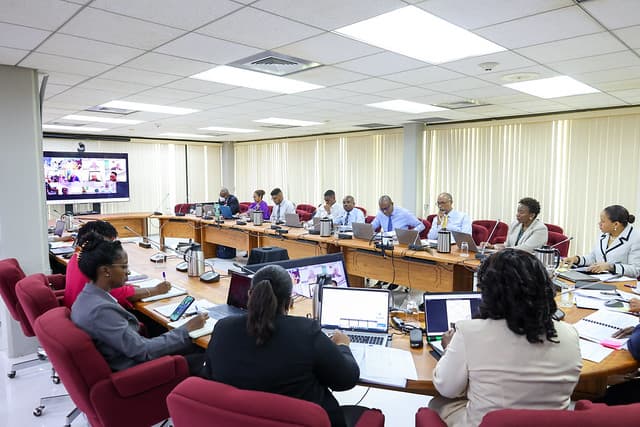
The statement carried more weight because it came out of COFCOR’s 29th meeting in Paramaribo, Suriname, on May 20 and 21, under the chairmanship of Surinamese Foreign Minister Melvin Bouva. By reaffirming Cuba’s sovereign right to import and receive fuel, CARICOM framed the issue not as a technical trade dispute but as a matter of civilian survival. The council also warned against statements suggesting military aggression against Cuba, saying any such action would bring unnecessary human suffering, heavy material costs and instability to the region’s security architecture.

That language builds on a sharper humanitarian line CARICOM had already been drawing earlier in the year. On February 27, CARICOM Chairman Terrance Drew said the bloc intended to provide humanitarian support to Cuba, and on March 24 CARICOM said member governments were preparing to dispatch aid coordinated by the CARICOM Secretariat in Georgetown. The May statement suggests the bloc has moved from aid planning to open political confrontation with the logic of Cuba’s isolation.
The regional stance also tracks with the wider international alarm around Cuba’s fuel crisis. On January 29, 2026, UN human rights experts said a U.S. executive order imposing a fuel blockade on Cuba was a serious violation of international law. In May, those same experts described the policy as energy starvation with grave human rights impacts. UN humanitarian reporting in February said reduced fuel imports were disrupting healthcare, water services and food distribution, while OCHA launched a revised $94 million plan of action to address the worsening effects of fuel shortages and support about two million people, or around one in five Cubans.
The pressure has landed on an island still recovering from Hurricane Melissa, which struck in late October 2025 and affected more than 2.2 million people. A ReliefWeb briefing said Cuba’s domestic oil production covers only about 40 percent of an estimated daily need of 100,000 barrels, a figure that helps explain why fuel restrictions quickly spill into power generation, transport and basic services. CARICOM’s latest statement shows that Cuba is no longer being discussed in the Caribbean only as a bilateral headache for Havana and Washington, but as a test of whether the region can turn solidarity into coordinated action.
This article was produced by Prism’s automated news system from verified source data, official records, and press releases, then run through automated quality and moderation checks before publishing. The system is built and supervised by the people who set the standards it runs under. Read our full AI policy.
Did this article answer your question?