Cuba confirms rare military talks with U.S. officials at Guantánamo Bay
Cuba and U.S. military officers met near Guantánamo Bay in a rare security channel, a sign both sides still want a line open as pressure on the island intensifies.

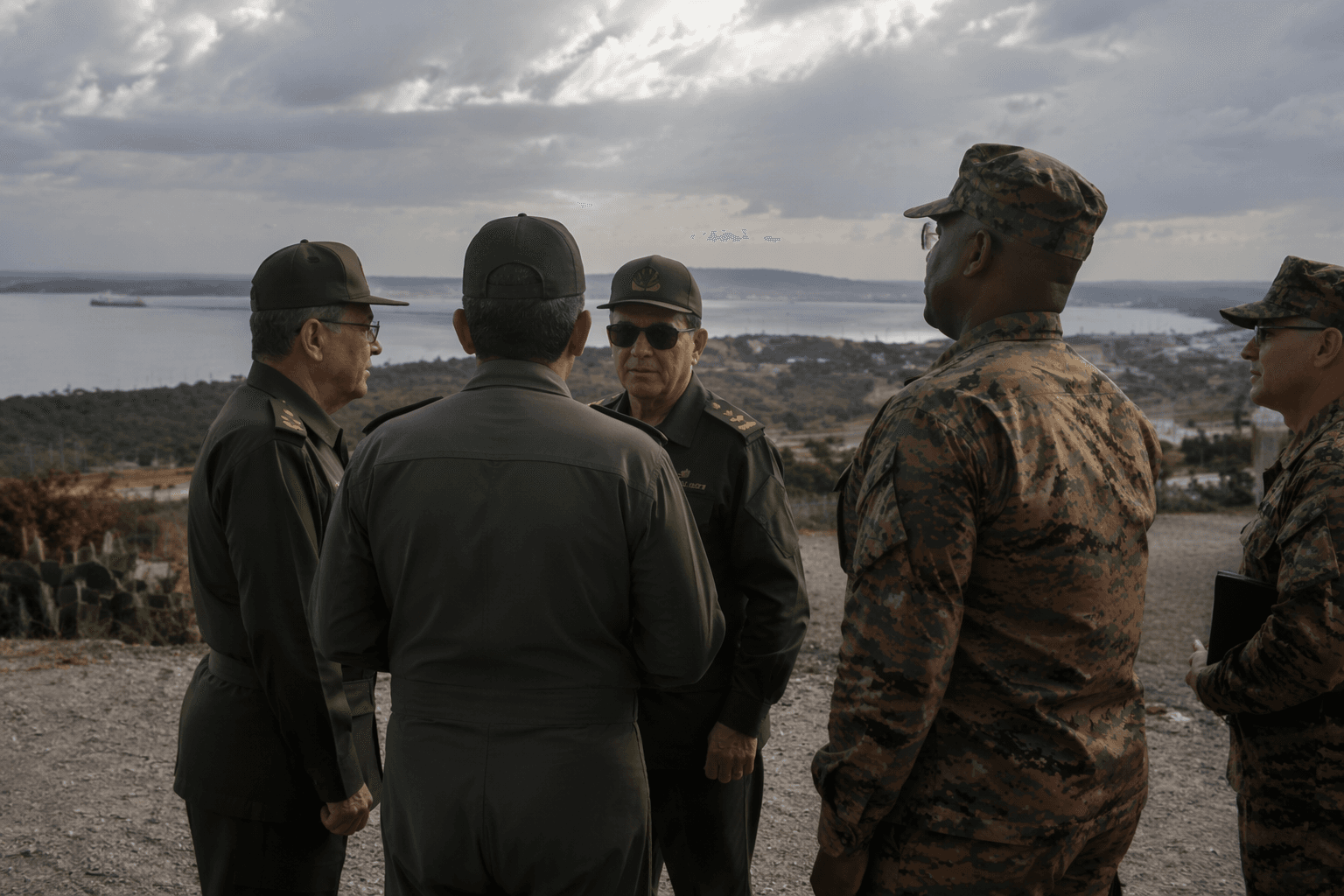
A rare military channel between Havana and Washington opened again at the fence line of Guantánamo Bay, where Gen. Francis Donovan, the head of U.S. Southern Command, met Cuban military leaders on Friday, May 29, 2026. The Cuban delegation included Lt. Gen. Roberto Legrá Sotolongo, Cuba’s first deputy minister and chief of the general staff, in a brief exchange focused on operational security matters near the perimeter of United States Naval Station Guantánamo Bay.
Cuba’s Revolutionary Armed Forces said both sides viewed the meeting positively and agreed to keep communication between the two military commands. Southcom described the discussion as a brief exchange on operational security matters, while other reporting said Donovan and Cuban officers also discussed readiness and perimeter security around the military enclave. The setting mattered as much as the content: this was not a broad diplomatic reset, but a narrow, practical contact at one of the most sensitive places in the bilateral standoff.
The timing is hard to miss. The meeting came as the Trump administration has stepped up pressure on Cuba, including a larger U.S. military presence in the Caribbean and repeated warnings that Cuba could be next after Venezuela. Havana has said the strain has worsened its blackouts and fuel shortages, and it continues to describe the island’s energy crisis as the result of a U.S. energy blockade. Against that backdrop, even a short exchange on the Guantánamo perimeter signals that both militaries see value in keeping at least one channel from going cold.
The Guantánamo contact also followed a run of unusually high-level U.S.-Cuba meetings. In April, Cuban official Alejandro García del Toro confirmed separate talks in Havana with a U.S. State Department delegation and said the discussions were discreet, respectful, and professional, with neither side issuing deadlines or ultimatums. Cuba said lifting the U.S. energy blockade was a top priority in those talks, while U.S. reporting at the time said political prisoners and internet access were also on the table. Then came CIA Director John Ratcliffe’s May 14 visit to Havana, which Reuters said was only the second known visit by a CIA director to Cuba since the 1959 revolution. Taken together, the contacts suggest both governments are probing how much room remains for crisis management, even as the bigger conflict stays very much alive.
This article was produced by Prism’s automated news system from verified source data, official records, and press releases, then run through automated quality and moderation checks before publishing. The system is built and supervised by the people who set the standards it runs under. Read our full AI policy.
Did this article answer your question?