Cuba marks independence day shadowed by U.S. intervention history
May 20 is Cuba’s formal birthday on paper, but the date still carries the sting of U.S. control. That tension makes the anniversary a live political message, not a dead date.
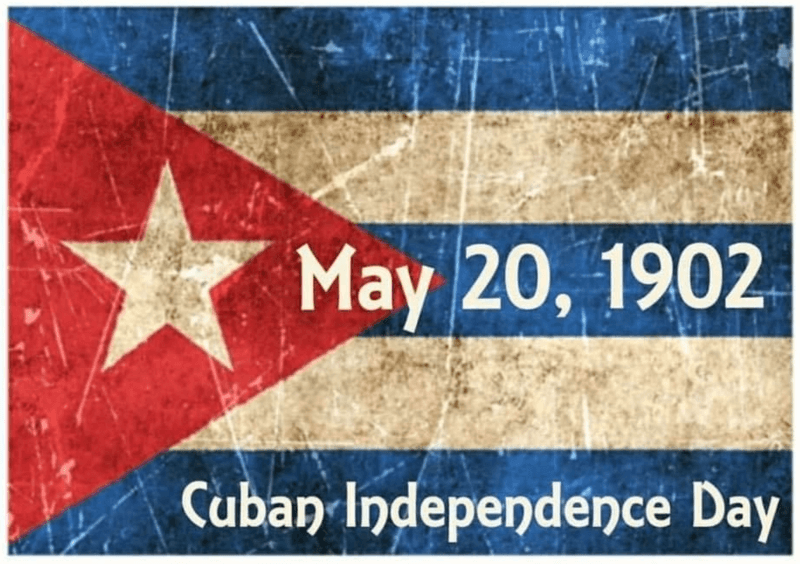
May 20 on paper, and in memory
Cuba’s independence anniversary is one of those dates that looks clean in a history book and messy everywhere else. On May 20, 1902, the United States ended its occupation authority and Tomás Estrada Palma was installed as Cuba’s first elected president, but the republic was born under conditions that still shadow the island’s political language today. That is why the day remains awkward in official Cuban memory: it marks sovereignty, yet also the beginning of a relationship in which Washington claimed the right to step back in.

The anniversary landed under fresh pressure from the Trump administration, including criminal charges against Raúl Castro over the 1996 downing of two civilian planes. That is the kind of collision Cuba knows well, where a historical milestone becomes a live signal about power, leverage, and who gets to define the island’s story.
Why May 20 is loaded
To understand why the date matters, you have to go back before the republic and through the wars that made it possible. The road begins with the 1868 Cry of Yara, then runs through the Ten Years’ War and the Little War, a century-spanning struggle that left Cubans with a hard-earned independence movement and a strong memory of unfinished business. By the time the Spanish-American War ended, the island was no longer simply moving from empire to freedom. It was moving into a U.S.-managed transition that would shape its next generation of politics.
The key discomfort is this: May 20 is not just the day Cuba became formally sovereign. It is also the day the United States stepped out while keeping a hand on the door.
The Platt Amendment and the fine print of independence
The fine print came in the form of the Platt Amendment, forced on Cuba as a condition of independence. The Cuban Constitutional Convention ratified it on June 12, 1901, by a vote of 16 to 11 after heavy U.S. pressure. That amendment preserved Washington’s claimed right to intervene in Cuban affairs and allowed the United States to lease land for naval bases, including Guantánamo Bay.
The amendment remained in force until 1934, when Franklin D. Roosevelt’s Good Neighbor policy helped push it out of Cuban law. But the damage to the symbolism of May 20 had already been done. The National Archives says the Platt framework was used to justify U.S. interventions in 1906, 1912, 1917 and 1920, which means that for many Cubans the date reads less like a finish line than a warning label.
That is why the island’s socialist government does not celebrate it, and why many Cubans on the island do not treat it as a national holiday. Independence came, but not on fully sovereign terms.
A republic installed, a flag lowered, a claim preserved
The ceremonial details from 1902 still carry their own drama. Leonard Wood transferred Cuba’s government to Estrada Palma on May 20, 1902, and the records from that moment show the Cuban flag being raised as the U.S. flag came down. It is an image of transition, but not of total release.
The distinction between May 19 and May 20 matters, too. U.S. records say the Republic of Cuba was formally installed on May 19, 1902, while May 20 was when occupation authority was relinquished. That narrow gap captures the uneasy legalism of the moment: the republic existed, but it existed inside a structure shaped by the departing occupier. Cuba and the United States did not even establish full diplomatic relations that day. The American legation in Havana opened on May 27, 1902.
Why the anniversary still lands in the present tense
The present-day relevance is not abstract. When Washington speaks forcefully about Cuba on May 20, Cubans hear more than policy. They hear the old pattern of intervention, pressure, and moral instruction layered over a history in which the United States has repeatedly treated the island as a special case. Even the most routine diplomatic message can sound different when the calendar itself recalls occupation, conditional sovereignty, and the long shadow of the Platt Amendment.
That is part of why competing narratives of independence still shape the island’s identity and state messaging. The post-1959 government has long framed January 1, 1959 as the true revolutionary break, the moment Cuban history finally turned from dependency toward self-definition. In that telling, May 20 is not the nation’s triumph but a reminder of the old order Cuba had not yet escaped.
The symbols ordinary people live with
The power of this date is not only in official speeches or archival records. It shows up in the symbols ordinary people move through every day. A bicycle taxi in Havana carrying the flags of the United States, Cuba, and the Dominican Republic is not just a street scene. It is a portrait of how layered this history remains, with national identities, regional ties, and U.S. influence all visible at once.
That is the real force of May 20. It is a formal birthday that never fully stopped being a debate about who held the keys. More than a century later, the anniversary still arrives carrying the same double meaning: a republic was born, but the argument over its sovereignty never really left the room.
This article was produced by Prism’s automated news system from verified source data, official records, and press releases, then run through automated quality and moderation checks before publishing. The system is built and supervised by the people who set the standards it runs under. Read our full AI policy.
Did this article answer your question?