Cuba revives all-people war doctrine amid fears of U.S. attack
Cuba has dusted off its Cold War mobilization playbook, treating U.S. attack scenarios as real and pushing civilians back into the country’s defense calculations.
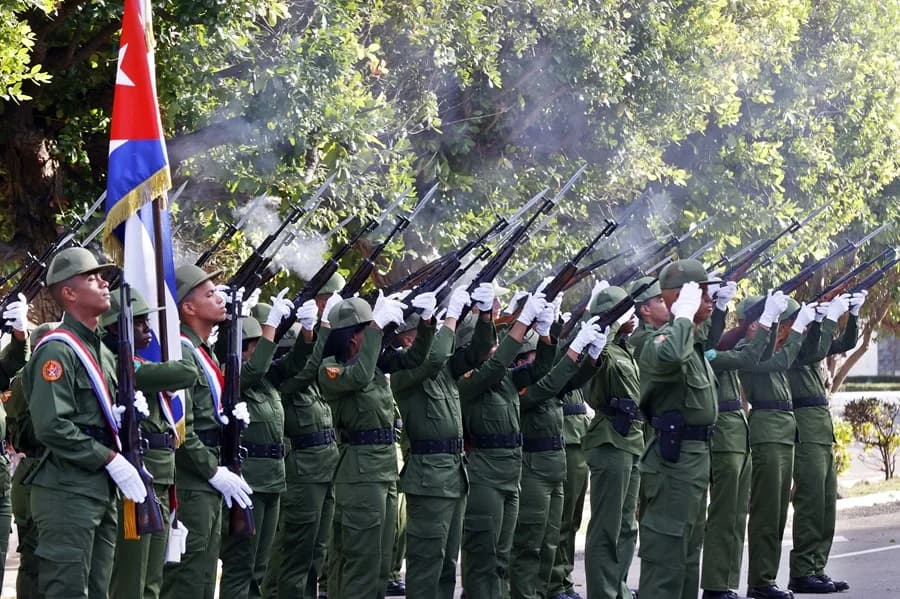
In March, Vice Foreign Minister Carlos Fernández de Cossío said Cuba’s armed forces were preparing for the possibility of a U.S. military aggression and that the country would mobilize as a nation if needed. Cuba has revived its “war of all the people” doctrine, built around turning civilians, reservists, schools and workplaces into part of the defense system, not around defeating a modern U.S. invasion outright but around making any occupation unbearably costly.
Granma’s January 2025 Bastion 2024 coverage cast the exercises as an essential element in materializing the War of the Whole People doctrine.
Cuba’s filing to the United Nations Security Council on January 5, 2026, said the United States attacked Venezuela on January 3 and that 32 Cubans died in combat while serving missions for the Revolutionary Armed Forces and the Ministry of the Interior. Cuban officials tied that episode to a broader deterioration in U.S.-Cuba relations, and weekly defense reviews across the island involve both military personnel and ordinary citizens.

On June 10, Pete Hegseth said “all options are on the table,” warned that it would be imprudent for Cuba to seek weapons that could reach Guantánamo or the U.S. mainland, and said there was pressure on Cuba’s government. He also said the Pentagon prepares contingencies and presents options to the president. On April 16, anonymous U.S. officials said the Pentagon was intensifying intervention plans for Cuba, even as the Department of War declined to speculate on hypothetical scenarios.
On April 16, EFE put Cuba’s economy at a 15% contraction between 2020 and 2025, leaving the island short of fuel, cash and spare parts.
On April 21, Cuba confirmed a recent bilateral meeting with U.S. representatives after leaks in U.S. media, and on May 27 Marco Rubio said he was confident discreet talks between Washington and Havana would have a good outcome. On June 23, Havana condemned new U.S. sanctions on five state entities linked to Gaesa.
This article was produced by Prism’s automated news system from verified source data, official records, and press releases, then run through automated quality and moderation checks before publishing. The system is built and supervised by the people who set the standards it runs under. Read our full AI policy.
Did this article answer your question?