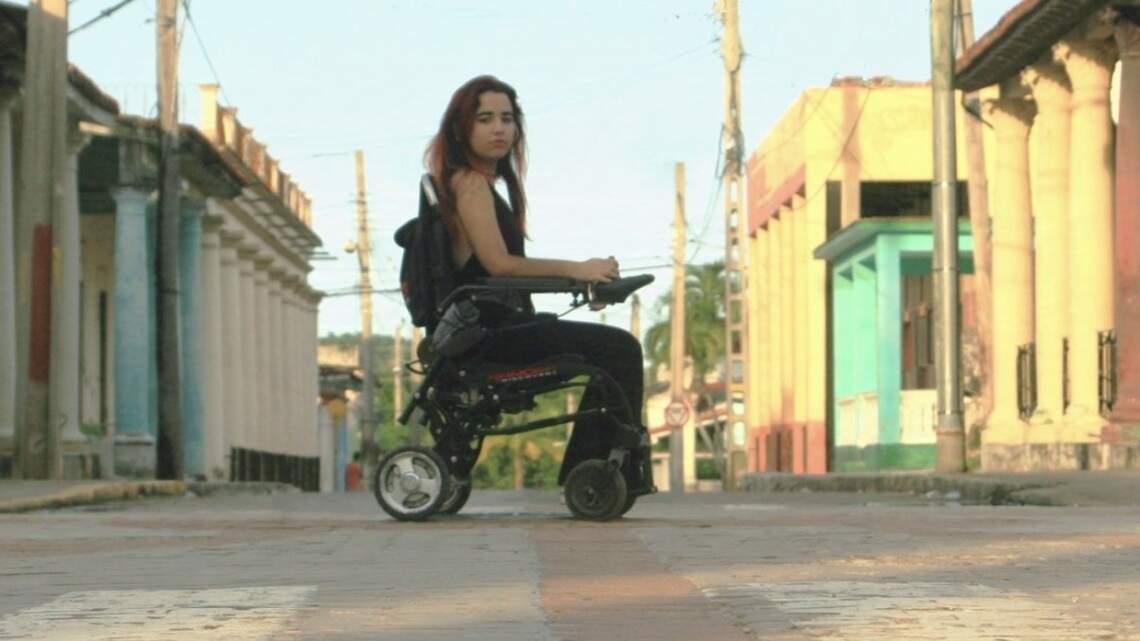
Cuban artists turn streets into a red line against control
Cuba’s red line now runs through the street. Artists are moving dissent into public space, where murals, performances, and bodies are harder for the state to fully contain.
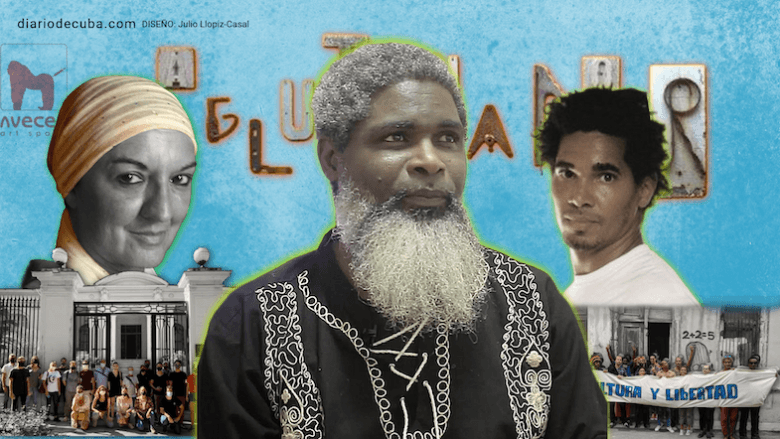
In Cuba, the street has become the place where cultural control meets its hardest test. A Havana Times feature published June 25 follows Amaury Pacheco and a wider generation of artists who learned that galleries can be shut down, but public space is far harder to seal off. What looks like art on a corner, in a neighborhood, or in an improvised gathering also becomes a direct challenge to the state’s monopoly over what can be shown, said, and staged.
The street as the boundary the state cannot fully manage
The feature’s central argument is simple and sharp: when official cultural institutions stop offering room for dissent, the sidewalk, the plaza, and the neighborhood become the real battleground. In that setting, art is not decoration or a side project. It is a way of occupying public life, turning visibility itself into a form of pressure on the authorities.
That is why the article treats the street as a red line in two senses. It is the physical line where people gather, perform, and make themselves impossible to ignore. It is also the boundary the state draws around acceptable speech and action. Crossing it can mean harassment, exclusion from official venues, loss of work, or exile, all of which have shaped the lives of Cuba’s independent artists for years.
Amaury Pacheco’s path tracks the shift from cultural experiment to open confrontation
Amaury Pacheco sits at the center of that story because his career maps the movement from neighborhood-based creativity to direct conflict with the state. Artists at Risk Connection says he co-founded Omni Zona Franca in 1997, building a space of creation and resistance outside the official system. The collective’s festival, Poesía Sin Fin, ran for 15 years and promoted freedom of expression and artistic intervention even as the political climate worsened.
That trajectory continued in 2018, when Pacheco co-founded the Movimiento San Isidro, a network that linked artists, journalists, and academics in resistance to state pressure. By 2023, WLRN reported that he had left Cuba through the Biden administration’s humanitarian parole program and was living in Oklahoma. Read together, those milestones show how a cultural experiment rooted in the street ended in forced movement across borders, with the same state pressure following the same people from one stage to the next.

The June 25 feature uses Pacheco’s experience to show how dissent in Cuba rarely stays in one lane. It can begin with poetry, installation, or neighborhood organizing, then turn into a political test when the state decides that independent culture is no longer just culture.
Decree 349 turned culture into a permission regime
That pressure did not appear overnight. Decree 349, published in Cuba’s Official Gazette in 2018, regulates cultural-policy violations and artistic services. Amnesty International said Miguel Díaz-Canel signed the decree in April 2018, and that it was expected to take effect in December 2018. Amnesty also said it requires artists, collectives, musicians, and performers to obtain prior approval to operate in public or private spaces.
That language matters because it extends the state’s reach beyond formal theaters and galleries. A performance in a courtyard, a concert in a house, or an intervention on a street corner can all fall under the same logic of permission. Human Rights Watch and other rights groups have treated the decree as a major trigger for the current period of repression and censorship because it gave the state a clearer framework for policing artistic life wherever it happens.
The effect on the street has been direct. If the state can decide who may perform in private homes or public squares, then the public realm itself becomes contested territory. Independent artists answer by moving more visibly into that territory, not less.
From street art to street politics, Cuba’s public space carries the same risk
The same logic was visible in the July 11, 2021 protests, which Human Rights Watch described as the largest nationwide demonstrations against the Cuban government since the 1959 revolution. Thousands took to the streets over shortages, rights restrictions, and the pandemic response. Human Rights Watch said Cuban rights groups counted more than 1,400 detentions, with more than 700 people still imprisoned a year later, and reported that protester Diubis Laurencio Tejeda died during the unrest.
That national wave matters to artists because it confirmed what Cuban cultural activists had already learned: the street is not only a venue for art, it is the arena where state power is most visible and most vulnerable. Once public space becomes the place where people gather outside official channels, the line between performance and protest starts to disappear.
The feature’s reading of Cuban dissent fits that wider pattern. Murals, impromptu installations, and neighborhood performances are not separate from political life in Cuba. They are part of the same struggle over who gets to appear in public and on what terms.
Recent artist-led interventions show how the red line keeps moving
The pressure on independent creation has already produced a recognizable cycle. The Art Newspaper wrote in 2021 about artists using public interventions to protest repression, including Hamlet Lavastida, whose idea to stamp currency with dissent slogans was blocked after his arrest. PEN America has linked arrests of artists and mass detentions of protesters to the broader crackdown on artistic expression that hardened after Decree 349.
Those episodes matter because they show how quickly a creative gesture can become a political offense. A slogan, a performance, or a public placement is enough to trigger a response when the state treats visibility as disobedience. In that setting, the street is not a neutral backdrop. It is the place where Cuban artists keep testing how much control the state can still claim, and how much of public life can still be reclaimed in plain sight.
The red line in the title is therefore not just a warning. It is the line Cuban artists keep stepping toward, because in a country where official venues narrow and approval becomes a gatekeeping tool, the street remains the only stage the state can never quite finish closing.
This article was produced by Prism’s automated news system from verified source data, official records, and press releases, then run through automated quality and moderation checks before publishing. The system is built and supervised by the people who set the standards it runs under. Read our full AI policy.
Did this article answer your question?