Cuban customs intercept passenger from Panama after swallowing 25 drug capsules
Cuban customs stopped a Panama arrival at José Martí Airport after officials said he had swallowed 25 drug capsules, a fresh sign of Havana’s tightening airport scrutiny.

A passenger arriving from Panama was intercepted at José Martí International Airport in Havana after Cuban customs officials said he had swallowed 25 drug capsules. The seizure quickly turned into a public display of airport vigilance, with Wiliam Pérez González, Cuba’s first deputy chief of customs, framing the case as proof that risk analysis and anti-drug screening were doing their job.
Photos released with the announcement showed the yellow capsules recovered from the passenger’s body and an abdominal X-ray that revealed foreign objects inside. That detail made the case a textbook example of body-packing, the concealment method border authorities across the region are trained to catch when traffickers move drugs by commercial flight.
The route matters as much as the seizure itself. A passenger coming in from Panama put Havana back into the conversation about transit travel through third countries, where tightly managed direct traffic can still be bypassed through connecting journeys. The customs office did not say whether the passenger was Cuban or foreign, but the message from the interception was plain: airport screening is being treated as a national security task as much as a criminal one.
That emphasis fits broader enforcement trends. The United Nations Office on Drugs and Crime says drugs moved on commercial passenger flights are often hidden in luggage or on and in passengers’ bodies, which is why trained airport personnel and specialized screening tools remain central to interdiction. UNODC’s Passenger and Cargo Control Programme, created in January 2025 through the merger of its container and airport programs, is designed to strengthen border authorities at air, sea and land crossings, while INTERPOL says joint airport interdiction task forces and intelligence-sharing are key to disrupting trafficking.
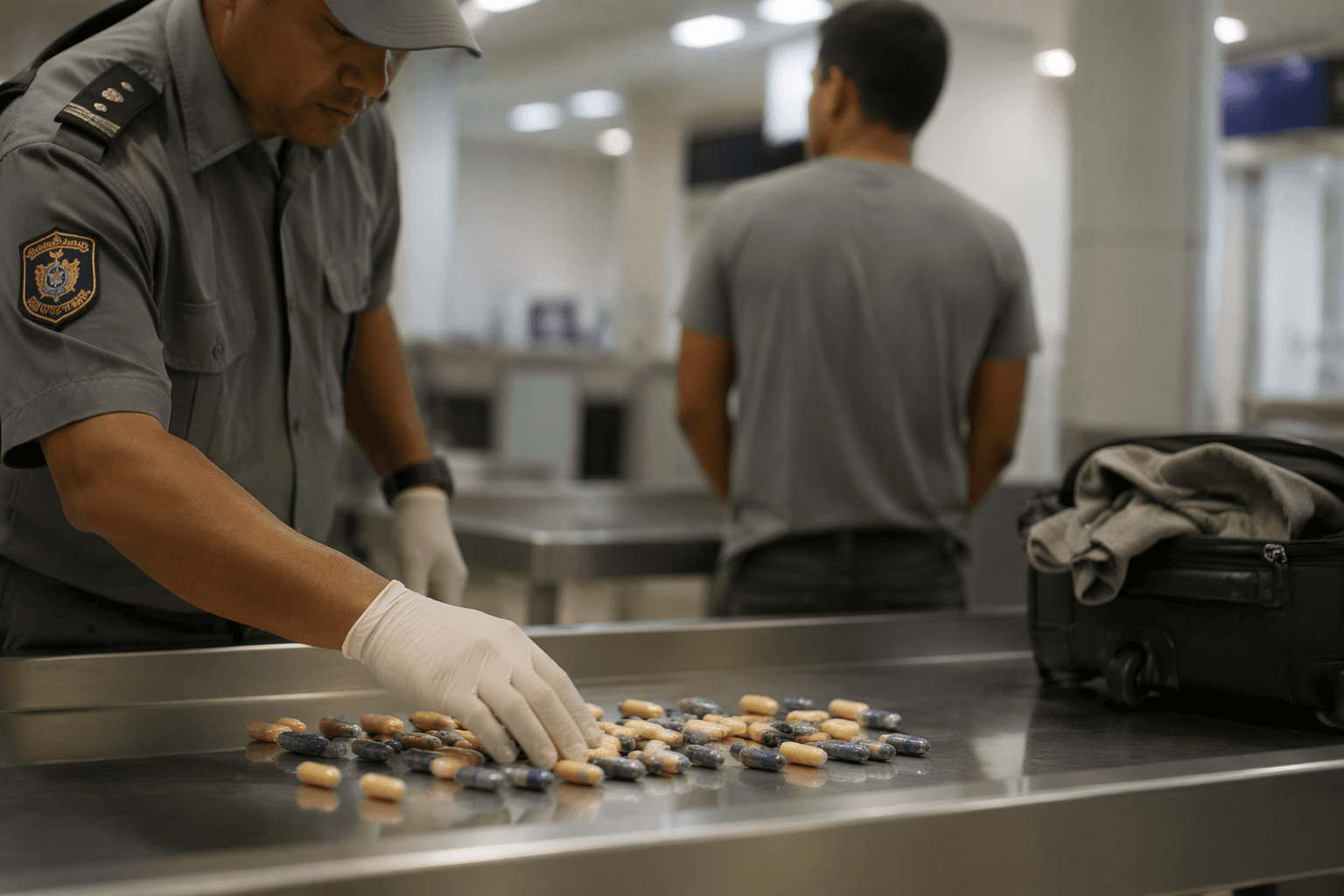
José Martí Airport has also been showing up repeatedly in this kind of case. Recent reporting has described other Havana airport seizures, including 48 cocaine capsules from a body-packer in May 2026, while OnCuba previously reported a 2022 case involving 22 swallowed capsules. Taken together, those cases suggest this is no isolated arrest but part of a repeated enforcement pattern at Cuba’s main air gateway.
For Havana, the public value of the interception is clear. Customs can point to scanners, risk analysis and visible seizures at a time when the state is under pressure, and the Panama-Havana route gives officials a vivid example of how quickly a flight can become a trafficking corridor.
This article was produced by Prism’s automated news system from verified source data, official records, and press releases, then run through automated quality and moderation checks before publishing. The system is built and supervised by the people who set the standards it runs under. Read our full AI policy.
Did this article answer your question?