Cuba’s food crisis deepens as families race to cook before blackouts
When the lights go out, Cuban families race to cook before food spoils, as blackouts, fuel shortages and storm damage keep thinning meals.

The first emergency is often in the kitchen. When the power fails, Cuban families scramble to cook what they have before refrigerators warm up, food spoils and dinner disappears along with the lights.
That daily rush captures the wider pressure on the island’s food system. The collapse of the National Electrical Energy System has already triggered island-wide outages that cut lighting, water supply and telecommunication systems, while the loss of electricity also breaks the cold chain that keeps food usable. In homes across Havana and beyond, that means meals get planned around blackouts, not around appetite.
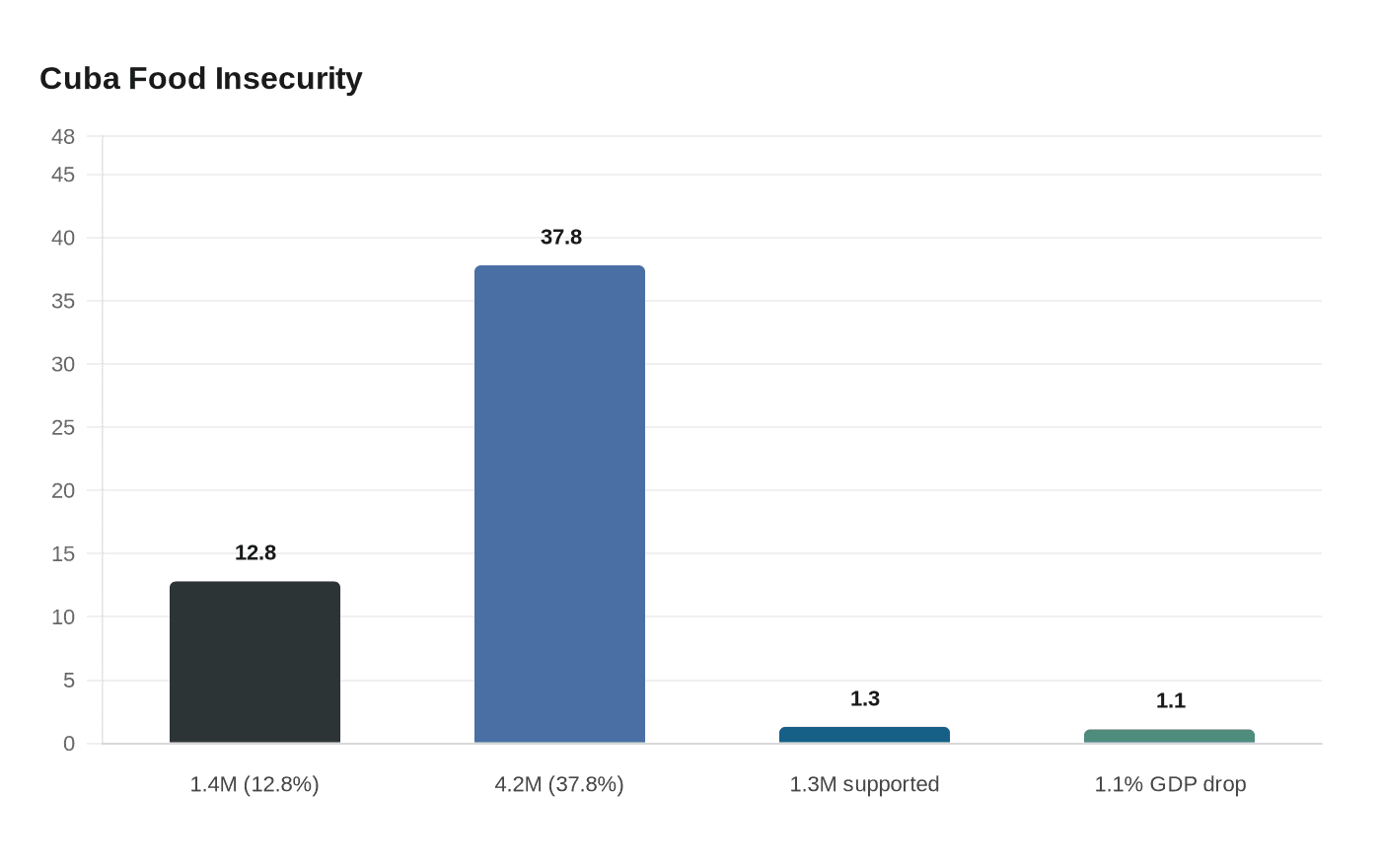
The numbers show how deep the strain runs. The U.S. Department of Agriculture Economic Research Service estimated that 1.4 million Cubans, or 12.8% of the population, did not meet the daily 2,100-calorie threshold in 2023. Under an adjusted GDP scenario, it said 4.2 million people, or 37.8% of the population, were food insecure. The agency tied Cuba’s worsening outlook to a long stretch of economic trouble since 2016, marked by lower tourism revenues, weaker agricultural output, energy shortages and double-digit inflation.
That pressure is visible in the food on the table. Families are stretching meals with thinner, more repetitive dishes, and a pot that once held root vegetables and meat now may hold little more than water, a couple of chayotes and a bone already boiled before. More households are trying to grow food in backyards and on rooftops, but that adaptation only goes so far when fuel is scarce, transport is slow and produce cannot move reliably from the countryside to city markets.

The World Food Programme said it supported 1.3 million people in Cuba in 2024, while warning that the government’s monthly food basket is almost entirely imported and still faces shortages and delays in distribution. It also said Cuba’s economy contracted by 1.1% in 2024 and continued to face a prolonged recession, persistent inflation, declining fiscal resources and fuel shortages. Those same forces ripple through every stage of the food chain, from farm inputs to delivery trucks to household storage.
Storm damage made the squeeze worse. The Food and Agriculture Organization said Hurricanes Oscar and Rafael made landfall on October 20 and November 4, 2024, affecting about 800,000 people and damaging roughly 15,000 hectares of crops, mainly cassava and plantains. More than 70,000 chickens died, and around 835 hectares of rice and 571 hectares of maize were affected in Artemisa and Mayabeque. With planting operations severely hampered in hurricane-hit areas and places already short of energy, the race to cook before the next blackout is no longer a temporary inconvenience. It is part of how Cuban families keep food from vanishing altogether.
This article was produced by Prism’s automated news system from verified source data, official records, and press releases, then run through automated quality and moderation checks before publishing. The system is built and supervised by the people who set the standards it runs under. Read our full AI policy.
Did this article answer your question?