Cuba’s foreign minister blasts White House statement as misinformed and superficial
Raúl Castro's murder indictment and a White House Cuba message collided on May 20, prompting Bruno Rodriguez to blast Washington as "superficial and misinformed."

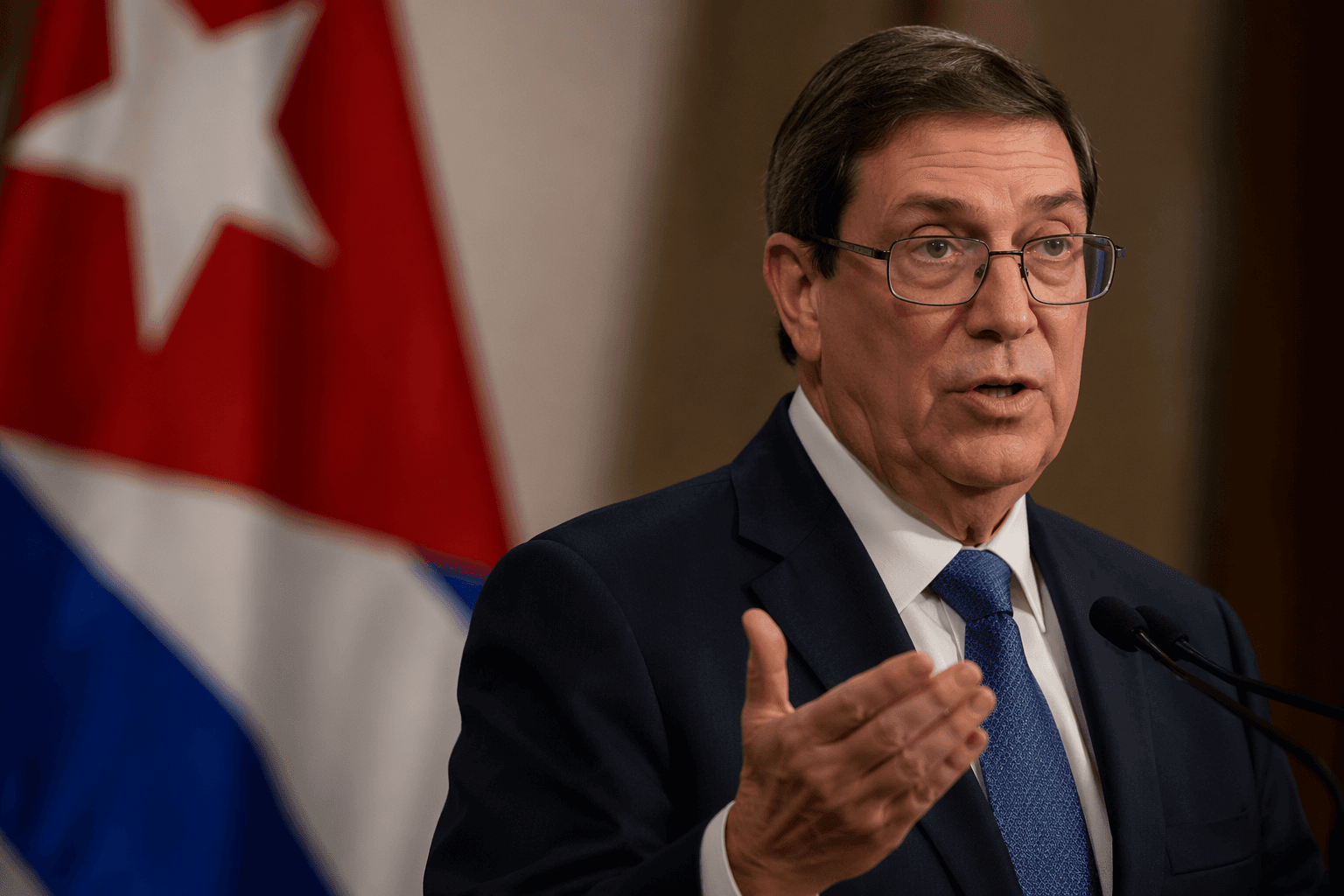
A murder indictment against Raúl Castro and a White House Independence Day message turned May 20 into a fresh flashpoint in U.S.-Cuba relations. Cuba’s foreign minister, Bruno Rodriguez, hit back on social media with a sharp dismissal of the White House statement as “superficial and misinformed.”
Rodriguez’s response landed shortly after the United States announced murder charges against the former Cuban president. The indictment was filed in federal court in Miami on April 23, 2026, and tied to the 1996 shootdown of two civilian planes carrying humanitarian aid, an attack that killed four U.S. nationals. That case is far from a routine legal filing in Havana’s eyes. It reaches back to one of the most notorious episodes in the long U.S.-Cuba conflict and gave the day’s rhetoric a much heavier edge.
The timing mattered as much as the charges. May 20, 1902 is widely treated as the date the Republic of Cuba was established after the U.S. occupation ended, and both Washington and Havana used that anniversary to frame the political battle. The White House’s May 20, 2026 Presidential Message on Cuban Independence Day said the republic was established on May 20, 1902. Secretary of State Marco Rubio also sent a video message to Cubans, saying the Cuban flag first flew over an independent country on that date and describing Cuba’s government as an illegitimate regime.
Havana saw something else in the choreography: not neutral commemoration, but a deliberate message of pressure. The Trump administration also announced sanctions on 11 Cuban regime elites and three government organizations in May 2026, and the White House said on May 1 that Trump had signed Executive Order 14404 on repression in Cuba and threats to U.S. national security and foreign policy. Those moves pointed to a broader campaign of legal, diplomatic and financial pressure, not a one-off indictment.
The political heat was not confined to Havana and Washington. On May 20, Democratic U.S. senators introduced a resolution aimed at stopping Trump from using the military against Cuba, showing that the administration’s escalation was already drawing resistance on Capitol Hill. By day’s end, the anniversary that once marked Cuban self-government had become a stage for dueling claims, sharper sanctions and a confrontation both sides were already treating as more than symbolism.
This article was produced by Prism’s automated news system from verified source data, official records, and press releases, then run through automated quality and moderation checks before publishing. The system is built and supervised by the people who set the standards it runs under. Read our full AI policy.
Did this article answer your question?