Dodgers’ Andy Pages stays in touch with Cuba amid blackouts, sanctions
Andy Pages is thriving in Los Angeles, but his hardest matchup is the blackout-prone phone line to Mantua, where his family waits through Cuba's daily shortages.
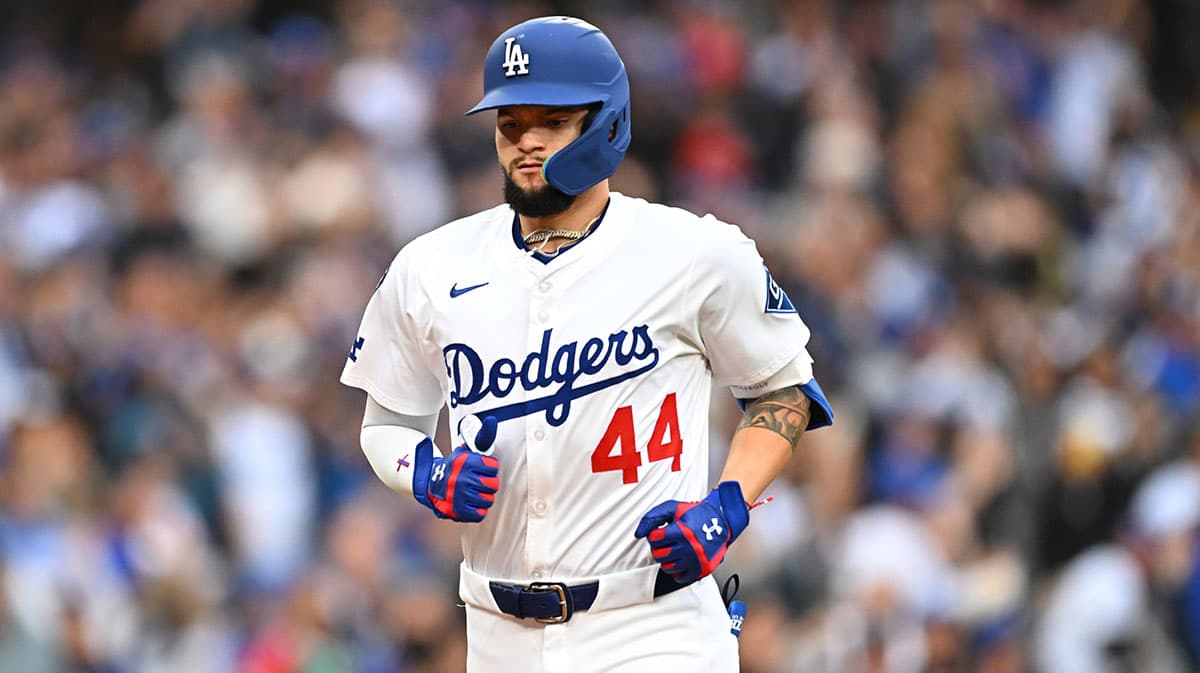
Andy Pages is putting together a breakout season for the Dodgers, but the season keeps bending back toward Cuba every time the phone line to Mantua goes dead. For Pages, the story is not just power and production in Los Angeles; it is the strain of trying to stay present for a family that lives inside blackouts, internet failures, and the daily uncertainty of the island’s breakdown.
A breakout season with a fragile connection
Pages was born on December 8, 2000, in Havana, Cuba, and made his Major League debut on April 16, 2024. He is married to Alondra, and MLB’s reporting makes clear how long the road has been: after leaving Cuba, he did not see his family again until 2023. That distance still defines him, even now that he is wearing a Dodgers uniform and becoming a bigger part of the club’s outfield picture.
His family story carries its own texture. MLB has said his parents are Juana Maria and Liban Pages, and that Liban helped make Andy’s first bats in Cuba using wood from friends. That detail matters because it shows how deeply the sport is tied to home, even after home becomes hard to reach. MLB also reported in August 2024 that, outside of his wife, his family still had not watched him play in person.
When Cuba goes dark, contact disappears with it
The hardest part of staying close is not just the distance. It is the instability. Pages’ calls home often do not go through, and when they do, the timing can be impossible to predict because Cuba’s blackouts and internet failures can cut off contact for hours or days. Sometimes the only window comes in the middle of the night, when power briefly returns and relatives can finally try to reach him.
That is the larger Cuban reality behind Pages’ private worries. WLRN reported on October 21, 2024, that Cuba had spent its fourth straight day in an almost island-wide blackout after the failure of the electrical grid, a crisis made worse by the country’s broader economic strain. Cuban Americans in South Florida told the station that when power, internet, and phones are down, families on the island lose their main lifeline. That is exactly the kind of rupture Pages is living with, and it helps explain why a big-league hot streak can still come with constant fear about whether parents and siblings are safe, whether they have power, and whether they can get through another day of shortages.
Storms make that fragility even worse. MLB reported that when a bad storm passes through Cuba, Pages might go days without hearing from his family because the lines of communication can be destroyed. In a place where basic infrastructure is unreliable, a weather event is not just weather. It becomes another way for a son in Los Angeles to lose contact with the people he is trying hardest to keep close.

Migration rules keep the family split
Pages’ story also exposes a less visible barrier: even money and fame do not erase the restrictions that keep Cuban families separated. He cannot simply fly back and forth, and his family cannot just come to the United States to watch him play because diplomatic and immigration barriers still stand in the way. That is the part of the story that turns a baseball profile into a Cuba story, because the issue is not only sentiment. It is the structure of movement itself.
Those barriers were part of the backdrop when U.S. and Cuban officials met in Havana on December 4, 2024, for the second of two scheduled migration talks that year. The talks were tied to bilateral migration accords dating back to 1984, and the U.S. said it raised family reunification, irregular migration, and human rights in the discussions. The official language is diplomatic, but the consequences are personal: every delay in policy is another season in which a son’s biggest family milestones happen through a shaky phone connection instead of a visit.
Why Pages’ Cuba story keeps landing
Pages has already given the Dodgers moments that feel like postcards home. MLB described his June 2025 Father’s Day homer as a long-distance gift to his dad back in Cuba, which is exactly how his public identity keeps forming, one big swing at a time. The baseball gets the attention, but the emotional center remains the same: he is a Cuban son trying to keep a family intact across a border that is made harsher by sanctions, shortages, and a communications system that can vanish without warning.
That is why Pages’ season hits differently. Every drive into the gap and every loud night at Dodger Stadium sits beside the same small, stubborn question from Mantua: did the power hold, did the call get through, is everybody okay? His breakout is real, but so is the silence that sometimes answers it, and that silence is the part of the story Cuba keeps writing into his life.
This article was produced by Prism’s automated news system from verified source data, official records, and press releases, then run through automated quality and moderation checks before publishing. The system is built and supervised by the people who set the standards it runs under. Read our full AI policy.
Did this article answer your question?