Hegseth warns Cuba against weapons that could reach U.S. mainland
Hegseth told troops at Guantánamo that Cuba would face confrontation if it sought weapons that could hit the base or the U.S. mainland.
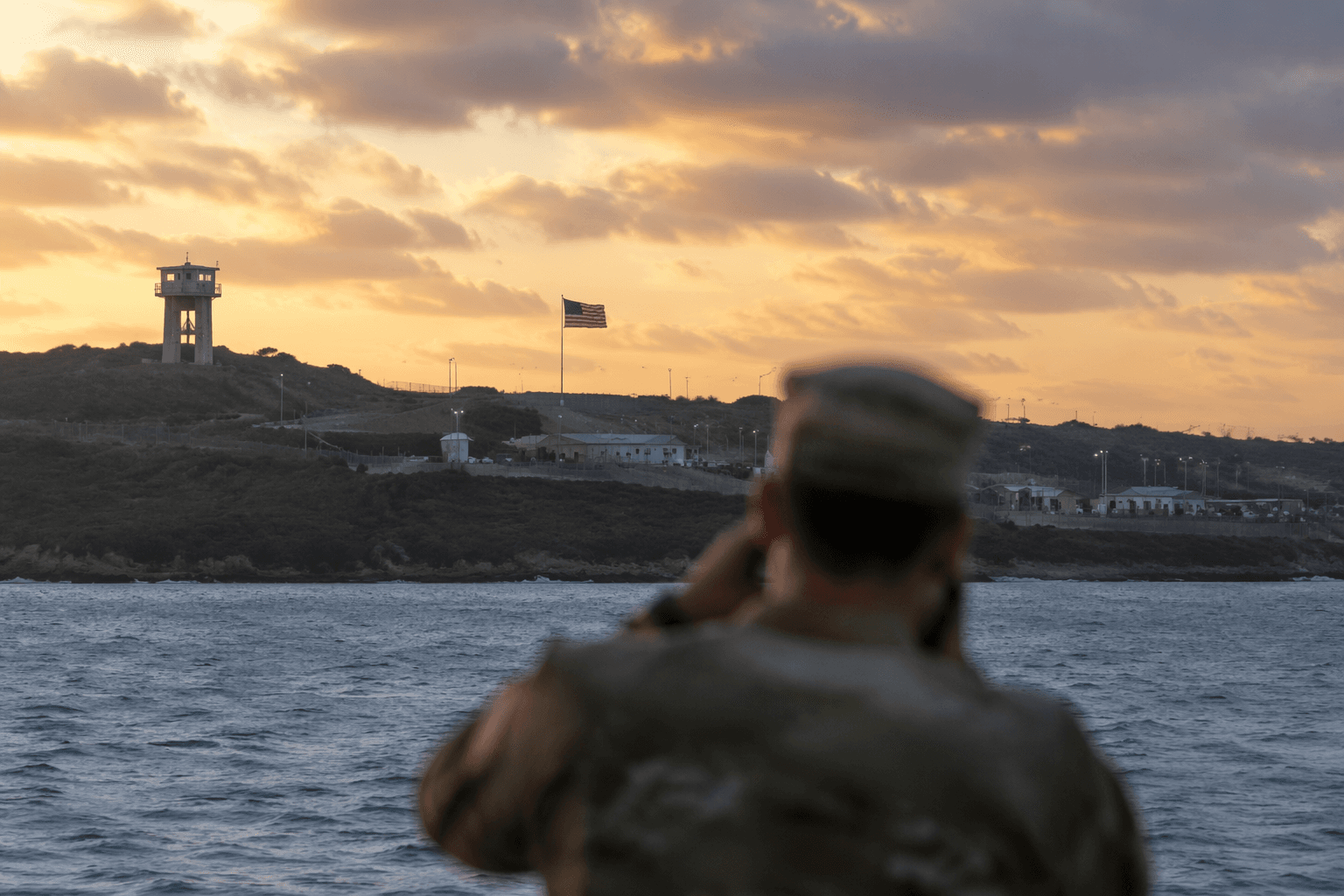
Pete Hegseth turned a stop at Naval Station Guantánamo Bay into a blunt warning to Havana. Speaking to U.S. troops at the base on Cuba’s southeastern tip, he said the Cuban government would be making a serious mistake if it tried to obtain weapons able to reach the U.S. mainland or the base itself, a move he framed as one that would invite a confrontation Cuba could not endure.
The warning landed with extra force because Guantánamo is no ordinary outpost. The installation covers about 45 square miles and sits roughly 400 air miles from Miami, a U.S. Navy sea-power platform that has anchored American military presence in the Caribbean since the 1903 lease arrangement with Cuba. Its symbolism runs straight through the Cuban Missile Crisis of October 1962, when the United States and the Soviet Union came closest to nuclear war and the island became the center of a superpower showdown.
Hegseth also tried to separate pressure from outright rupture. He said the United States still hoped for a positive relationship with Cuba, but that he was prepared to give the commander-in-chief every option needed. The trip followed a recent visit by the top U.S. commander for Latin America and an earlier, rare visit by CIA Director John Ratcliffe to Havana, part of a pattern that mixes military signaling with back-channel contact.
That broader pressure campaign was already moving before Hegseth arrived. On June 4, the State Department sanctioned Cuban military instrumentalities and other actors under Executive Order 14404, dated May 1, 2026. In late May, Washington designated 11 regime-aligned elites and three Cuban government bodies, and another June action targeted five Cuban entities and five individuals. The State Department’s Cuba travel page has also carried multiple 2026 alerts, including one dated May 24.

Taken together, the moves suggest that Guantánamo is being used as both a warning and a stage. The base remains the oldest overseas American naval installation, but it is also a pressure point in a second Trump term where sanctions, travel warnings, and military posture are being braided into one campaign. That matters well beyond the fence line at Guantánamo Bay: any escalation that threatens the island’s stability can widen regional tension and deepen the migration pressure that has long shadowed U.S.-Cuba relations. For Havana, the message was not subtle. The United States was not just tightening the screws; it was drawing a line around weapons, the base, and the risk of direct confrontation.
This article was produced by Prism’s automated news system from verified source data, official records, and press releases, then run through automated quality and moderation checks before publishing. The system is built and supervised by the people who set the standards it runs under. Read our full AI policy.
Did this article answer your question?