In Havana, blackouts turn daily life into exhaustion and frustration
Havana’s blackouts are not just outages, they are lost sleep, spoiled food, and hours of daily life. In Regla, power may return for 15 minutes, then vanish again.

The blackout is no longer a moment. It is the schedule.
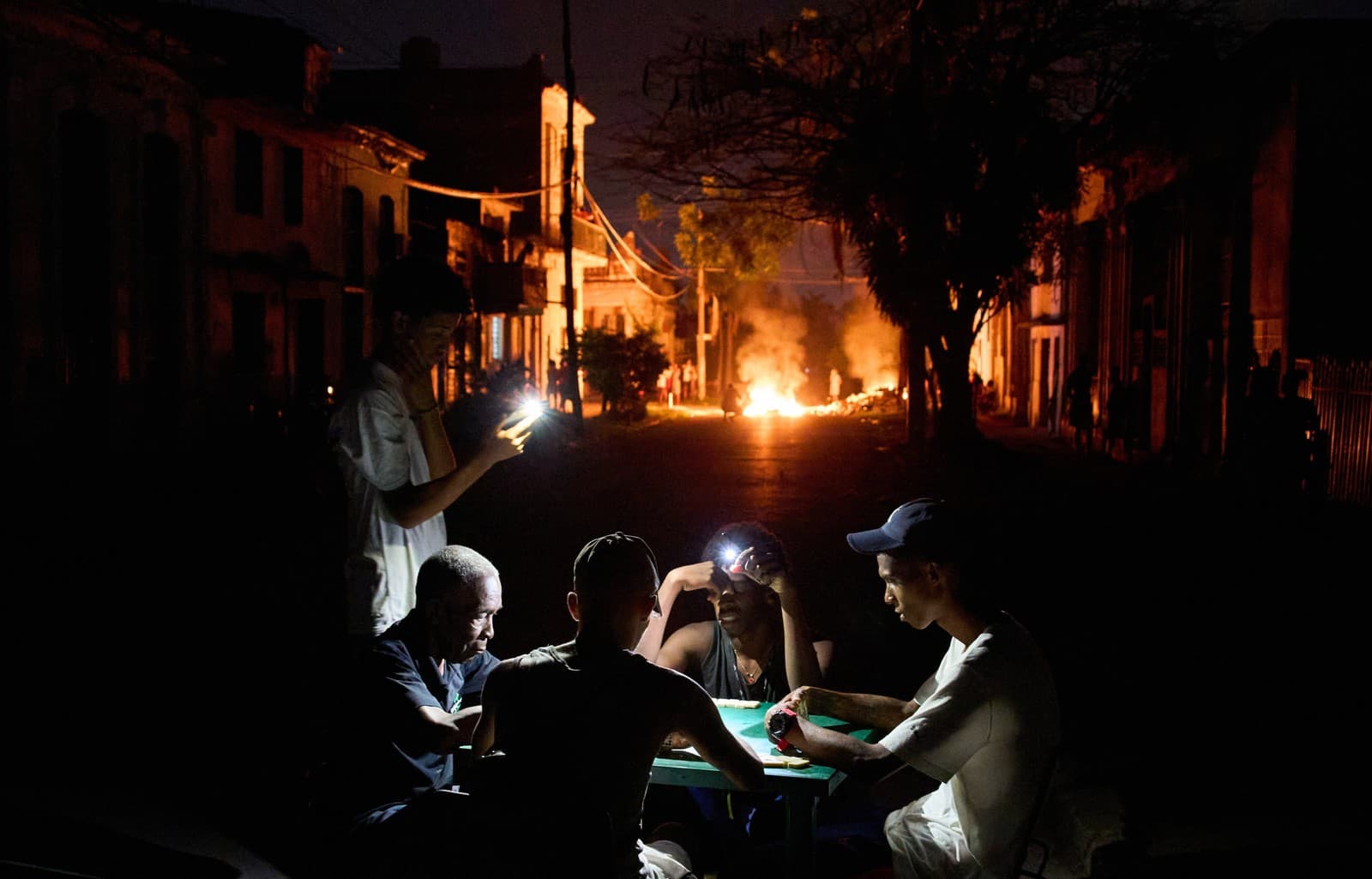
In Havana, especially across Regla, families are learning to measure the day by what the electricity did not allow them to do. A neighborhood can go 27 hours without power, then get only brief 15-minute bursts before the lights drop again. By then, sleep has already been broken by heat, mosquitoes, and children waking in the dark, and the next morning starts with the same question: how long will the charge in the fan, phone, or battery last this time?
That is why the crisis feels so punishing. It is not only the absence of power, but the way it fractures ordinary routines. Food spoils faster than people can replace it, rechargeable fans run down in stifling rooms, and the effort of standing outside in the dark waiting for a fix becomes its own humiliation. What official language treats as generation shortfalls is lived at home as exhaustion, frustration, and a daily shrinking of what can be done.
Inside the home, the grid failure becomes a health problem.
The Havana Times feature at the center of this story makes the crisis legible by staying inside the household. Nights without electricity mean heat that will not break, sleep that never fully arrives, and the kind of fatigue that spreads into work, caregiving, and school preparation. When power comes only in fragments, people cannot reliably refrigerate food, preserve medicine, charge devices, or keep a consistent household rhythm.
That loss is bigger than convenience. Parents are trying to settle children in rooms that never cool down. Adults are trying to get through the day after sleeping in waves. Every interruption adds another layer of strain, from the mosquitoes that fill the dark to the worry that one more outage will wipe out whatever food or battery charge is left. The crisis is shaping health, food safety, and the ability to show up for work with any consistency.
The anger is audible, and it is turning public.
In Havana, the frustration does not stay quiet. The story describes neighborhood pot-banging as a release valve after nights without sleep, a sound of people refusing to normalize what has become unbearable. In May 2026, blackouts in Havana triggered protests, showing that the grid crisis is no longer contained to private inconvenience or background hardship. It is becoming a public pressure point.

That matters because the official response has increasingly felt detached from what residents are experiencing. Updates from the Electric Union of Cuba, or UNE, arrive through Telegram, but the gap between those reports and daily reality has widened. People do not need a chart to tell them the system is strained. They are living the strain each time the power disappears before dinner, or comes back long enough to raise hope and then vanish again.
This is not a one-off failure. It is a system under repeated collapse.
Cuba’s electrical grid collapsed on September 10, 2025, after an unexpected shutdown at the Antonio Guiteras thermoelectric plant in Matanzas. Reuters described that breakdown as the fourth nationwide grid failure in less than a year, which is the clearest sign that this is structural rather than episodic. Bloomberg likewise reported that the failure at the 300 MW Antonio Guiteras plant brought the entire grid down.
The wider pattern is just as severe. In May 2026, another major collapse cut power to eastern provinces, and CBS News and AP reported that the U.S. offered $100 million in aid after that failure. By then, the crisis had moved far beyond Havana. The outages were binding together the capital, the eastern provinces, and the country’s already fragile energy system into one continuous emergency.
The official numbers explain the scale, but not the suffering.
International reporting in 2026 cited peak electricity-generation deficits of roughly 1,800 MW to 1,940 MW, a gap that makes the shortage feel almost abstract until it reaches the kitchen, the classroom, or the bedroom. The Ministry of Energy and Mines of Cuba has been trying to frame the crisis in technical terms, but the scale of the shortfall is already written into the daily routine of households across the island.
In May 2026, Energy Minister Vicente de la O Levy said Cuba had run out of diesel and fuel oil. That shortage helps explain why the blackouts are so persistent and why repairs do not reliably translate into stable service. Cuba’s crisis has been tied to aging power plants, chronic fuel shortages, and repeated breakdowns of the national electrical system, which means every outage is part of a larger pattern of fragility.
Solar power has helped, but it has not stabilized the system.
Miguel Díaz-Canel has said Cuba was generating about 1,000 MW, or 38% of daytime generation, from solar panels installed with Chinese support over the previous two years. That is a significant contribution, but it has not solved the basic problem: the grid remains vulnerable, and the country still lacks the fuel and redundancy needed to keep power flowing when the system is stressed.
That is why the blackouts continue to feel so unresolved. Solar generation can support daytime supply, but it does not erase the damage done by fuel shortages, aging plants, and repeated outages. When the system falters, the household consequences return immediately: fans stop, food warms, phones die, and the day gets reshaped around whatever electricity happens to appear.
The blackout crisis reaches far beyond Havana.
The United Nations said in April 2026 that humanitarian needs in Cuba remained urgent amid a worsening crisis fueled by energy shortages and the lingering damage of Hurricane Melissa in late October 2025. That broader emergency makes the Havana outages part of a national pattern of instability, not a city-specific complaint. The situation in eastern Cuba, where power was cut in a major collapse, shows how quickly one failure spreads through the country’s social and economic life.
For families, this affects more than comfort. It affects schooling when devices cannot be charged. It affects caregiving when there is no stable light or cooling. It affects work when people cannot keep a routine or preserve the food they depend on. It also affects migration decisions, because repeated blackouts change how people think about the future, and whether daily life can be sustained at all.
In Havana, the lights coming back for 15 minutes at a time do not feel like a recovery. They feel like a reminder of how narrow the margin has become. The blackout is now the thing residents plan around, endure, and count in hours, and that is why it has turned so much of ordinary life into exhaustion and frustration.
This article was produced by Prism’s automated news system from verified source data, official records, and press releases, then run through automated quality and moderation checks before publishing. The system is built and supervised by the people who set the standards it runs under. Read our full AI policy.
Did this article answer your question?