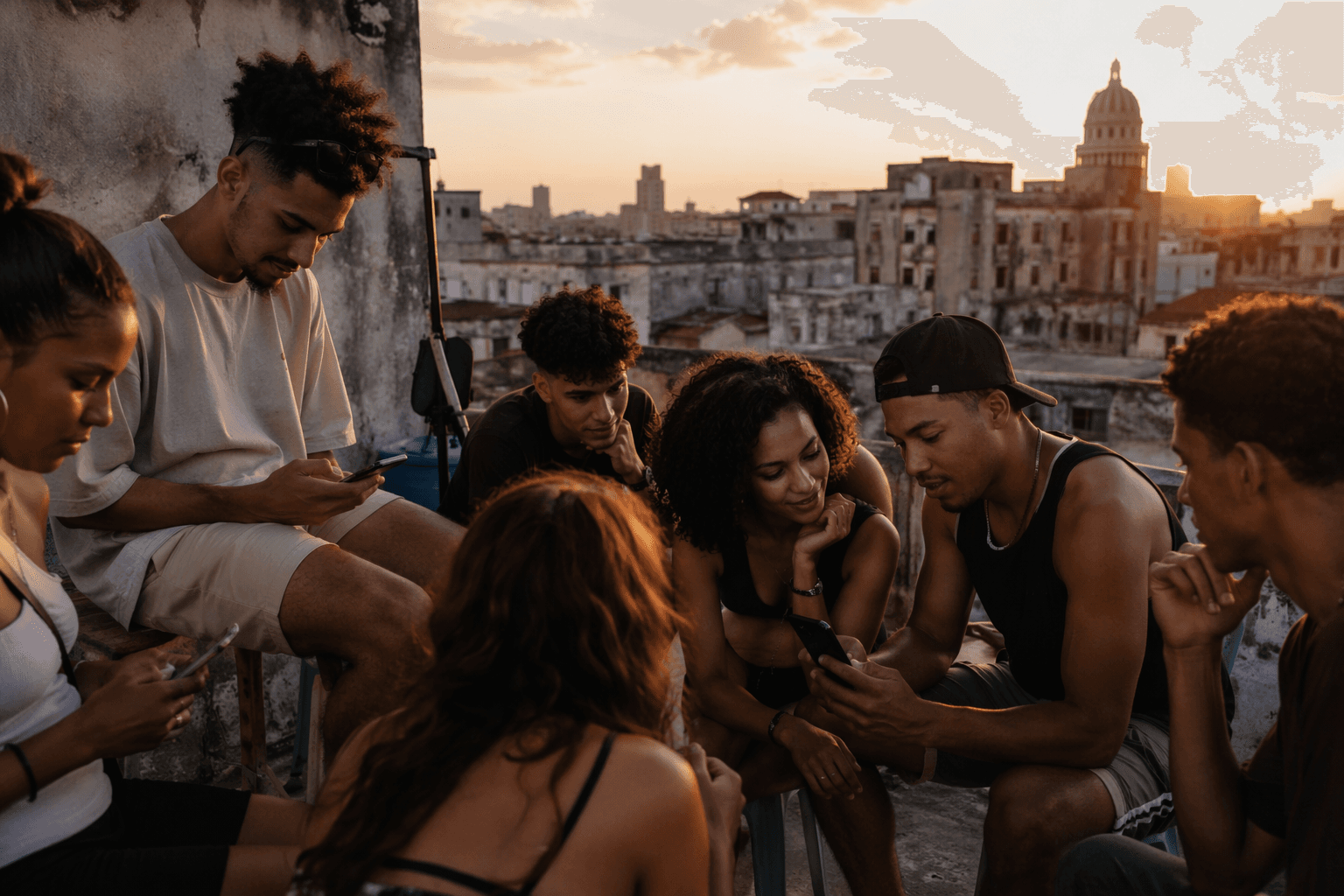
Morning light in Havana’s Miramar reveals quiet summer beauty
Morning light turns Miramar into a study in calm, where trees, sea, and old houses make beauty feel like a form of resilience.
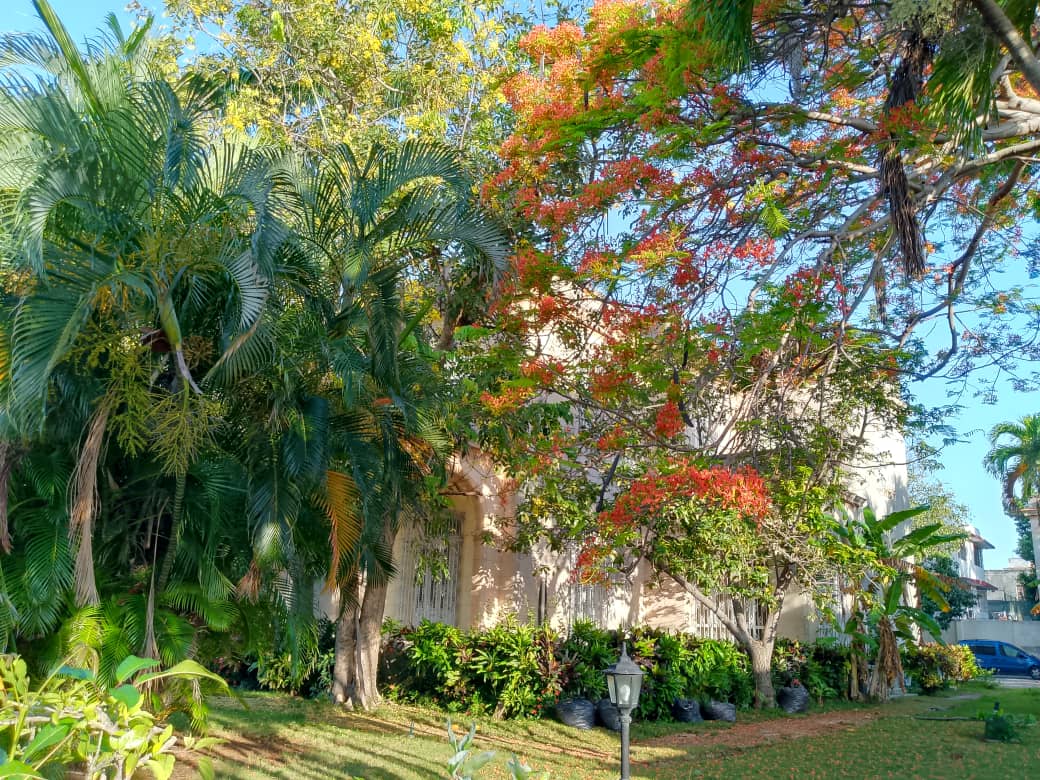
The best thing about Miramar in early summer is not that it ignores hardship. It is that, for a few bright hours in the morning, it lets you see how much life Havana still holds in its color, shade, and air. Trees press over the streets, gardens soften the edges of old houses, and the sea sits calm enough to make the whole neighborhood feel briefly suspended.
Miramar at first light
Walk Miramar early and the district reveals itself slowly, through texture rather than spectacle. The light catches the greenery first, then the façades of the houses, then the quiet sweep of water nearby. That pairing of architecture and vegetation gives the neighborhood its particular mood: lived-in, leafy, and unhurried, even in a city that so often appears in outside coverage only through shortage and strain.
This is a neighborhood that works well in a photo essay because it is built for atmosphere. The streets do not need to perform. In the morning, the trees, gardens, and sea do the work, and the result is a softness that feels especially vivid in early summer. It is a reminder that Havana is not only a place of queues, outages, and everyday improvisation. It is also a city where a simple walk can still feel like renewal.
A district with its own signature
Miramar sits in the municipality of Playa, and its identity has long been tied to the broad geometry of Quinta Avenida. That avenue, lined with embassies, consulates, and former manor houses, gives the district a formal, international air, but the neighborhood never becomes purely ceremonial. The residential character remains visible in the way the houses sit back from the street and in the persistent presence of greenery around them.
That combination of diplomatic frontage and domestic calm is part of what makes Miramar so recognizable to people who know Havana well. It is associated with embassies and old mansions, but it is also a neighborhood where the ordinary pleasures of shade, sea air, and morning light still matter. The visual rhythm of the place comes from those layers together, not from any one landmark alone.
One of the clearest symbols of that presence is the Russian Embassy in Havana, located in Miramar on Quinta Avenida. The building, completed in 1987 on a site of about 4 hectares, is a blunt reminder of the district’s geopolitical role, but it also sits within the broader residential landscape rather than apart from it. In Miramar, even large institutions are folded into a neighborhood that still feels rooted in everyday life.
How Miramar became what it is
Miramar did not always look like this. Historical accounts describe it as a wooded, swampy area west of the Almendares River, a landscape that changed quickly after 1903 as development accelerated. What is now a district of avenues, embassies, and manor houses was once a more unsettled edge of the city, and that older geography still helps explain the neighborhood’s spacious feel and green character.
By the early 1950s, the Malecón had been extended to the Almendares, bringing the city’s waterfront farther west. Then, in 1957, a tunnel opened between Vedado and Miramar, cutting downtown travel time to about 20 minutes. Those changes helped bind Miramar more tightly to the rest of Havana, while preserving the district’s separate personality. It became easier to reach, but it did not become interchangeable.
That history matters because the neighborhood’s present calm is not accidental. The avenues, the water, the mature trees, and the heavy houses all belong to a city that has been shaped and reshaped over decades. Even the area’s diplomatic visibility reflects this longer urban story. Miramar looks the way it does because Havana kept expanding toward it, then around it, while leaving its broad, green frame intact.
Havana in the background
Miramar’s appeal also comes from the city that surrounds it. Havana is Cuba’s capital and chief port, the island’s largest city, and one of the most storied urban landscapes in the Caribbean. Britannica estimates its population at 2,132,183 in 2020, a scale that helps explain why a neighborhood scene can feel so revealing: in a city this large, the character of one district can carry real weight.
Havana was founded in 1515 by Diego Velázquez de Cuéllar and moved to its present location in 1519. That long history sits behind the city’s present-day contrasts, where colonial memory, revolutionary symbolism, and daily scarcity coexist. Miramar belongs to that larger Havana, but it offers a different register from the city’s more familiar hard edges. Here, the eye lands on trees, walls, water, and the ways they meet in the morning.
For visitors and Cuba watchers alike, that makes Miramar useful as more than a scenic stop. It shows that Havana’s identity is not exhausted by crisis. The city still contains neighborhoods with distinct habits of light and space, places where beauty is not an escape from reality but part of how reality is lived.
In the end, that is what the morning walk in Miramar makes impossible to forget. The light comes up, the gardens answer it, the sea stays calm, and the neighborhood keeps doing what it has always done: offering a view of Havana that is quiet, inhabited, and unmistakably alive.
This article was produced by Prism’s automated news system from verified source data, official records, and press releases, then run through automated quality and moderation checks before publishing. The system is built and supervised by the people who set the standards it runs under. Read our full AI policy.
Did this article answer your question?