Senate Democrats move to block Trump military action on Cuba
Senate Democrats moved to block Trump from sending U.S. forces against Cuba, after warnings of a blockade, attack plans and a widening sanctions campaign.

Senate Democrats tried to slam the brakes on a Cuba crisis before it crossed from threats into open conflict. Tim Kaine, Adam Schiff and Ruben Gallego introduced a War Powers Resolution to block President Donald Trump from using U.S. Armed Forces in hostilities against Cuba, a sharp and unusual move aimed at stopping a blockade, a quarantine or something even more direct.
The resolution, S.J. Res. 184, was introduced in the 119th Congress on March 13, 2026. Its findings say a U.S. blockade or quarantine of Cuba would count as hostilities under the War Powers Resolution, which means Congress must authorize it. It is also privileged, giving senators a path to force a vote after 10 days. The sponsors were responding to Trump’s repeated threats to send in troops and reports that U.S. Southern Command had been ordered to draw up attack plans.
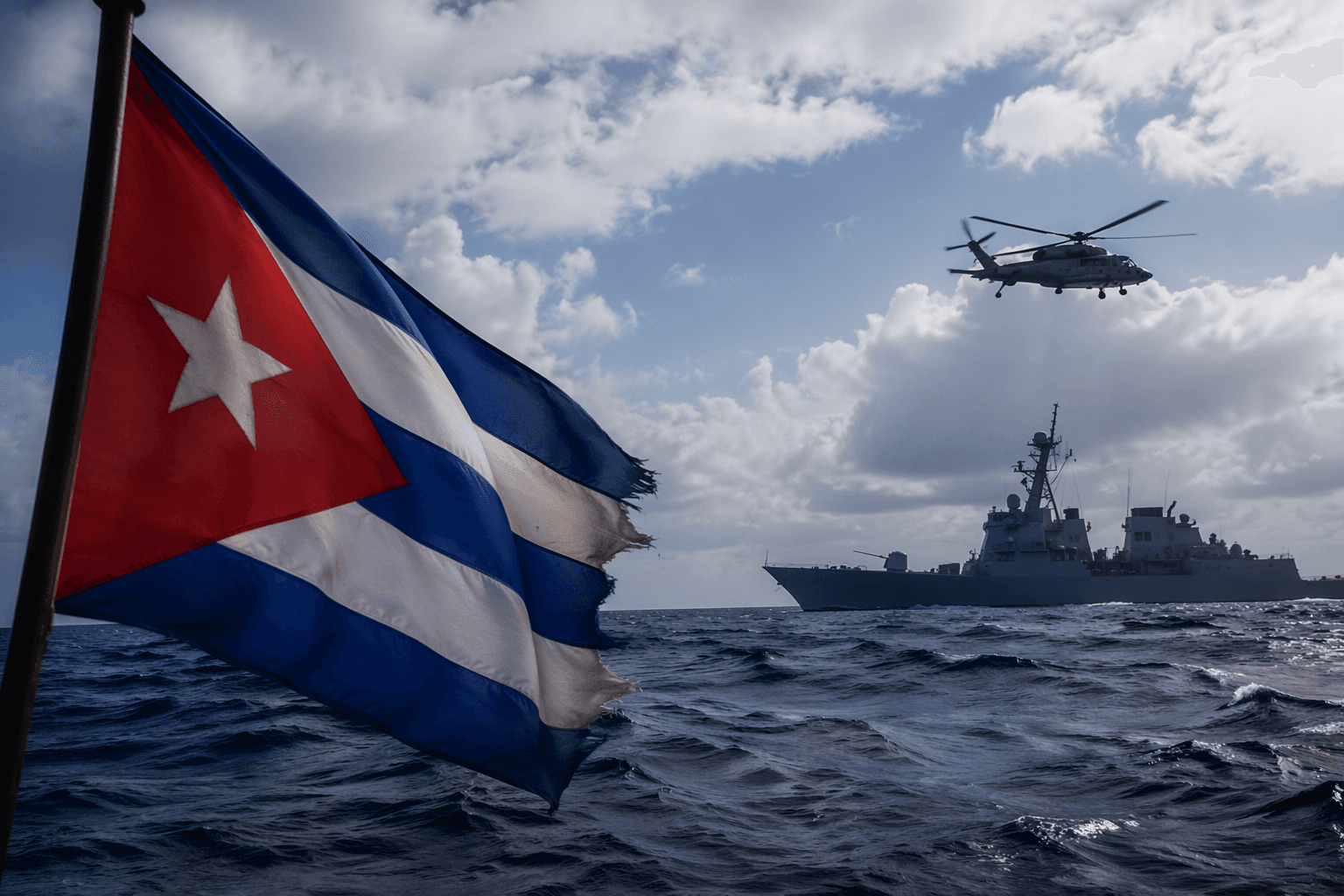
Kaine’s office said Trump had already engaged in a military blockade of Cuba and had recently threatened direct military action. Senate offices also said he had warned that the United States would “take care of Cuba” and that Cuba would “fall soon” if it did not make a deal. For a country with a long memory of blockade fears, those are not idle words.
The push landed in the middle of a broader escalation. On May 1, Trump signed Executive Order 14404, titled “Imposing Sanctions on Those Responsible for Repression in Cuba and for Threats to United States National Security and Foreign Policy.” Treasury said that order followed a national emergency declared on January 29, 2026. The State Department then announced sanctions on May 7 against Cuban regime elites, and again on May 18 against 11 regime-aligned actors and three entities.
On May 20, the Justice Department unsealed a superseding indictment charging Raúl Castro, now 94, and five other Castro-regime defendants over the February 24, 1996 shoot-down of two Brothers to the Rescue civilian aircraft. The defendants named in the case were Lorenzo Alberto Perez-Perez, Emilio José Palacio Blanco, José Fidel Gual Barzaga, Raul Simanca Cardenas and Luis Raul Gonzalez-Pardo Rodriguez.
That sequence made the Senate fight about more than rhetoric. It was a test of whether Congress could slow Trump before sanctions, criminal charges and military threats hardened into something far harder to unwind. For Cuba, a country where the U.S. export ban in October 1960 and the Bay of Pigs invasion on April 16, 1961 still frame the political imagination, the return of blockade talk made the War Powers fight feel less like procedure than a race against events.
This article was produced by Prism’s automated news system from verified source data, official records, and press releases, then run through automated quality and moderation checks before publishing. The system is built and supervised by the people who set the standards it runs under. Read our full AI policy.
Did this article answer your question?