Trump’s Cuba Pressure Rekindles Exile Claims Over Confiscated Property
Trump’s tougher Cuba stance has revived exile hopes over seized homes and businesses, but only 5,913 certified claims have clear legal footing.

An armed agent walking into Pedroso Bank in Havana and ordering a family out in November 1960 is the kind of memory that never stays buried for long in Cuban Miami. For Raul Valdes-Fauli, now a Miami attorney and former Coral Gables mayor, the seizure of a family business with roots reaching back to Spain in the 16th century was not just a loss of property. It was a public humiliation that still shapes how many Cuban Americans read every shift in Washington’s Cuba policy.
Donald Trump’s hard-line posture toward Havana has put those old losses back in the center of the conversation. His threats of military intervention and a naval blockade of fuel shipments have battered Cuba’s already weak economy and revived hopes among some exiles that political change could open a path to restitution or compensation. Nick Gutiérrez, president of the National Association of Cuban Landowners in Exile, said the issue has moved far beyond a legal niche, with younger Cuban Americans now asking how they might help rebuild the island if an opening ever comes.
The legal map is far narrower than the emotion around it. The U.S. government’s Cuba claims program certified 5,913 claims, out of 8,821 filed, with a total principal amount of $1,902,202,284.95. The program was completed on July 6, 1972. Those certified claims carry the strongest legal standing because they were formally processed by the Foreign Claims Settlement Commission, but the U.S. government says it is not presently authorized to adjudicate new claims for property seized by Cuba.
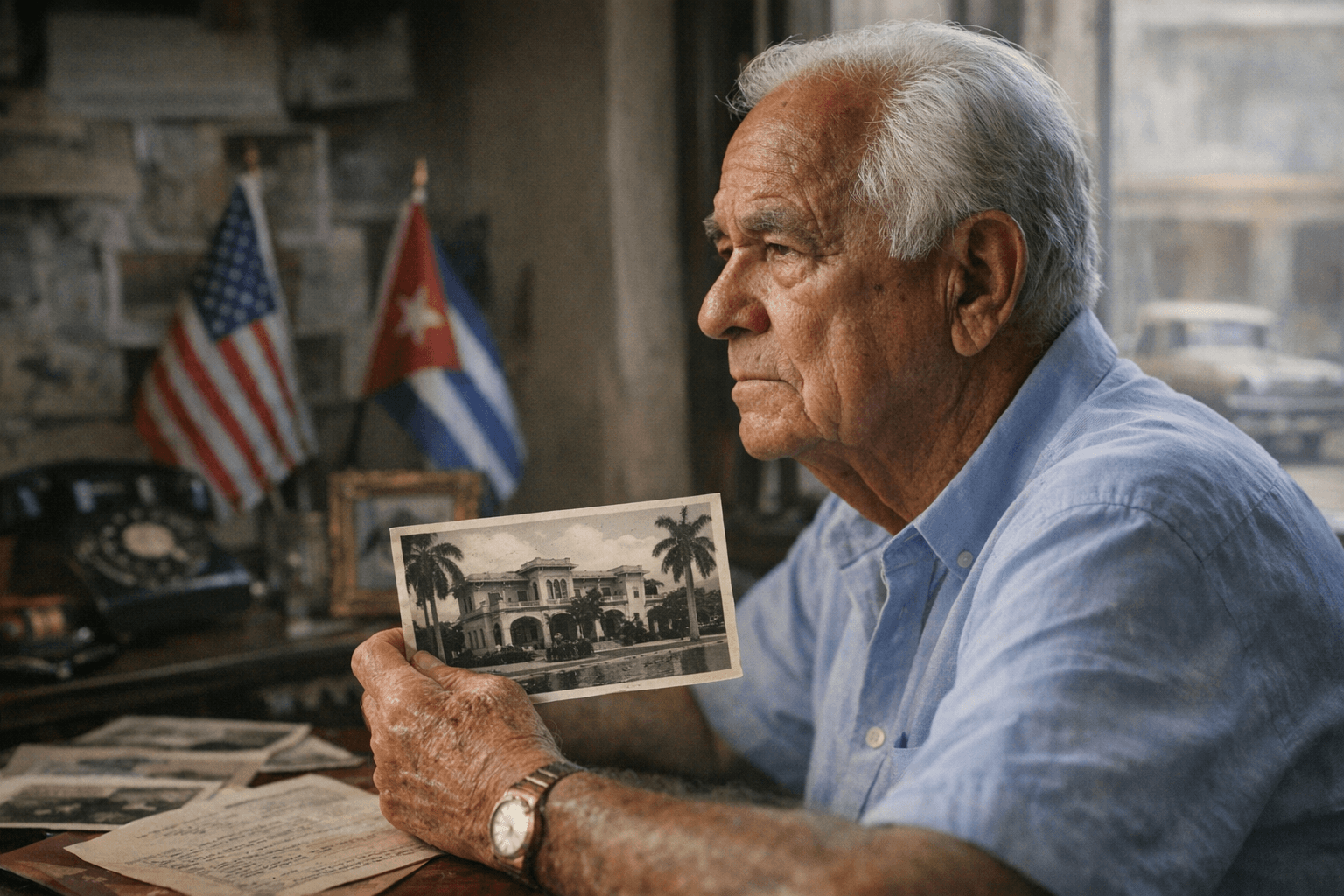
That matters because most Cuban-American families do not hold certified claims at all. Their cases may involve homes, farms, sugar interests, hotels, banks, or industrial assets, but they remain far harder to resolve in court or in diplomacy. The State Department says the Cuban Liberty and Democratic Solidarity, or Helms-Burton, Act, signed on March 12, 1996, does create a private right of action in U.S. courts against traffickers in confiscated Cuban property. Even so, that remedy is narrow, and it does not amount to a full restitution program.
The State Department’s 2024 and 2025 confiscated-property reports show the issue is still active in U.S. policy, including renewed outreach to Cuban American claimants and possible visa restrictions under Title IV. That keeps alive the hope that a future opening could address old losses. It also explains why so many families are wary: the emotional claim to a house or bank may be real, but the legal path to recovery is limited, and any serious U.S.-Cuba reset would have to face that gap head-on.
This article was produced by Prism’s automated news system from verified source data, official records, and press releases, then run through automated quality and moderation checks before publishing. The system is built and supervised by the people who set the standards it runs under. Read our full AI policy.
Did this article answer your question?