USCIRF says Cuba's religious repression is systematic, not isolated
USCIRF said Cuba uses surveillance, fines and exile to police worship, and one pastor was held for 14 hours after delivering medicine to prisoners' family.
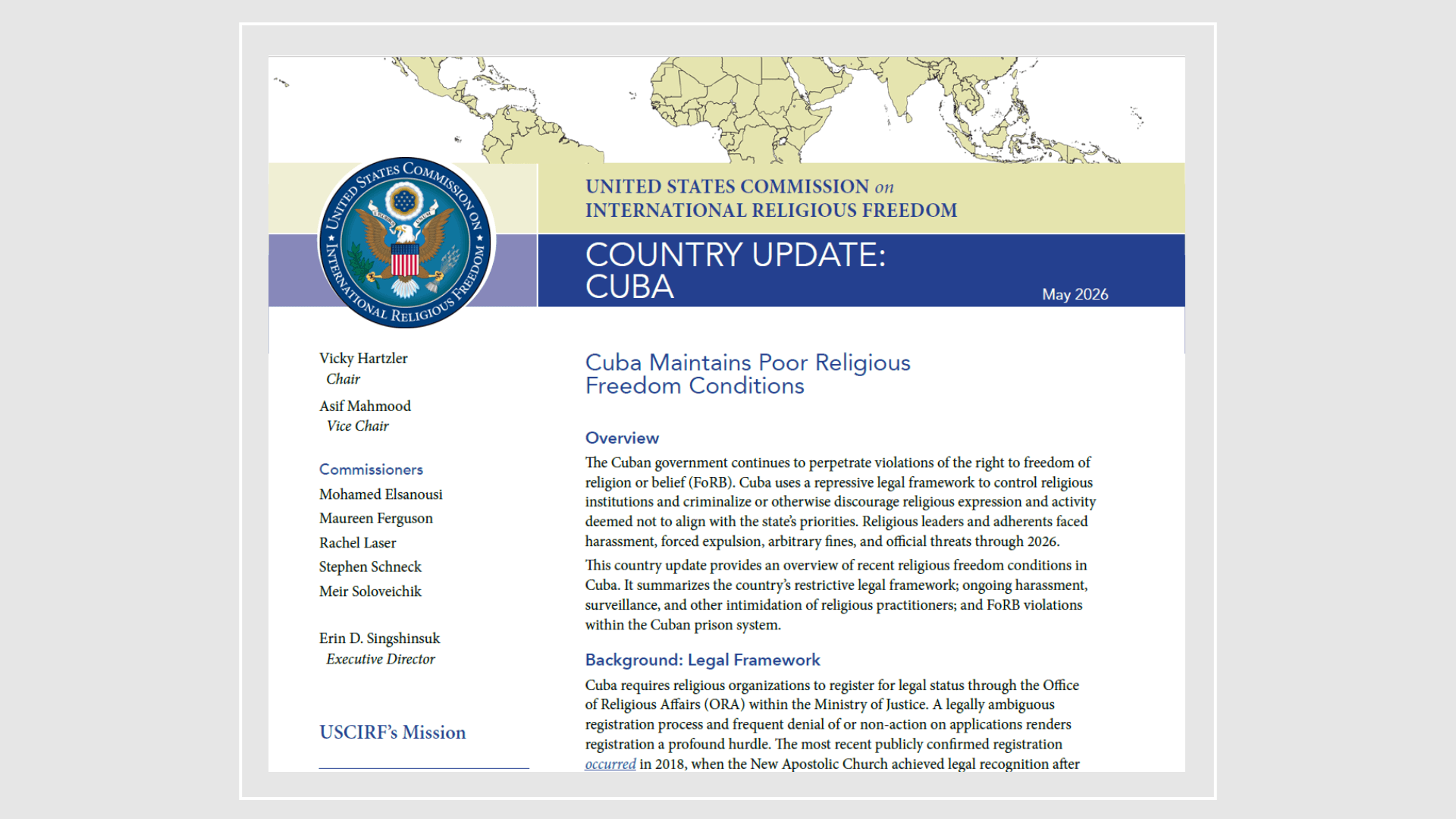
Cuba’s pressure on religion is not isolated, accidental, or hard to track, the U.S. Commission on International Religious Freedom said. In its latest Cuba update, USCIRF described a system built on surveillance, fines and enforced exile that keeps religious leaders and ordinary worshipers under control.
The commission said Cuba’s legal structure starts with registration, requiring religious organizations to go through the Ministry of Justice’s Office of Religious Affairs. Even there, the process remains vague and uneven. USCIRF said the most recent publicly confirmed approval came in 2018, when the New Apostolic Church finally won recognition after years without it, while Jehovah’s Witnesses have waited for years without a decision. The result is a tiered system that favors groups such as the Cuban Council of Churches and, to a degree, the Catholic Church, while unregistered communities are treated as illegal. That includes syncretic Santería and some non-Christian faiths.
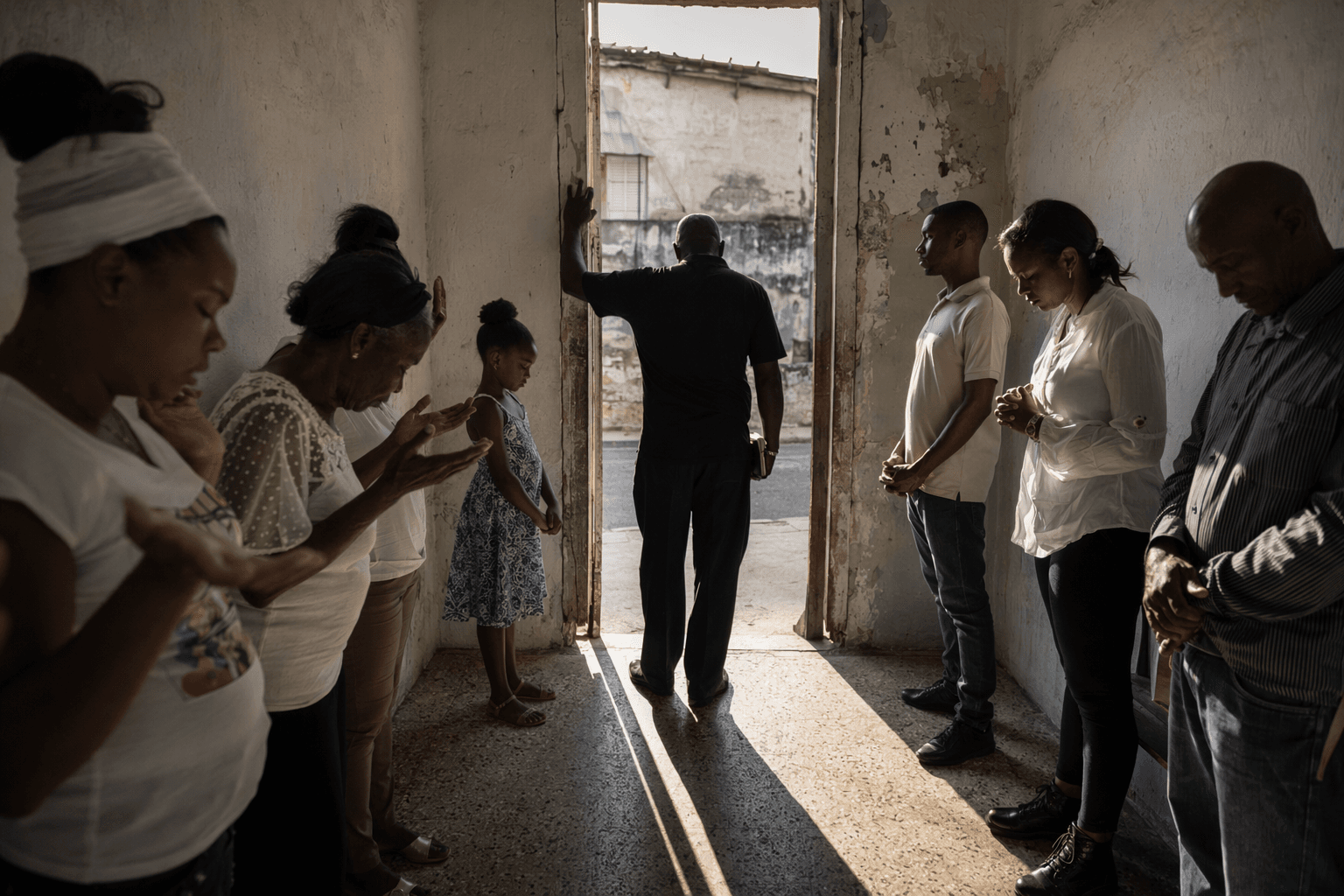
USCIRF said the enforcement side of that system runs through the Department of State Security, the National Revolutionary Police and local Committees for the Defense of the Revolution. Those bodies are used to monitor, pressure and punish religious leaders and practitioners, turning worship into a security issue. The commission’s 2026 annual report pointed to one sharp example: a pastor was forcibly disappeared for 14 hours in July 2025 after delivering medication to the mother of two political prisoners. The message was clear: even basic acts of faith-linked charity can trigger retaliation.
The broader rights picture makes that pattern harder to dismiss. Human Rights Watch said the Cuban government continued to repress dissent and public criticism, with hundreds of critics and protesters from the July 2021 demonstrations still arbitrarily detained. Christian Solidarity Worldwide documented 624 cases of religious persecution involving 1,894 specific violations in 2024, including harassment and fines against churches and other groups that tried to provide humanitarian aid, especially to families of political prisoners. The Cuban Human Rights Observatory later reported at least 873 violations of religious freedom in 2025.
USCIRF said it had already held a hearing on Cuba’s religious-freedom violations in 2023, recommended redesignating Cuba as a Country of Particular Concern in 2024, and again urged that designation in its 2026 annual report. Read together, the findings show a country where worship is not merely restricted, but managed through a system of surveillance, penalties and exile that reaches from registration desks to prison gates.
This article was produced by Prism’s automated news system from verified source data, official records, and press releases, then run through automated quality and moderation checks before publishing. The system is built and supervised by the people who set the standards it runs under. Read our full AI policy.
Did this article answer your question?