Dog yoga research explores mindfulness, well-being, and human-dog contact
Dog yoga may calm you, but the strongest signals point to slow movement, low-pressure dog contact, and the class setting, not a magic stress cure.
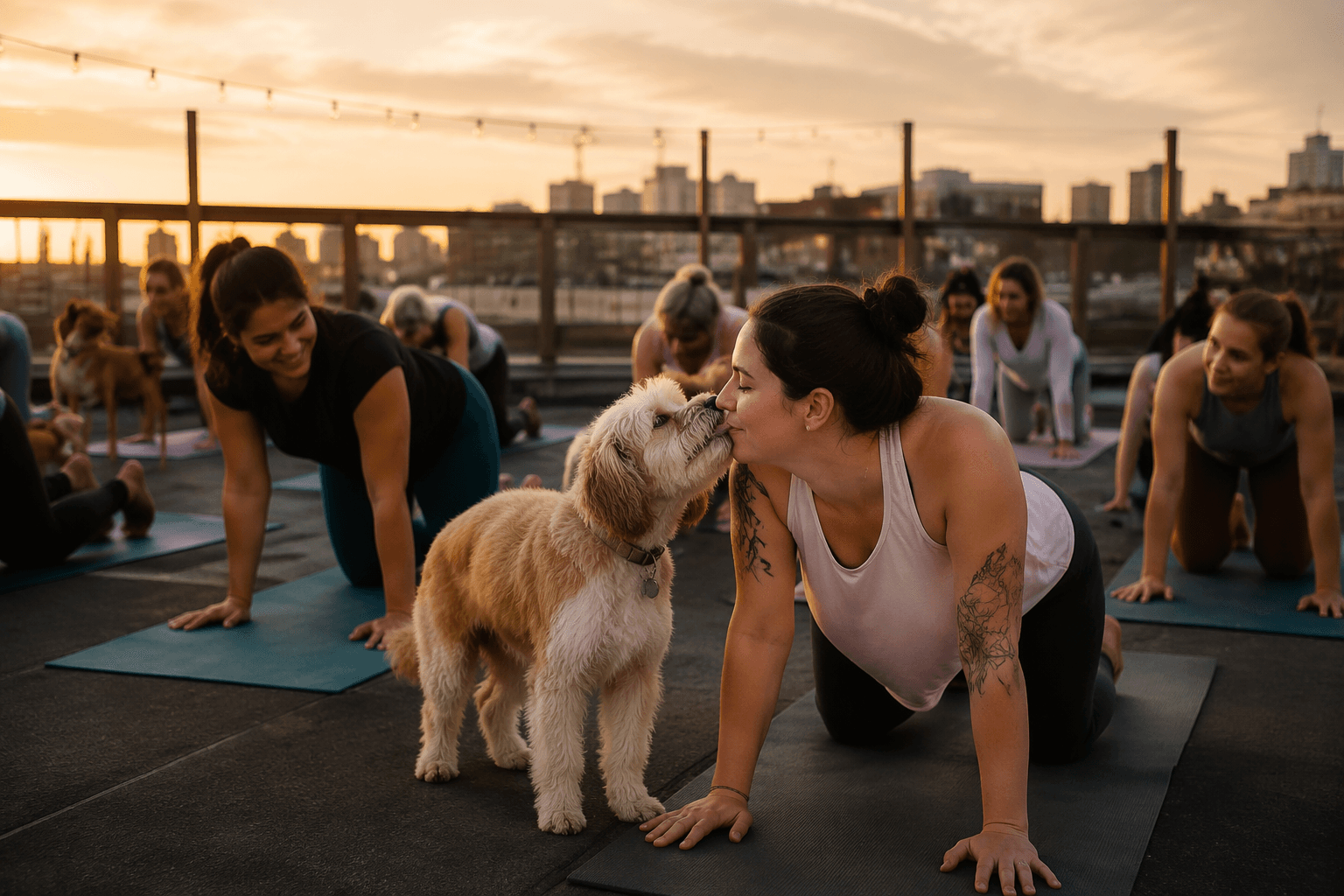
A 2024 PLOS ONE EEG study of human-dog interactions found that specific dog activities were associated with stronger relaxation, emotional stability, attention, concentration, and creativity. Dog yoga sits in a narrow band between mindfulness practice and human-animal contact, and the benefit appears to come from a mix of breathing, movement, novelty, and being around a dog rather than from a therapeutic power unique to dog yoga itself.
What the science can plausibly support
A 2021 conceptual analysis in Frontiers in Veterinary Science framed dogs and human well-being through a biopsychosocial lens. That approach treats dog-related wellness as a blend of body, mind, and social context, not just a feel-good anecdote, and it fits dog yoga better than a simple “pets are calming” slogan.
Dog interactions can increase brainwaves linked to stress relief and heightened concentration, while Teo et al. in 2023 found higher delta, theta, and alpha EEG activity during interactions with pet dogs.
Those are encouraging signals, but they are not the same thing as a clinical treatment claim. EEG activity, heart rate variability, oxytocin, and cortisol are all useful markers, and a 2022 study found increases in heart rate variability and oxytocin, plus decreases in cortisol, during human-dog interactions. Even so, those biomarkers do not automatically prove that dog yoga treats anxiety disorders or replaces therapy.
What dog yoga is probably doing for you
The best way to read the evidence is to break the class into parts. Dog yoga may feel calming partly because you are moving slowly, breathing on purpose, and staying in a low-arousal setting where the dogs are close enough to matter but not so frantic that the room turns into a puppy free-for-all. A steady yoga flow with gentle canine contact is a very different experience from a high-energy dog park or a chaotic play session.
The likely contributors are easy to name:
- Mindful breathing, which slows the pace and gives the nervous system something to follow
- Gentle movement, which can shift tension before the dog even enters the picture
- Novelty, because doing yoga with dogs changes attention and can make the practice feel fresher
- Human-animal contact, including touch, eye contact, and proximity
- The social setting, since group classes can add warmth, laughter, and shared attention
Where the claims stop
Marketing language can outrun the data. A class can feel soothing without being a medical intervention, and “I felt relaxed after class” is not the same as evidence for treating generalized anxiety, depression, or trauma. The research supports a narrower claim: certain forms of dog contact are associated with better mood or calmer physiology, especially when the interaction is structured, low-pressure, and measurable.
The mindfulness framing in the PubMed Central paper shifts the conversation from “dogs are cute” to “what kind of contact changes attention, arousal, and well-being?” It also explains why some dog yoga sessions may work better than others. A class that centers slow transitions, clear boundaries, and quiet dog time is more likely to line up with the conditions that the research has actually measured.
The welfare question is part of the equation
The human side is only half the story. By July 2023, welfare concerns around puppy yoga and goat meditation were surfacing in The Conversation on 2023-07-25, ITV News on 2023-07-03, and a Guardian opinion piece on 2023-07-13. The RSPCA has publicly criticized puppy yoga, and RSPCA Australia has called it a “hidden cost” in animal-welfare terms.
Those concerns are concrete, not abstract. They include vaccination status, parasite prevention, disease transmission, sanitation, and whether repeatedly moving puppies through a studio is a responsible form of socialization or just a slicker version of pet handling. The biggest red flag is when a wellness class starts to look like a sales channel instead of a carefully managed experience.
That risk showed up sharply in Las Vegas, where on 2025-04-25 an unlicensed breeder from California was fined after puppies were brought to a yoga class over Easter weekend.
How to read a class before you book it
If you are deciding whether dog yoga is worth trying for stress relief, the most useful question is not whether it is trendy. It is whether the class is built around the same conditions the research seems to reward: calm pacing, low pressure, and good animal care. A strong setup should make it obvious that the dogs can rest, move away, and stay clean and healthy.
Look for a class that can clearly answer the basics on dog welfare, hygiene, and handling. If the experience is being sold as a cure-all for anxiety, that is a promise the science does not support. If it is presented as a relaxing hour of movement and human-dog contact, clear safeguards for the animals should be part of the setup.
This article was produced by Prism’s automated news system from verified source data, official records, and press releases, then run through automated quality and moderation checks before publishing. The system is built and supervised by the people who set the standards it runs under. Read our full AI policy.
Did this article answer your question?