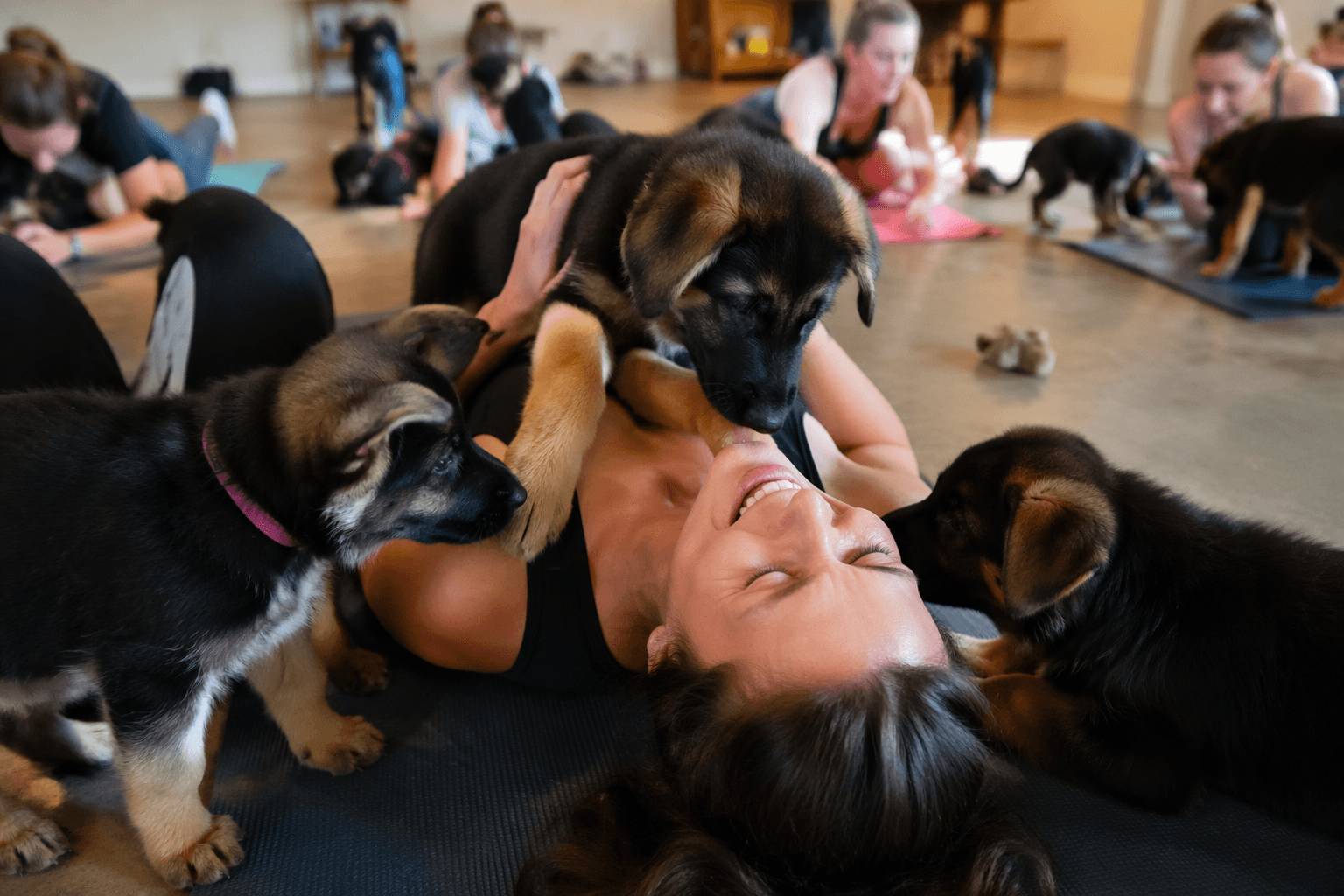
Doga grows in popularity, strengthening bonds and easing stress
The best doga pairs calm people with dogs who like to stay close, not perform. Real benefits show up when the session stays short, gentle, and dog-led.
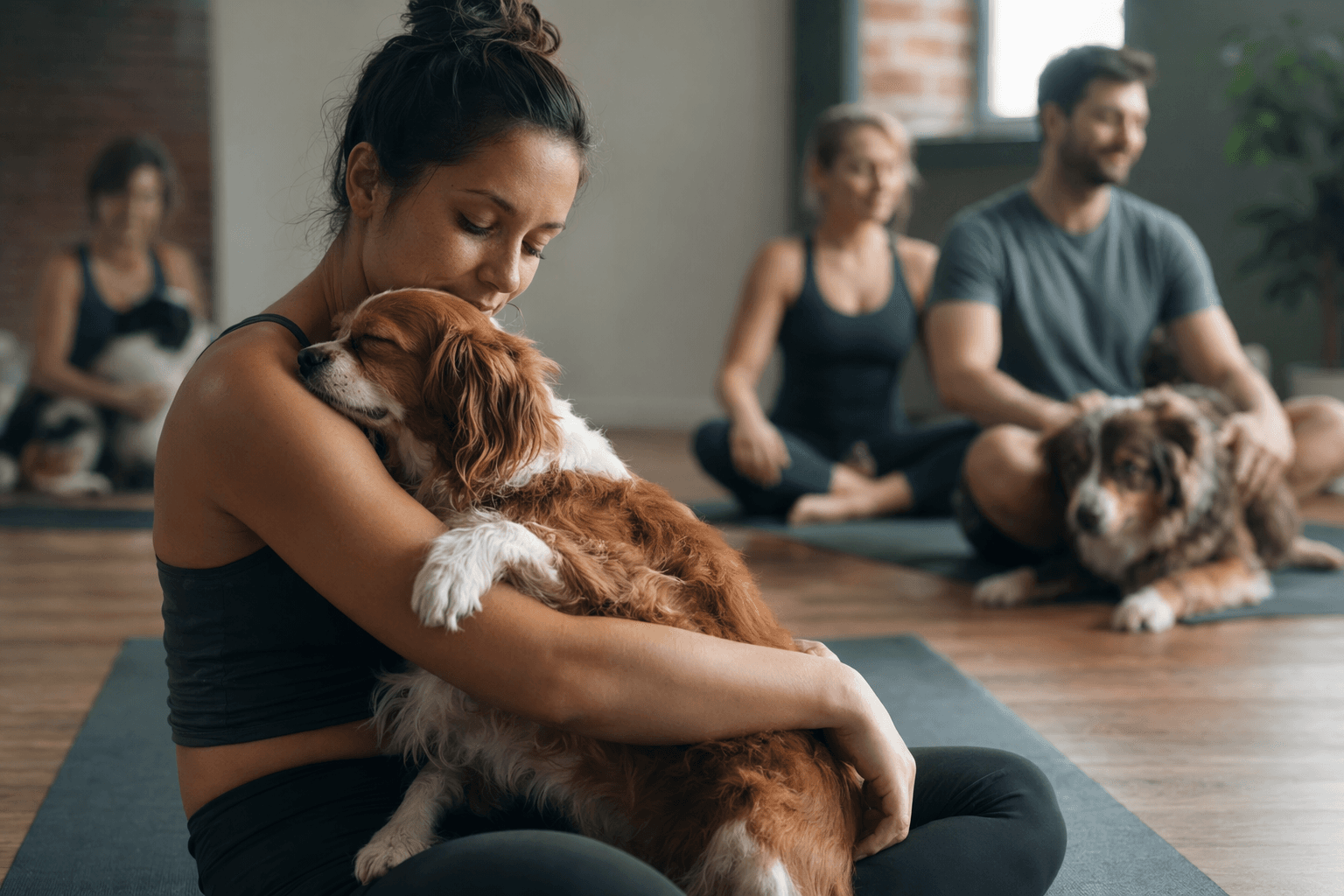
Vet-approved guide
Doga works best when it feels less like a performance and more like a shared exhale. The sweet spot is a dog who is comfortable on the mat, an owner who wants a calmer kind of bonding, and a session that respects the animal’s mood instead of forcing a pose to fit the idea.
Where doga came from, and why it keeps spreading
Doga is simply yoga practiced with pet dogs, but the origin story has become part of its charm. The practice is widely traced to Suzi Teitelman in New York City around 2001 to 2002, after she noticed her cocker spaniel, Coali, hovering near her yoga mat. From there, accounts say it reached Britain by 2004 and had spread more broadly across the Western world by 2011.
That growth has always come with a split-screen reaction. Supporters see a bonding practice that makes the mat feel more inclusive and affectionate. Critics have dismissed doga as a fad and argued that it can trivialize yoga. Both views linger in the background, but the practical truth is easier to judge: if the dog is relaxed and the human is calmer afterward, the session has done something useful.
Why the calm feels real
The wellness appeal is not just a cute idea. Research on human-dog interaction has found evidence that time with dogs can reduce stress and support relaxation-related effects in people. A March 13, 2024 PLOS ONE study reported that spending quality time with dogs increased brain-wave activity associated with relaxation and concentration, which fits neatly with what many doga participants describe after a gentle session.
There is also a deeper layer here than simple mood-boosting. A 2024 Scientific Reports study examined emotional and physiological co-modulation between dogs and owners, looking at the way each can influence the other in a shared interaction. That matters for doga because the practice is not really about getting a dog to “do yoga.” It is about creating a setting where the dog and owner can settle together, each responding to the other.
Even broader dog-ownership research points in the same direction. A systematic review discussed by The Conversation found that dog owners had a 24% lower risk of death from any cause compared with non-owners. That finding is about dog ownership generally, not doga specifically, but it helps explain why pet-centered practices keep finding an audience: people are looking for rituals that make the bond feel tangible, not abstract.
Which dogs actually benefit
The best doga partners are dogs that can tolerate closeness without pressure. A dog that likes lying near a mat, moving in and out of contact, and watching the room without becoming frantic is usually a better fit than one that treats every human movement like a cue to climb, jump, or demand attention. The goal is co-regulation, not obedience theater.
Dogs with pain, arthritis, or other health conditions should not be pushed into poses. That is the clearest line in the sand, and it is the one that matters most for readers trying to decide whether this is a good activity for a particular pet. When in doubt, veterinary guidance may be appropriate before participation, especially if the dog is older, stiff, recovering from injury, or uncomfortable on the floor.
What a safe beginner session looks like
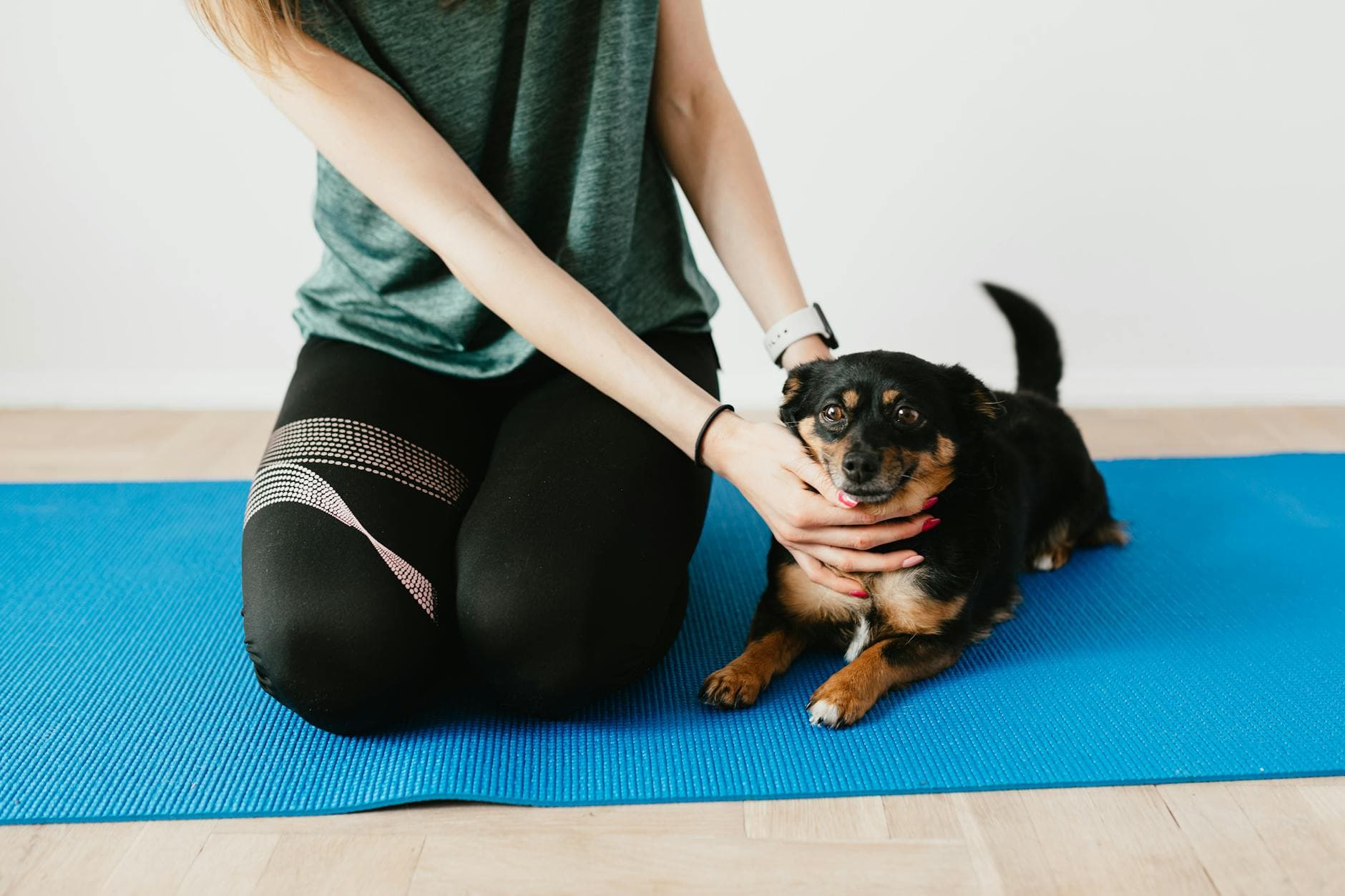
A good first doga class should feel low-key from the moment you walk in. The practice is usually adapted to the animal’s comfort and attention span, which means the dog should be free to lie down, shift away, sniff, or simply observe. If the class seems to assume every dog will sit perfectly still or join every stretch, that is a sign the setup is wrong.
A sensible beginner session usually includes:
- short, gentle movement instead of long, athletic flow
- plenty of breaks for the dog to settle
- no forcing of paws, hips, backs, or necks into shapes
- a calm room where the dog can stay near its person without getting crowded
- an instructor who treats the dog’s comfort as the main measure of success
That is especially important because doga is supposed to make the room feel softer, not more performative. The best sessions borrow the rhythm of yoga, then slow it down enough for the dog to remain a participant rather than an accessory.
Bonding without turning the dog into a prop
The line between co-regulation and anthropomorphism is simple to describe and easy to cross. Co-regulation means you notice the dog settling when you soften your breathing, lower your voice, or reduce the pace of movement. Anthropomorphism is assuming the dog wants the same emotional experience you do, even when the body language says otherwise.
In practice, the useful signals are small and visible. A dog that chooses to stay near the mat, relaxes its body, and seems more settled as the session goes on is giving you a real answer. A dog that looks restless, overexcited, tense, or uncomfortable is telling you the class has moved past its comfort zone. Doga works when you listen to that answer early.
Why this niche keeps finding an audience
The reason doga endures is that it sits at the intersection of three things people already care about: stress relief, pet companionship, and rituals that feel shared instead of solitary. Its history, from Teitelman and Coali in New York City to its spread across Britain and the Western world, shows how quickly a small idea can travel when it answers a very human desire for closeness.
For the right dog and the right owner, doga is not a gimmick. It is a quiet, practical way to turn a mat, a few breaths, and a willing dog into a calmer day, with the bond between them doing most of the work.
This article was produced by Prism’s automated news system from verified source data, official records, and press releases, then run through automated quality and moderation checks before publishing. The system is built and supervised by the people who set the standards it runs under. Read our full AI policy.
Did this article answer your question?