Ohio State’s dog yoga program blends wellness, therapy, and community
Ohio State has turned doga into a weekly wellness reset, pairing power yoga with therapy dog Kody and a clear, repeatable campus format.

What makes Dare to Doga work
Ohio State’s Dare to Doga is built like a campus service, not a novelty class. Every Monday, newly certified yoga instructor Laura Stehura leads a 30-minute power yoga session in Room 060 of the 18th Avenue Library, with space reserved from 12:00 to 1:00 and the class itself running from 12:15 p.m. to 12:45 p.m. Kody, Stehura’s TDI registered therapy dog, is part of the setup, giving the program the dog yoga community recognizes: structured movement, calm animal contact, and a recurring mid-day reset that students and staff can actually plan around.
That repeatable rhythm is what gives the program durability. Instead of relying on one-off event energy, Ohio State has framed doga as an ongoing wellness offering with a fixed time, fixed place, and clear participation steps. Yoga mats and lint rollers are available, and attendees must RSVP to complete a liability waiver and register, which makes the experience feel organized and safe rather than improvised.
Why the format is sustainable
The choice of a power yoga class matters. Power yoga gives Dare to Doga enough structure to feel like a real practice while still leaving room for the dog-centered atmosphere that makes doga appealing in the first place. Because the class is only 30 minutes long, it fits naturally into the kind of schedule students and staff can actually maintain during the week.
The program is also designed for all levels and includes modifications, which keeps it accessible to people who are new to yoga as well as those who already practice regularly. That matters on a campus where a lot of potential participants are looking for a low-pressure way to reset, not a performance. Ohio State has also made a point of welcoming pet lovers who are not into yoga, reinforcing that the dog is part of the wellness environment, not just a prop at the edge of the mat.
Kody’s role as a therapy dog, not a mascot
Kody is central to the program’s identity because his role is credentialed and purposeful. Therapy Dogs International describes therapy dogs as temperament-tested and meant to be petted, which gives the human-animal interaction in Dare to Doga a clear welfare framework. That is a big reason the program feels more sustainable than a casual bring-your-dog gathering: the dog’s presence is anchored in training, temperament, and intentional handling.
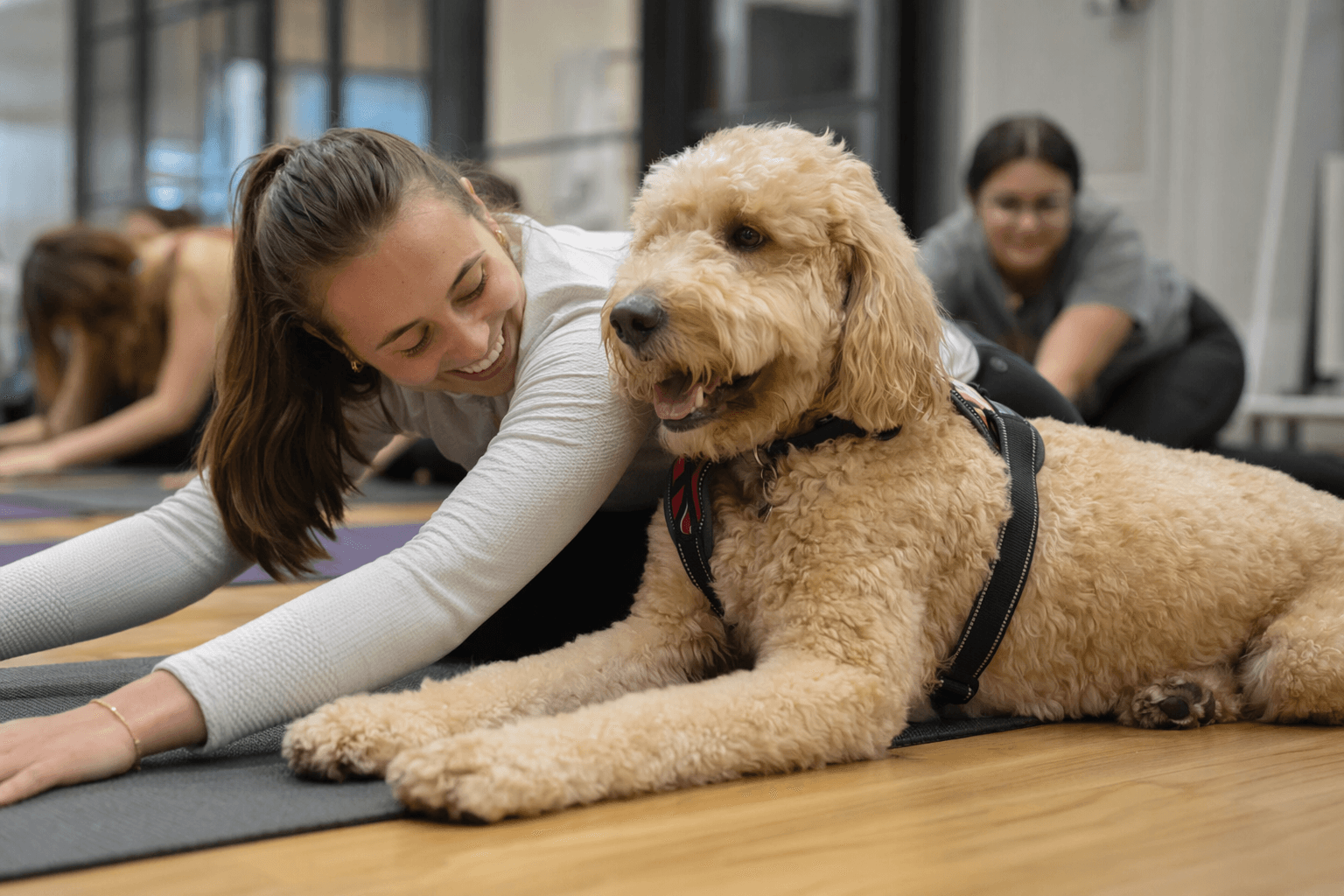
Therapy Dogs International says it was founded in 1976 and now has volunteer dogs and handlers in all 50 states and parts of Canada. That wider context matters because it shows Ohio State is working within an established therapy-dog culture, not inventing its own standards from scratch. In practice, Kody helps turn the class into something more than exercise. He adds the social warmth and emotional ease that can make people show up, stay engaged, and come back.
The wellness case behind the program
Ohio State is not presenting doga as a vague feel-good concept. The university’s integrative-health materials describe yoga as combining meditation, posture, and breathing techniques to relieve stress, reduce pain, and boost mood and confidence. The National Center for Complementary and Integrative Health goes further, saying yoga may improve general wellness, stress, emotional health, sleep, and balance, and may have a small benefit for low-back pain. It also notes that yoga and similar approaches may help reduce blood pressure in people with hypertension.
That evidence-based framing is important because it gives Dare to Doga a legitimate wellness identity. The dog interaction may be what draws people in, but the yoga format gives the program a reliable body-and-mind structure. Together, they fit the needs of people who want stress relief, gentle movement, and a short, accessible break in the middle of the day.
Why campus-based animal therapy has momentum
Dare to Doga also fits into a larger Ohio State pattern. Buckeye Paws launched at the Ohio State Wexner Medical Center on March 6, 2020, and the university announced in March 2022 that it would expand beyond the medical center to students, faculty, and staff across the university. Recent Ohio State coverage has noted that the program includes more than 30 dogs and handlers, showing that animal-assisted wellness has become part of the university’s broader support system.
The research base helps explain why that approach resonates. A campus-based study found therapy-dog exposure improved students’ mood and affect during finals. A Washington State University study found that just 10 minutes with cats and dogs significantly reduced student cortisol, the stress hormone. A 2025 systematic review and meta-analysis found canine-assisted therapy can reduce stress and anxiety in university students. Taken together, those findings support the idea that programs like Dare to Doga are not just pleasant add-ons. They can meet a real need during the most stressful parts of academic life.
Who this model serves best
Dare to Doga is especially well-suited to people who want structure without intensity. That includes students looking for a mid-day reset, staff members who need a break between responsibilities, and anyone who wants a beginner-friendly entry point into yoga without the pressure of a traditional studio environment. The all-levels design and built-in modifications make it easier to join without feeling behind.
It also serves people who respond to social support as much as physical movement. The dog element can lower the barrier to trying yoga in the first place, especially for those who may be more motivated by companionship and atmosphere than by exercise alone. Because Ohio State has built in logistics, registration, and therapy-dog standards, the class is more than a feel-good moment. It is a practical model for how universities can institutionalize wellness in a way that is repeatable, credible, and easy to access.
What readers can take from the Ohio State model
The strongest lesson from Dare to Doga is that dog yoga works best when it is treated as a program. A fixed Monday schedule, a defined room in the 18th Avenue Library, clear registration steps, and a therapy dog with formal credentials all help the experience feel sustainable. That is what separates a lasting wellness offering from a one-time event.
Ohio State has made doga part of its larger integrative-health culture, alongside yoga, tai chi, meditation, and the broader Buckeye Paws ecosystem. For the dog yoga community, that is the takeaway worth watching: when the format is practical, the dog is properly supported, and the health case is grounded in research, doga becomes something campuses can actually keep running.
This article was produced by Prism’s automated news system from verified source data, official records, and press releases, then run through automated quality and moderation checks before publishing. The system is built and supervised by the people who set the standards it runs under. Read our full AI policy.
Did this article answer your question?