Devin Gray finds creative freedom and a home in Berlin
Devin Gray's Berlin base shows how a drummer can cut overhead, build deeper community, and keep creative control while working across borders.
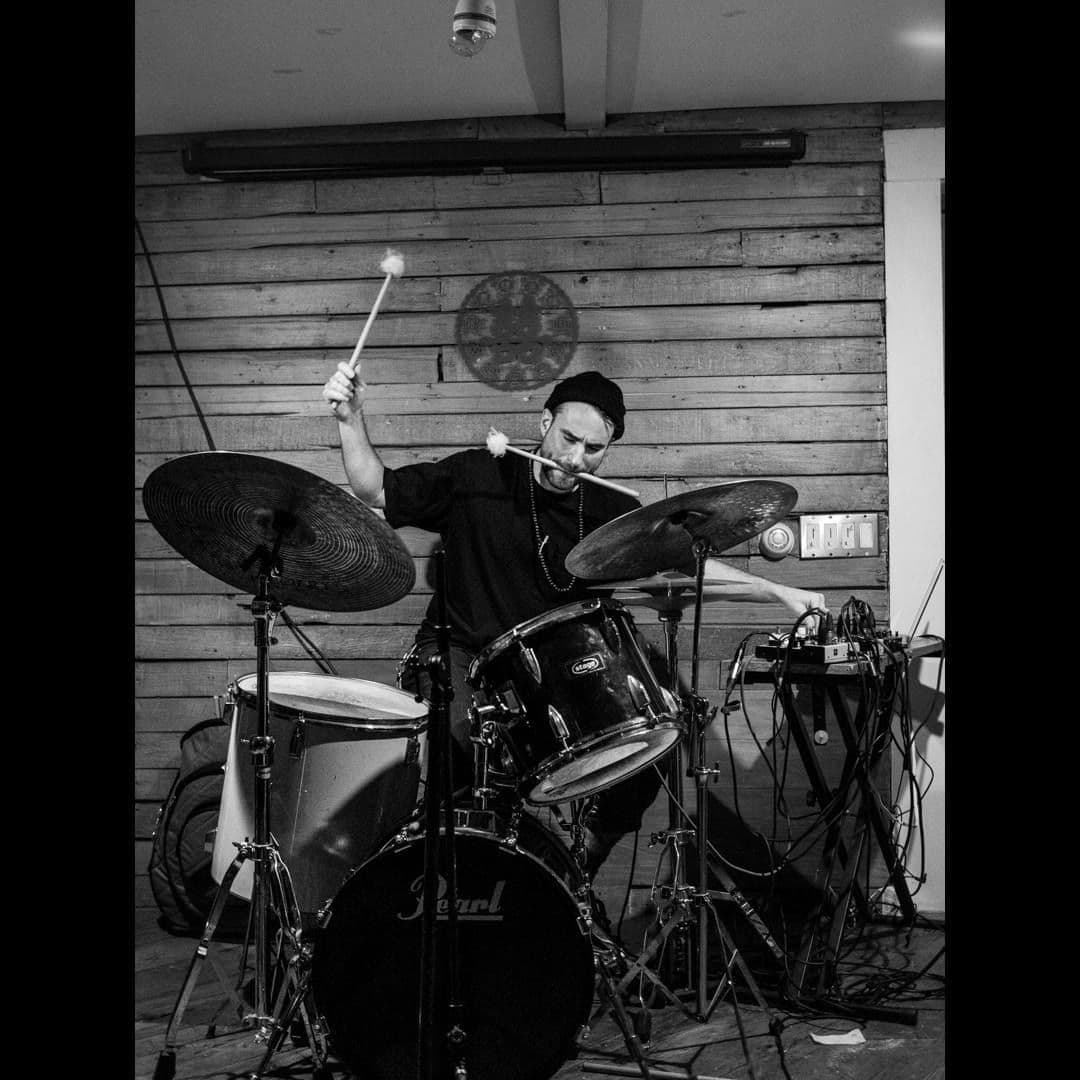
Devin Gray’s Berlin base shows how a working drummer can keep the kit at the center while stepping outside the usual New York orbit. Across recent records and interviews, Gray has been framed as both a Brooklyn-Berlin-based jazz drummer and composer and a New York/Berlin-based drummer, composer and bandleader, a split identity that says as much about the modern jazz economy as it does about one player.
Berlin as a drummer’s operating system
A two-part interview with Gray published on May 26 and 28, 2026, landed after a March 2 review had already noted that he had been spending a lot of time in Berlin and that Berlin was “rubbing off on him.” That detail matters because it points to more than a change of address. It suggests a city that is shaping how a drummer thinks about ensemble size, collaboration, and the pace of a career built on original music rather than sideman traffic.
Gray’s public profile over the last decade reinforces that reading. Something Else! reviewed his debut album *Dirigo Rataplan* on August 3, 2012, then returned to *Dirigo Rataplan II* on September 26, 2018. By November 5, 2024, the same outlet was calling him “a restless talent,” and by then his work was clearly moving through a transatlantic lane rather than a single local scene.
The records that make the move visible
From *Dirigo Rataplan* to *Dirigo Rataplan II*
The arc from *Dirigo Rataplan* to *Dirigo Rataplan II* shows Gray building a drummer-composer identity around composition, structure, and long-form development. That matters in Berlin because the city has long drawn experimental musicians, improvisers, and international players who are willing to work inside and around original material instead of demanding a familiar club-date formula.
For a drummer, that kind of environment changes the job. Time feel still matters, but so do dynamics, color, and the ability to steer a group without overpowering it. Gray’s early leader records established that he was already working in that lane years before Berlin became such a visible part of his artistic address.
*To the Point*, *Melt All the Guns II*, and *Hz Of Gold*
The 2024 EP *To the Point* marked a clear shift in how Gray was using personnel to build his sound. The release introduced a new quartet made up entirely of Belgian musicians except Gray, with Bram De Looze, Nicolas Thys, and Robin Verheyen in the mix. That is not the standard U.S. jazz-biz leader move, where the band often circles one home market; it is a cross-border improvising setup that fits Berlin’s role as a meeting point.
The same pattern is visible on *Melt All the Guns II*, credited to Devin Gray feat. Ralph Alessi & Myslaure Augustin. A 2024 JazzTrail listing for the earlier *Melt All the Guns* gives the core personnel as Gray on drums, Ralph Alessi on trumpet, and Angelica Sanchez on piano, which shows how the project sits in a chamber-sized trio format built around interaction rather than volume. Gray’s own discography around the project, including the *Melt All the Guns II* release on October 4, 2024, keeps that language of precision and ensemble conversation intact.
Gray’s later *Hz Of Gold* continues the same approach, pairing him with Andrea Parkins and Frank Gratkowski. That combination keeps the focus on players who are comfortable with improvisation, texture, and risk, which is exactly the kind of artistic space Berlin supports when a drummer wants more than routine gigging.
What Berlin gives a serious drummer
Berlin’s attraction for a working drummer is practical before it is romantic. Gray’s release pattern shows a city where original projects can be built around smaller ensembles, where collaborators can come from Belgium, New York, and beyond, and where the music can be led from the drums without being squeezed into a single commercial template. That is the big difference for drummers thinking beyond legacy U.S. scenes: the career can still be rooted in technique and time, but the surrounding ecosystem makes room for authorship.
The tradeoff is equally clear. A transatlantic career brings range, but it also means your identity is no longer protected by one scene’s assumptions or one city’s default hierarchy. Gray’s positioning as Brooklyn-Berlin-based and New York/Berlin-based captures that tension neatly. He is not disappearing into Berlin, he is using it to widen the field of work.
For drummers weighing geography as part of artistic growth, Gray’s path points to a simple test: can the city lower your overhead, strengthen your creative circle, and let your own ideas breathe? Berlin appears to answer yes for him, not because it replaces New York, but because it lets him build a different kind of center.
That is the real lesson in Gray’s Berlin story. The city is not just where he landed, it is the place where the drummer can keep playing the role that matters most, player, composer, and bandleader at once, without letting the kit become a sideline.
This article was produced by Prism’s automated news system from verified source data, official records, and press releases, then run through automated quality and moderation checks before publishing. The system is built and supervised by the people who set the standards it runs under. Read our full AI policy.
Did this article answer your question?