DRUM TAO Opens Permanent 300-Seat Theater Near Kyoto Station for Nightly Performances
DRUM TAO's purpose-built 300-seat Kyoto theater is small enough to run without amplification, delivering taiko's full-body impact in its purest acoustic form.
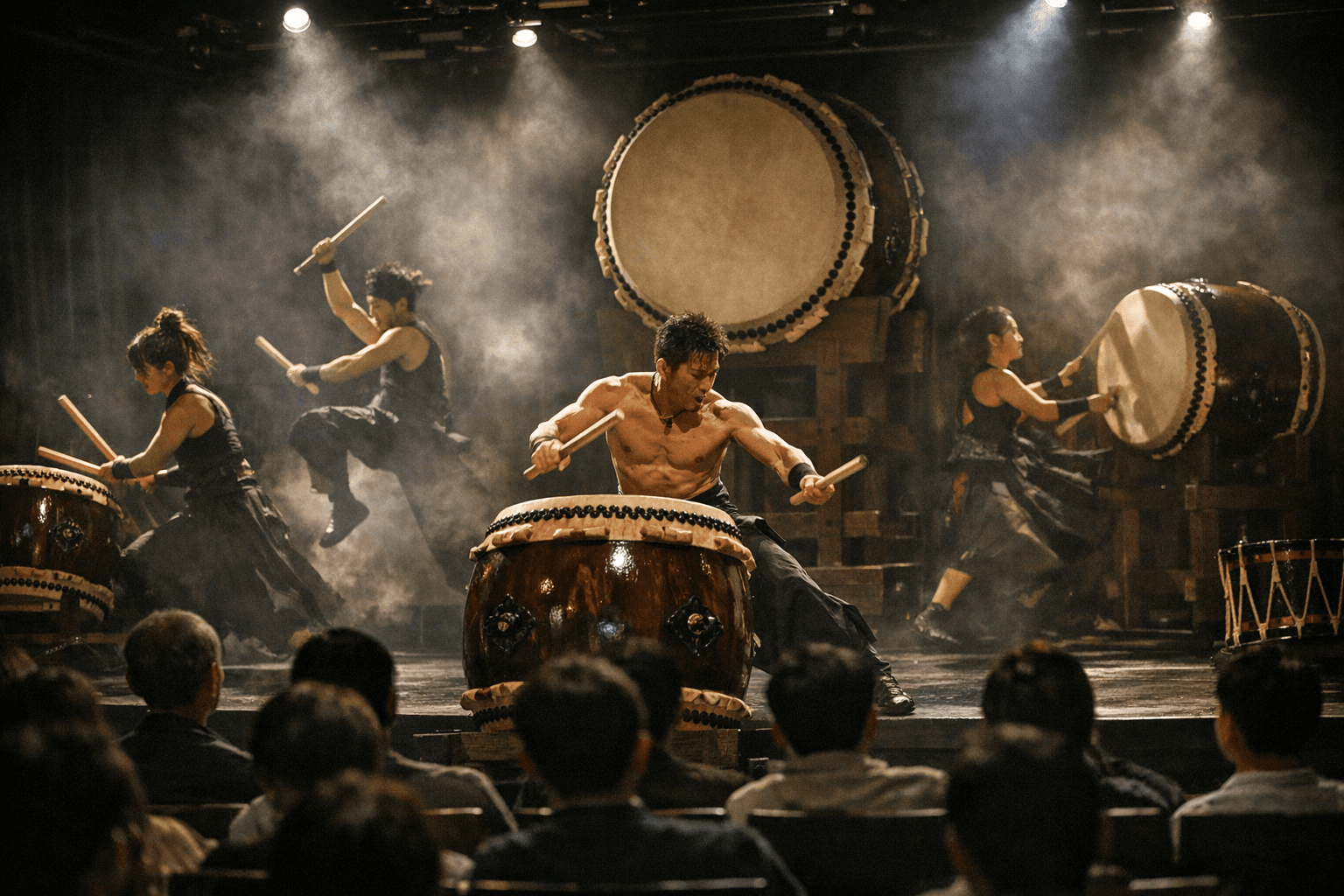
DRUM TAO THEATER KYOTO opened April 9 on the ninth floor of the Avanti Building, one minute from Kyoto Station's Hachijo Exit, giving the internationally traveled taiko ensemble a permanent home after performances across roughly 500 cities in 31 countries.
The 300-seat capacity was deliberate. At that scale, the theater's designers determined the ensemble could perform without electronic amplification, letting each taiko strike land as unprocessed acoustic energy. That single decision frames what drummers should understand about DRUM TAO's entire approach: the physical and sonic dimensions of taiko are inseparable, and every staging choice is made to protect that relationship.
Two shows run nightly, at 7:00 p.m. and 9:00 p.m., structured as two 40-minute sets. Part 1 is titled HIBIKI, Part 2 is YUME. The program is entirely nonverbal, layering wadaiko drumming against shinobue flute, shamisen, and koto, with sword choreography and synchronized visual design threaded through both halves. The venue was developed by NRE & TAO Entertainment Partners LLC, a joint venture involving Nomura Real Estate Development Co., Ltd., Tao Entertainment Co. Ltd., and Nomura Real Estate Retail Properties Co., Ltd. DRUM TAO sold out its full Off-Broadway run in New York City in 2016.
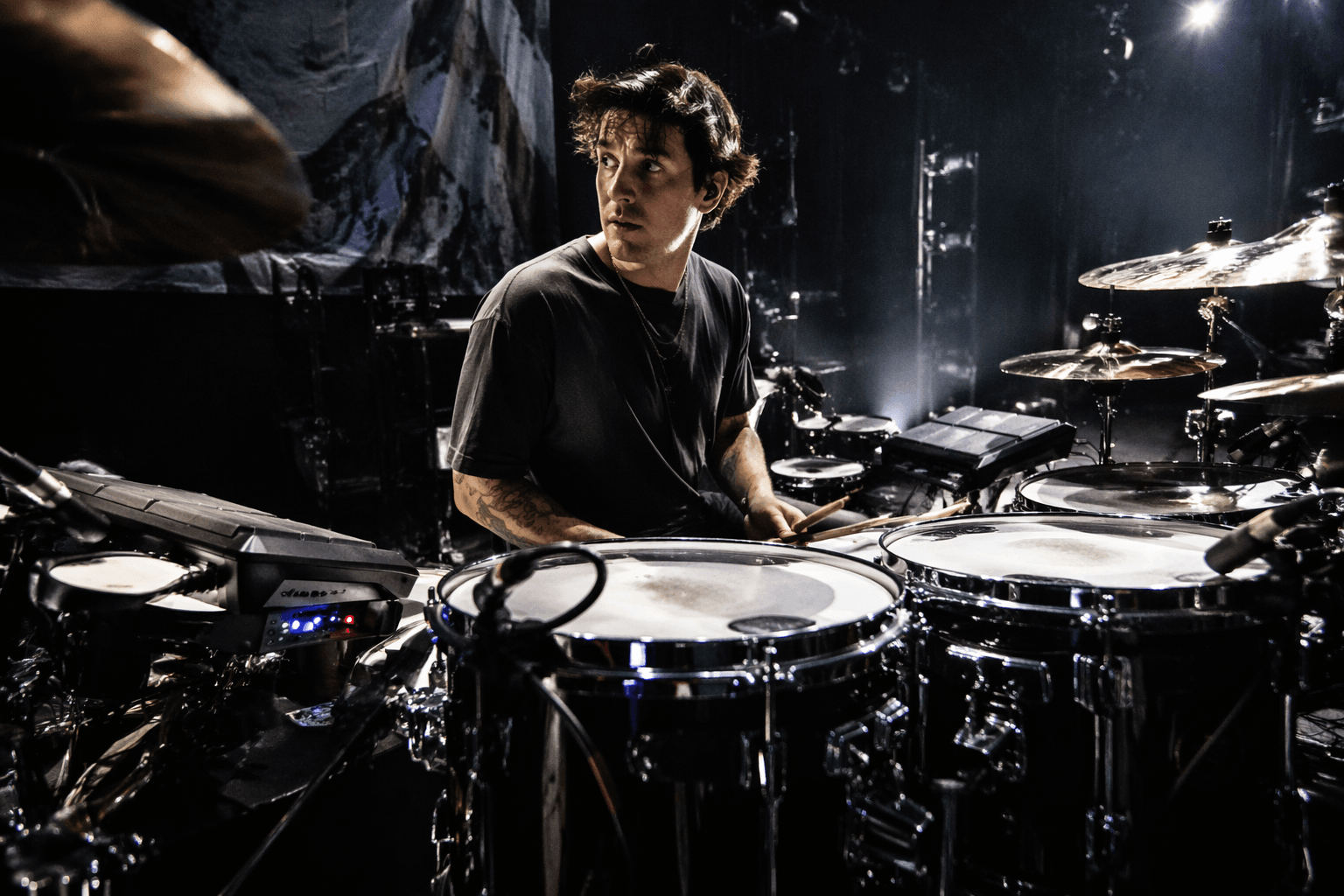
If you're watching for the first time, there's a technique curriculum hidden inside the spectacle. The foundational starting point is kata, the collective term for stance and posture that drives both tone quality and ensemble precision. In practice, that means a wide, low kiba-dachi (horse stance) with hips facing the drum and shoulders relaxed. The low base is not theatrical: it stabilizes the torso so that full overhead strokes from the shoulder can land with controlled power rather than muscled tension. Track bachi height during synchronized passages. When every stick reaches the same apex before dropping, what you're seeing is a timing mechanism, not just choreography. That matched arc is what makes unison landings land clean.
Core strokes include the center hit (don) and rim-shot accents (ka), combined into phrases taught via vocal mnemonics called kuchi shōga. Call-and-response is the other structural element worth watching. One section initiates a phrase; others answer after the attack lands. The technique controls density, letting individual voices cut through the ensemble without the whole group collapsing into a single wall of sound. This translates directly to the kit. Take any two-bar phrase on your snare or floor tom and treat your hi-hat hand as the answer voice, offset by half a beat. The discipline of waiting for the call forces the same active listening that makes DRUM TAO's synchronization work at full tempo.
For practice pad work, set a metronome to 80 bpm and play single strokes with full arm extension from the shoulder rather than wrist pivots alone. That overhead arc trains gravity-assisted strokes: the stick weight handles the descent, and control comes from the catch, not the push. The payoff is consistent tone with significantly less forearm fatigue across longer sets, which is exactly how performers sustain 40-minute blocks at full physical intensity.
Tickets start at 10,000 yen for standard seating and 15,000 yen for premium seats, with the stage positioned as close to the audience as the room allows. Kyoto's temples close around 5:00 p.m., and this venue, one minute from the city's central transit hub, was built to fill that gap with something whose force speaks without translation.
This article was produced by Prism’s automated news system from verified source data, official records, and press releases, then run through automated quality and moderation checks before publishing. The system is built and supervised by the people who set the standards it runs under. Read our full AI policy.
Did this article answer your question?