Ecuador Day of Percussion blends masterclasses, concerts, local traditions
Ecuador’s Day of Percussion connected rudiments, jazz language, and Afro-Ecuadorian rhythm, showing how local identity can sharpen a drummer’s voice.
A percussion day with real range
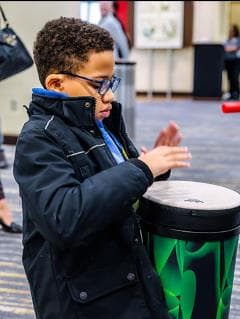
The PAS Ecuador chapter used its recent Day of Percussion to make a simple point with big reach: drum education lands hardest when it links disciplined study to the rhythms people actually live with. Organized with the Escuela de Artes Sonoras at the Universidad de las Artes, the event paired concerts and masterclasses with strong student and public turnout, giving the day the feel of a community checkpoint rather than a closed-door clinic.
That matters because the Percussive Arts Society is not a small local club trying this on for size. PAS says it was founded in 1961, calls itself the world’s largest percussion organization, and now counts nearly 6,000 members across 25 international chapters. Its chapter model is built around clinics, workshops, concerts, festivals, and similar programs, so the Ecuador event fit squarely inside a larger system that is designed to move percussion education beyond the practice room.
Technique first, but never technique only
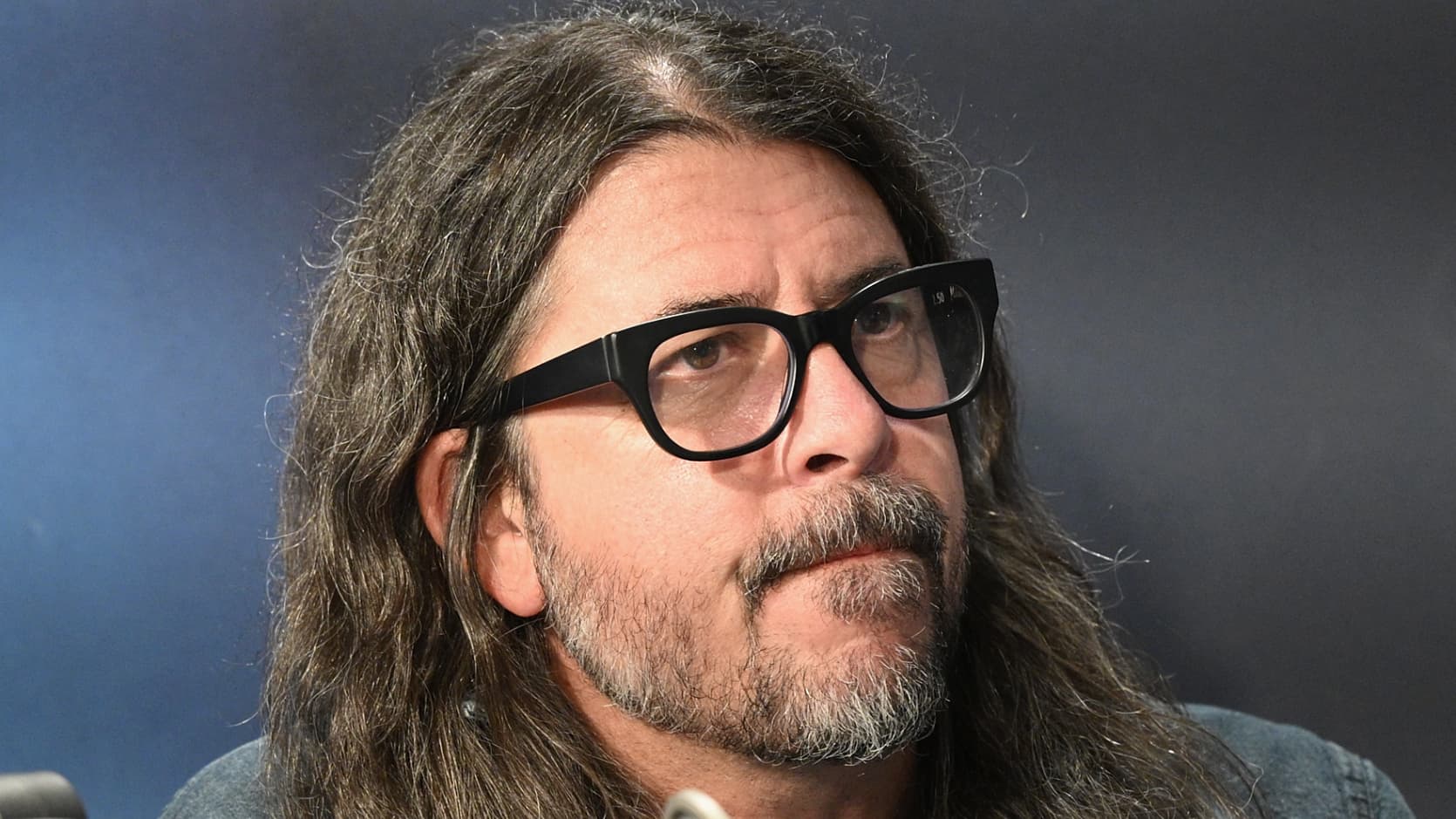
The educational core of the day was built for drummers who want more than speed and accuracy. Carlos Bravo focused on the 40 official PAS rudiments and pushed the conversation toward musicality, a useful reminder that sticking vocabulary only becomes useful when it turns into phrasing, dynamics, and control. That approach fits PAS’s own education culture, which includes a dedicated rudiments library and a broad teaching program aimed at keeping basic studies active rather than academic.
Mark Walker added another layer by framing drumset playing as a language problem as much as a coordination problem. His session outlined the four essential languages of the drumset, a concept that fits the wider profile of a player whose official site identifies him as a Grammy and Latin Grammy Award-winning drummer, composer, producer, bandleader, author, and educator. For players, that kind of perspective is useful because it moves the kit out of the narrow “licks and fills” box and into ensemble communication, style, and intent.
A citywide jazz context gave the day extra momentum
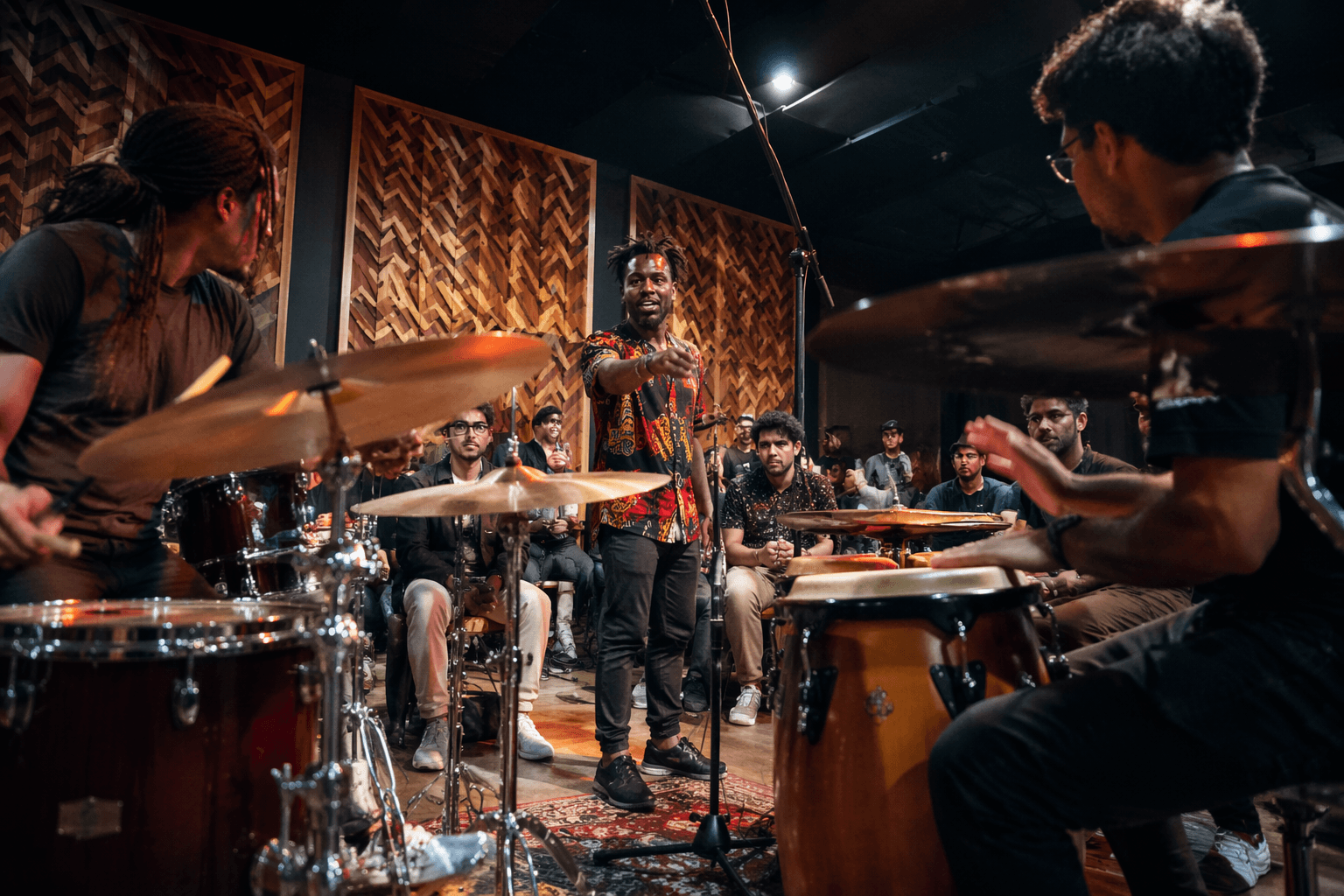
The Ecuador percussion program did not happen in isolation. Quito Jazz Club promoted Mark Walker appearances around International Jazz Day 2026, including concerts on April 30 and May 1, and described the venue as an intimate listening room in a 1930s heritage house near Quito’s historic center. The club also presented Walker’s visit as part of an International Jazz Day celebration, which helped place the percussion day inside a larger public-facing music calendar.
PAS also tied educational activity to International Jazz Day at both Quito Jazz Club and the Universidad de las Artes. That kind of overlap matters for drummers because it widens the audience for percussion instruction and gives masterclasses a performance context. Instead of treating education and concert life as separate lanes, the Quito programming showed how they can feed each other in the same week and in the same city.
Local rhythm stayed central, not secondary
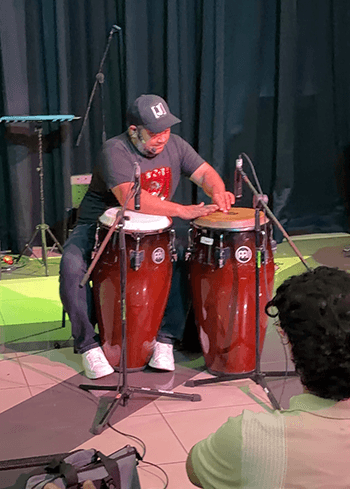
What separated this event from a standard technique clinic was the space it gave to Ecuadorian and wider Latin rhythmic identity. Orlin Montaño discussed the rhythmic foundations of Música Cimarrona in Afro-Ecuadorian percussion, a session that points directly to the deep local lineage behind the instruments and grooves on stage. Sergio Reggiani traced the influence of clave across folklore, Latin, jazz, and rock, while Luis González presented the historical development of the timpani, adding a classical and orchestral dimension to the program.
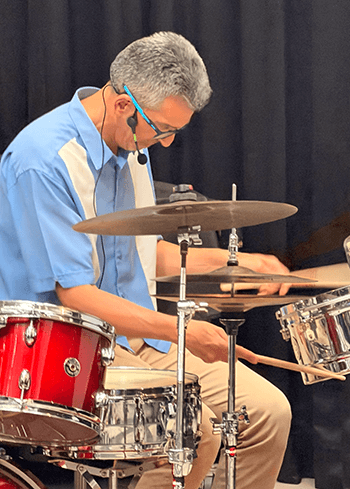
That mix is exactly why the day reads like a model rather than a one-off. It connected formal percussion study with Afro-Ecuadorian tradition, Latin rhythmic frameworks, and the broader drumset vocabulary that traveling artists bring into towns and conservatories. For drummers, the lesson is clear: when education includes local rhythm alongside global standards, players leave with more than new exercises. They leave with a stronger sense of where their sound comes from and what it can say.
Why the Ecuador chapter model works
The PAS Ecuador chapter’s visibility grew because the event made room for both precision and identity. Strong participation from students and the public suggests the formula has reach, and PAS’s chapter structure helps explain why. Clinics, workshops, concerts, and festivals are not separate add-ons in that model. They are the mechanism that keeps percussion education active, social, and connected to the wider community.
The presence of Mark Walker gave the day international weight, but the local sessions gave it lasting relevance. A drummer can leave a masterclass with better hands, but the bigger win comes when the same event also deepens understanding of Afro-Ecuadorian rhythm, clave, and orchestral history. That combination turns education into voice, not just vocabulary.
PAS is already looking toward another major gathering, with the 2026 PASIC convention set for November 11-14 in Indianapolis, Indiana. The society says PASIC50 drew more than 7,800 percussionists, a reminder that interest in percussion education is broad and growing across the network. Ecuador’s Day of Percussion showed why that audience keeps showing up: the strongest sessions do not separate chops from culture, they let both speak at full volume.
Know something we missed? Have a correction or additional information?
Submit a Tip