El Guincho Tailors BTS’s Hooligan Drums to the Group’s Dance Moves
El Guincho kept reshaping BTS’s drums to match the members’ movement, making “Hooligan” a lesson in how choreography can change a groove.
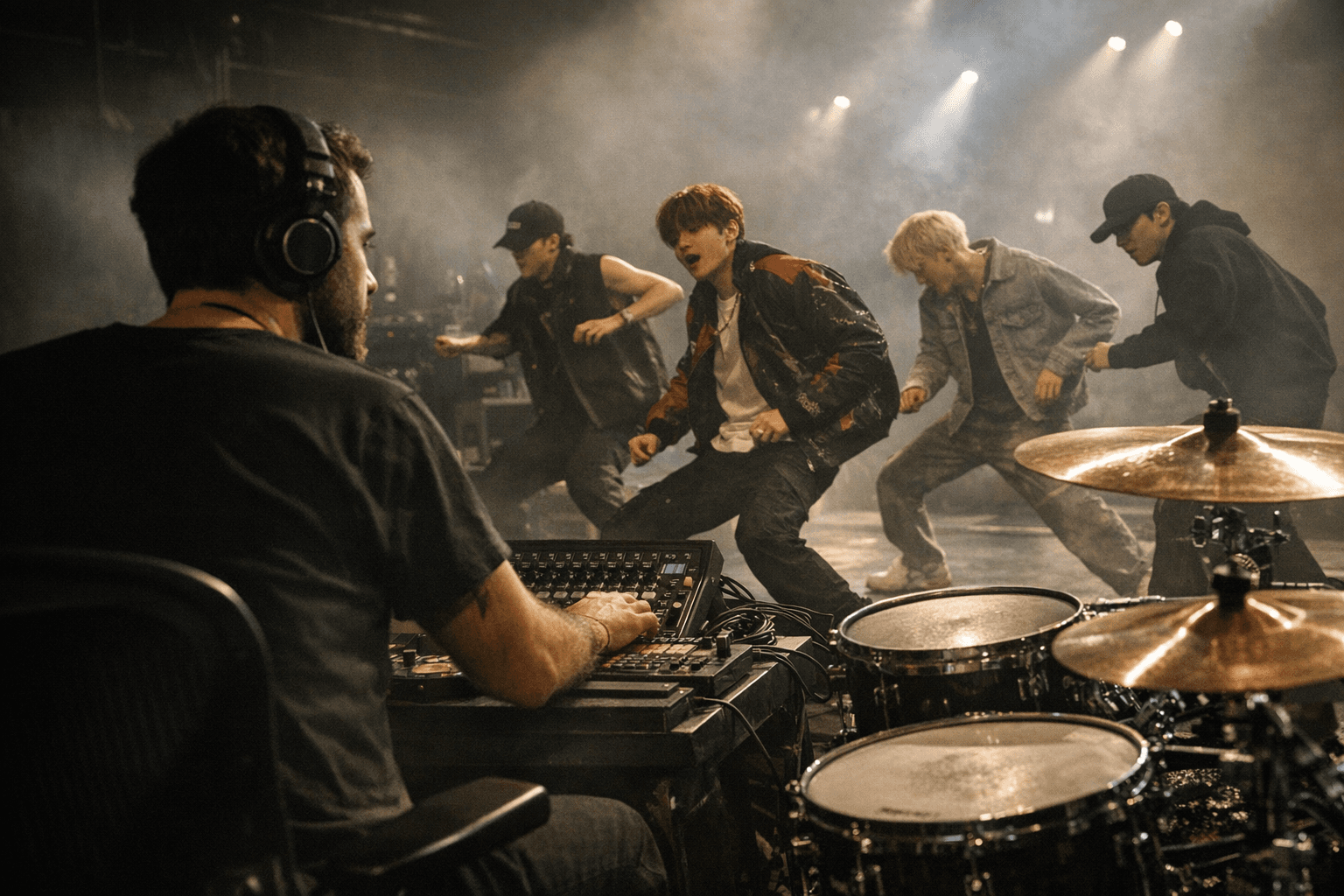
El Guincho built BTS’s “Hooligan” like a drummer writing for bodies first and speakers second, adjusting the kick, bass line and snare after watching the members test dance moves. The result is a track where the groove does not just support the choreography, it seems to answer it.
“Hooligan” arrived on March 20, 2026 as track No. 2 on ARIRANG, BTS’s 14-track album and the group’s first full studio release since its military-service hiatus. That context matters for drummers because the song sits inside a comeback that carried a lot of weight for BTS, whose recent years had been split between solo work and mandatory service. When a group returns at that scale, every snare choice and every kick placement starts to feel like part of the stage picture.
El Guincho, the Spanish producer and writer born Pablo Díaz-Reixa, shared credits on the song with Fakeguido and Jasper Harris. The production details point to a specific kind of studio conversation, one where the rhythm section is not treated as fixed once the mix is locked. Instead, the drums kept shifting in response to what the dancers were doing, a feedback loop that is easy to miss if you only listen for melody and easy to hear if you ever tried to lock a rhythm to a step pattern.

BTS drove that point home on April 14, 2026, when it released an official “Hooligan” dance practice video. The clip showed all seven members, RM, Jin, Suga, J-Hope, Jimin, V and Jung Kook, moving with backup dancers in a mega crew style formation. It gave fans a clear look at how the choreography spread across the floor and how the arrangement had to leave room for bodies to hit the accents cleanly. The video also spread quickly across BTS’s official channels, including BANGTANTV and Weverse, where the clip drew 2,949,181 views.
For drummers, that is the practical lesson in “Hooligan”: groove is not just taste in a studio. Sometimes it is architecture for movement, built to help a front line land in unison, fill space for a formation change, and make every hit feel physical. BTS’s comeback turned that idea into the point.
This article was produced by Prism’s automated news system from verified source data, official records, and press releases, then run through automated quality and moderation checks before publishing. The system is built and supervised by the people who set the standards it runs under. Read our full AI policy.
Did this article answer your question?