Microtiming Gives Drumming Grooves Their Feel, Depth, and Energy
Microtiming is the difference between a beat that sits flat and one that breathes, drives, or lopes. Hear it in funk, jazz, and rock, then practice it with purpose.
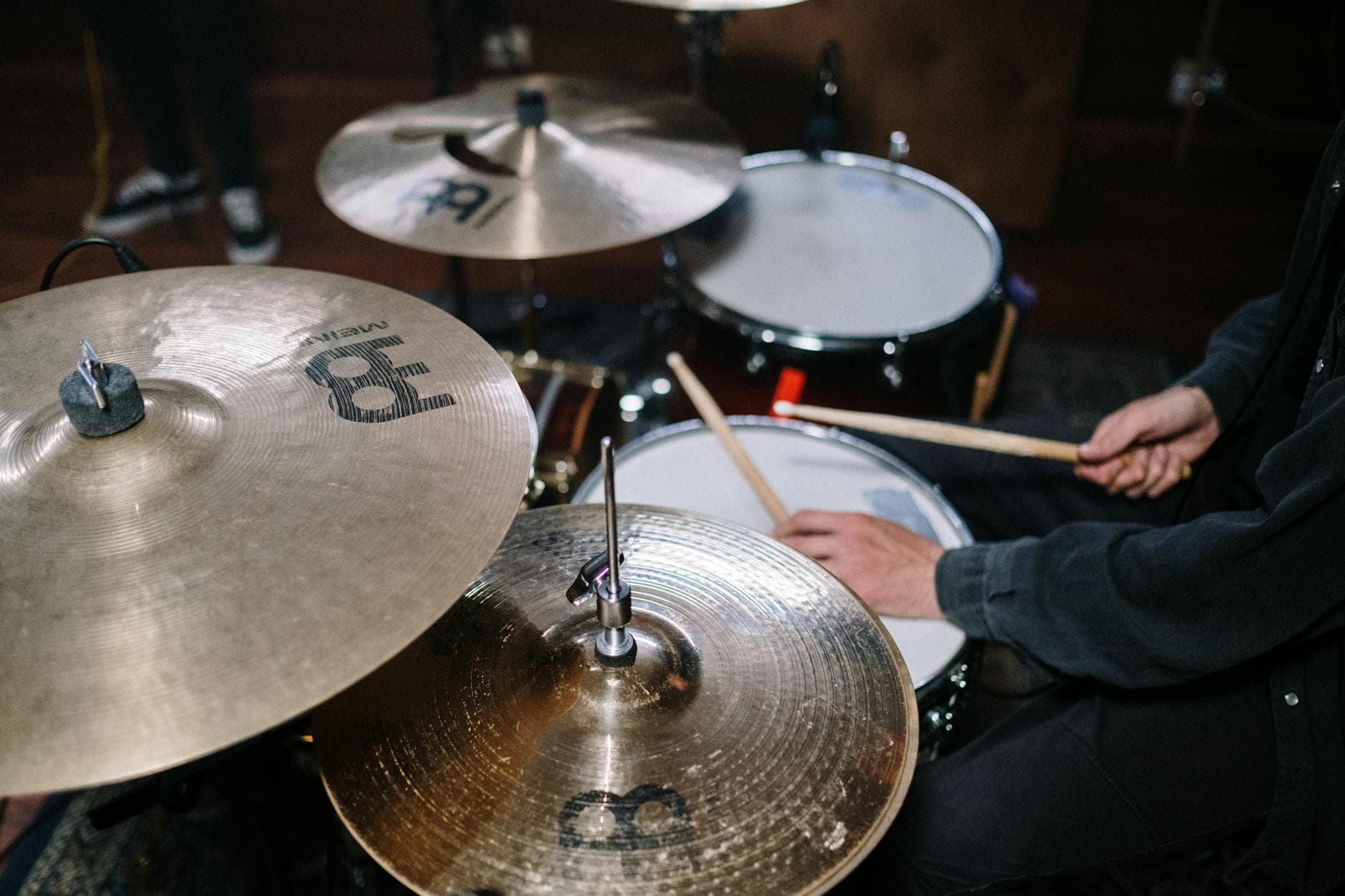
What microtiming really is
Microtiming is the tiny push and pull inside the beat that turns solid time into a living groove. A metronome gives you the skeleton, but microtiming is what gives the pulse weight, air, and motion. The important shift for drummers is understanding that timing is not a binary choice between “right” and “wrong,” but a controlled range of placements that can make the same tempo feel urgent, relaxed, heavy, or buoyant.
Playing ahead of the beat is not rushing. It is a slight forward lean that adds tension and energy. Playing behind the beat is not dragging. It creates a little more space, which can make a groove feel laid-back, deep, and wide. Even when you are right on top of the beat, the phrase is still shaped by ghost notes, accents, and swing, so the line is never just a line on a grid.
Rock feel: how the beat gets bigger without getting sloppy
Rock players know that a hard groove often comes from control at the edge of the beat, not from brute force. John Bonham is a classic example because his grooves sound massive without needing to sound rushed. That kind of power comes from placement, where the backbeat, kick, and ride or hi-hat lock into a pocket that feels larger than the click but never loses the pulse.
Steve Gadd is the opposite lesson, and just as useful. Modern Drummer described his playing as having incredible precision and a strong musical fit, which is why he became such a respected session player. Born on April 9, 1945, and inducted into the Modern Drummer Hall of Fame in 1984, Gadd shows that microtiming is not only about loose swagger. In a ballad, a perfectly judged placement can make the song breathe just as much as a behind-the-beat push can in a heavier groove.
Funk: where microtiming becomes a language
If rock uses microtiming for weight and lift, funk uses it as part of the groove’s identity. A 2025 analysis of early funk focused on 14 influential grooves from 1967 to 1974, starting with James Brown’s “Cold Sweat,” which the study describes as arguably the first funk track. Those recordings were made without click tracks and many were tracked live in the studio, and the analysis built a database of more than 1,000 microtiming deviations. That matters because it shows the feel was not an accident. It was part of the style’s architecture.
That history also explains why drummers still talk about pocket in almost physical terms. Funk often lives in the tiny space between mechanical regularity and human stretch. When the snare, bass drum, hi-hat, and bass line all settle into a shared pulse, the groove can feel like it is leaning forward without ever tipping over.
J Dilla and the sound of intentional instability
J Dilla turned microtiming into a signature. Research on his beats describes the “Dilla feel” as coming from microtiming variations between mechanical and human elements, with notes landing away from metronomic positions in a way that can sound unstable but still deeply intentional. The result is often described as tipsy, but it is a controlled kind of imbalance, not a mistake.
That feel also connects to the tools behind it. A recent feature notes that Amp Fiddler taught Dilla the basics of the Akai MPC60, the sampler and drum machine that became closely linked to his rhythmic language. The takeaway for drummers is bigger than one producer’s style: microtiming is not only something you play on a kit, it is something you can hear, program, and shape in the studio.

Jazz: the debate that refuses to settle
Jazz is where microtiming becomes most debated, because the effect is strongly tied to context. Research on swing feel says the influence of microtiming deviations is still highly disputed and may be genre-specific rather than universal. That is a useful correction for players who assume there is one perfect placement that works everywhere.
Charles Keil’s participatory discrepancies theory gives one way to hear it. The idea is that small timing discrepancies among rhythm-section players help create swing and invite listeners into the groove physically. In other words, the slight mismatch between bass, drums, and soloist is not a flaw to erase. It can be the very thing that makes the music move.
What the science says your body already knows
The research backs up what drummers hear in the room. A 2015 study found that microtiming deviations in swing and funk affect listeners’ body movement behavior, which supports the idea that minute timing shifts change how strongly music makes people want to move. Another study found that emotional response depends not only on the size of the deviation but also on rhythmic density, and that fixed snare displacements irritated expert listeners more than the flexible deviations heard in real performances.
That distinction is important. Microtiming is not about randomly placing notes off the grid. It is about how small deviations interact with density, instrumentation, and style. A note that feels alive in one groove can feel wrong in another, which is why feel has to be trained in context, not just measured in milliseconds.
Two exercises that build real feel
1. Hear the pocket before you move it. Put on a favorite record and isolate the hi-hat, then listen for whether it sits slightly ahead, centered, or behind the pulse.
Start with one bar loop and identify where the drummer is placing the backbeat relative to the bass and the ride. This trains your ear to hear groove as a relationship, not just a click position.
2. Practice the same pattern three ways. Take a simple groove and play it once slightly ahead, once dead center, and once slightly behind, keeping the tempo steady the whole time.
Do not change the notes or volume at first. Listen for how the forward version feels more urgent, how the centered version feels most neutral, and how the behind-the-beat version opens up more space.
The bottom line
Microtiming is where drumming stops being only accurate and starts becoming expressive. From James Brown’s live, no-click funk to J Dilla’s deliberate instability, from Steve Gadd’s precision to John Bonham’s massive pull, the lesson is the same: great drummers do not merely keep time. They shape it, and that is what gives a groove its feel, depth, and energy.
This article was produced by Prism’s automated news system from verified source data, official records, and press releases, then run through automated quality and moderation checks before publishing. The system is built and supervised by the people who set the standards it runs under. Read our full AI policy.
Did this article answer your question?