D&D Bastions turn player bases into campaign-shaping power hubs
Bastions turn the 2024 DMG into a campaign engine, giving parties a base that grows with the story and reshapes downtime, rewards, and identity.
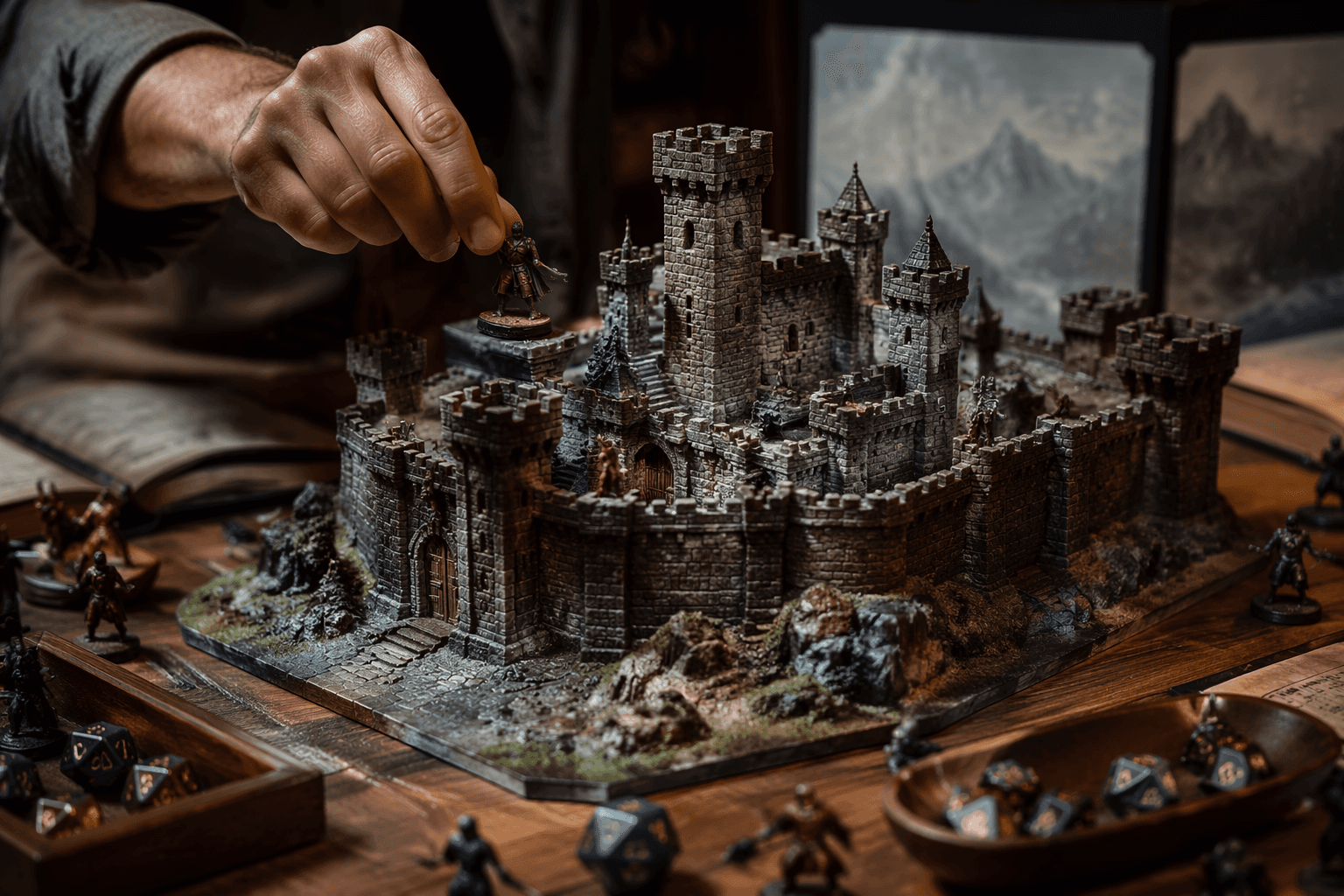
**The biggest change in the 2024 Dungeon Master’s Guide may be the one that sits between adventures. Bastions are not just a new subsystem, they are a new way to make a party’s home base matter every time the table returns to it.** Instead of treating downtime as a pause button, the 2024 rules turn a player-owned stronghold into a living part of the campaign, one that can be built, customized, improved, and staffed with hirelings as the story grows.
That shift is why Bastions stand out in a 384-page rulebook that also packs in over 400 magic items. Wizards of the Coast released the 2024 Dungeon Master’s Guide on November 12, 2024, as part of D&D’s 50th-anniversary-era rules refresh, and D&D Beyond frames the book as the new baseline at the table, replacing the 2014 DMG when the revised rules are used. Bastions sit right at the center of that redesign, because they push the game toward campaign management, not just encounter prep.
What a Bastion actually is
A Bastion is a player-owned base of operations, but that simple label undersells how flexible the concept is. The space can be an abandoned fortress, an old wizard’s tower, a tavern, a cellar complex, a barracks, or a mash-up of several ideas. That openness matters, because it lets the table decide whether the Bastion feels like a gritty frontier redoubt, a magical laboratory, a criminal safehouse, or a proud adventuring hall.
That flexibility is what keeps the system from feeling like a preset estate-management mini game. D&D Beyond presents Bastions as a campaign-level tool for crafting, research, recruiting allies, and more, which means the stronghold is meant to reflect the party’s style of play rather than force it into one template. If the group wants a place that looks and behaves like them, the rules leave room for that identity to take shape.
Why Bastions change the cadence of a campaign
The real power of Bastions is pacing. A normal campaign often treats downtime as a lull between bigger scenes, but Bastions make that downtime productive, repeatable, and memorable. When the party has a home base that develops alongside the main story, every return trip can carry some new advancement, obligation, or complication.
That is a meaningful change for long campaigns, because it creates a rhythm beyond quest, battle, and reward. Bastions give DMs a place to plant recurring threats, revisit unfinished projects, and tie personal goals to the larger arc of play. The stronghold becomes a place where the world remembers what the characters have done, and where the players can see the consequences of staying invested.
The chapter is built for recurring play
The official Bastions chapter is structured around Gaining a Bastion, Bastion Turns, Bastion Map, Basic Facilities, Special Facilities, Bastion Orders, Bastion Events, and Fall of a Bastion. That structure tells you a lot about the design intent. This is not a one-time build system; it is a repeating loop with its own pacing tools, event hooks, and failure states.
Bastion Turns are especially important, because they turn the stronghold into something that keeps generating play. A DM can use those turns to create callbacks, escalate problems, or let upgrades pay off in visible ways. The chapter’s inclusion of Bastion Events and Fall of a Bastion also shows that the system is meant to be part of the campaign’s drama, not just a safe storage room with a fancy name.
The mechanical rewards are where the system starts to hum
Bastions are not only flavor. They deliver concrete benefits that affect the rest of the campaign, and that is what makes them more than a narrative accessory. An Arcane Study can grant a Charm that lets a character cast Identify without spending a spell slot or material components, which is a clean example of the system turning a base into a practical engine for adventuring power.
Other facilities widen the Bastion’s role even further. A Greenhouse can support magical plants, healing resources, and, at higher levels, poison production. Hirelings can craft arcane tools, blank books for spellbooks, an Arcane Focus, and eventually common or uncommon magic items. That means the Bastion can influence the party’s resource economy, item access, and magical preparation in ways that are felt every session.
- Arcane Study: supports research and can produce the Identify Charm.
- Greenhouse: opens up magical plants, healing support, and later poison production.
- Hirelings: can contribute to tools, spellbook supplies, an Arcane Focus, and basic magic item crafting.
These are not abstract bonuses. They reshape what the party can do, what they can carry into an adventure, and how often they need to go shopping or seek outside help.
The level gate makes Bastions a mid- and high-level engine
One important detail is the level threshold attached to some advanced Bastion options. Public discussion of the Arcane Study notes that the Craft: Magic Item, Arcana order requires the Bastion owner to be level 9 or higher. That matters because it shows where Bastions are meant to take over as a source of progression.
At lower levels, characters are still scrambling for survival and basic gear. By the time a party is high enough for level 9 Bastion options, the game needs different forms of motivation: long-term goals, infrastructure, and ways to make the world feel owned rather than merely traveled through. Bastions answer that need by giving the group something to grow into, not just something to win.
Why this feels like a clean break from the old rules era
Bastions also connect to older D&D stronghold play, but the 2024 version is much more streamlined and much more tightly tied to the DMG’s campaign-running advice. That makes it feel less like a nostalgic side feature and more like a statement about what D&D should emphasize going forward. The rules are not asking the DM to bolt on a castle system after the fact; they are building the campaign around the idea that player ownership can drive structure.
That is what sets Bastions apart. They turn a base into a source of pacing, rewards, downtime activity, and party identity all at once. In a book that also reorganizes the Dungeon Master’s Guide around running a whole campaign and not just surviving a session, Bastions may be the clearest sign of how distinct the 2024 era is from the 2014 one.
By the time the party is returning home between adventures, Bastions make that return feel like part of the game instead of time off from it. That is the real break they introduce: the stronghold stops being scenery and becomes another kind of roll at the table.
This article was produced by Prism’s automated news system from verified source data, official records, and press releases, then run through automated quality and moderation checks before publishing. The system is built and supervised by the people who set the standards it runs under. Read our full AI policy.
Did this article answer your question?

