D&D Beyond Maps VTT streamlines encounters for online and in-person play
D&D Beyond Maps gives DMs a browser-based VTT that works with free accounts, quick setup, and mixed-table play. It is simple enough for many campaigns, but limited once you need a fuller automation stack.
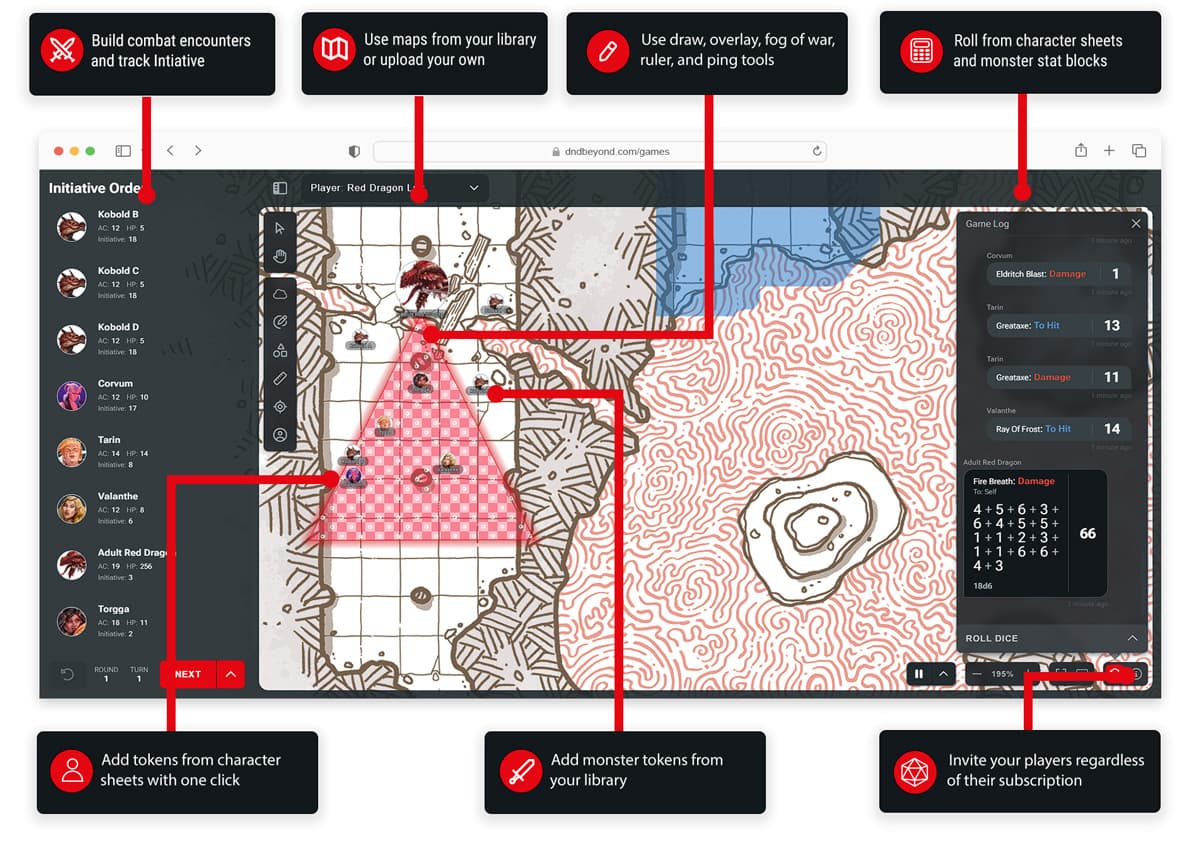
The low-friction VTT that fits inside a D&D Beyond campaign
D&D Beyond Maps works because it does not ask your table to change its habits. It is the official fifth edition Dungeons & Dragons virtual tabletop, it runs in a browser, and anyone with a free account can host game sessions. That makes it especially attractive for DMs who want a tactical layer without asking the group to learn a heavy platform before the next session.
The real appeal is practical. Maps is built to handle encounters, not to replace the feel of a tabletop game. If you already use D&D Beyond for character sheets, monsters, and campaign prep, Maps slots into that same workflow and lets you move from scene to scene without juggling separate tools. For a lot of groups, that is the difference between “maybe someday” and “we can use this tonight.”
Why it works for both remote and in-person games
Maps is flexible enough to support the two setups DMs keep balancing in 2026: the fully online campaign and the shared-table game that still wants a digital battle map. D&D Beyond says it can be used whether players are across the world or seated in the same room, and it is built to work on any device with an internet connection.
That matters most when a table is mixed. If half your group is remote and the rest are gathered around a projector or TV screen, Maps gives you one shared browser-based workspace for the encounter. You can run the battlefield on a big screen, keep monsters hidden until they are revealed, and let everyone track the same combat state without making the physical table feel like it has been replaced by a software demo.
What the core workflow actually looks like
The heart of Maps is straightforward encounter prep. DMs can build battle maps, upload their own maps, and scale them to fit the scene. From there, they can pull in monsters and player tokens from the books in their D&D Beyond library, which keeps the process tied to the content most tables already own and use.
Once combat starts, the tool keeps the encounter moving with initiative tracking and a game log. D&D Beyond also includes shared dice and roll-from-character-sheet support, so the table is not constantly bouncing between tabs or outside dice rollers. That combination is important: the map shows the battle, the log shows the action, and the character sheet stays connected to the roll.
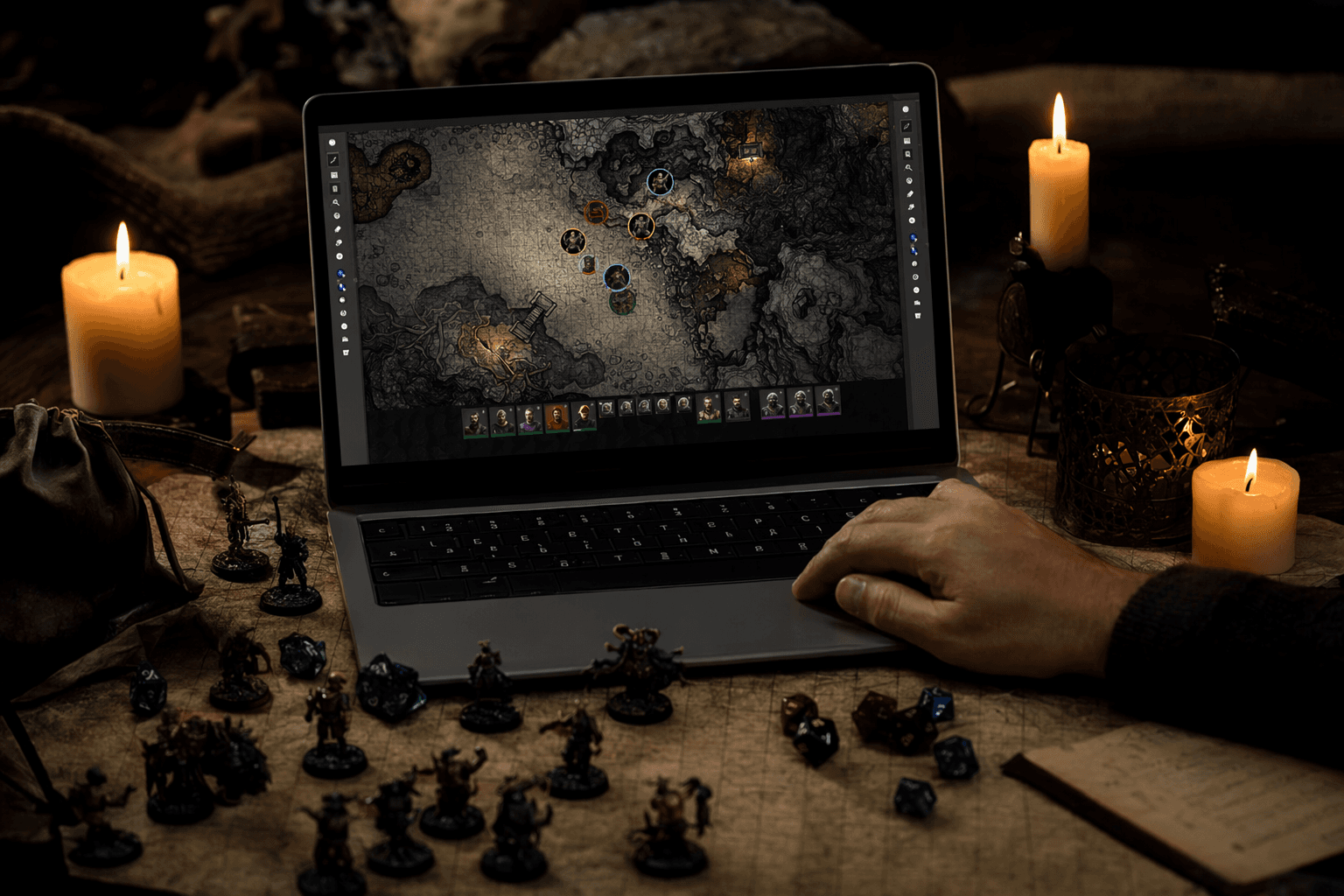
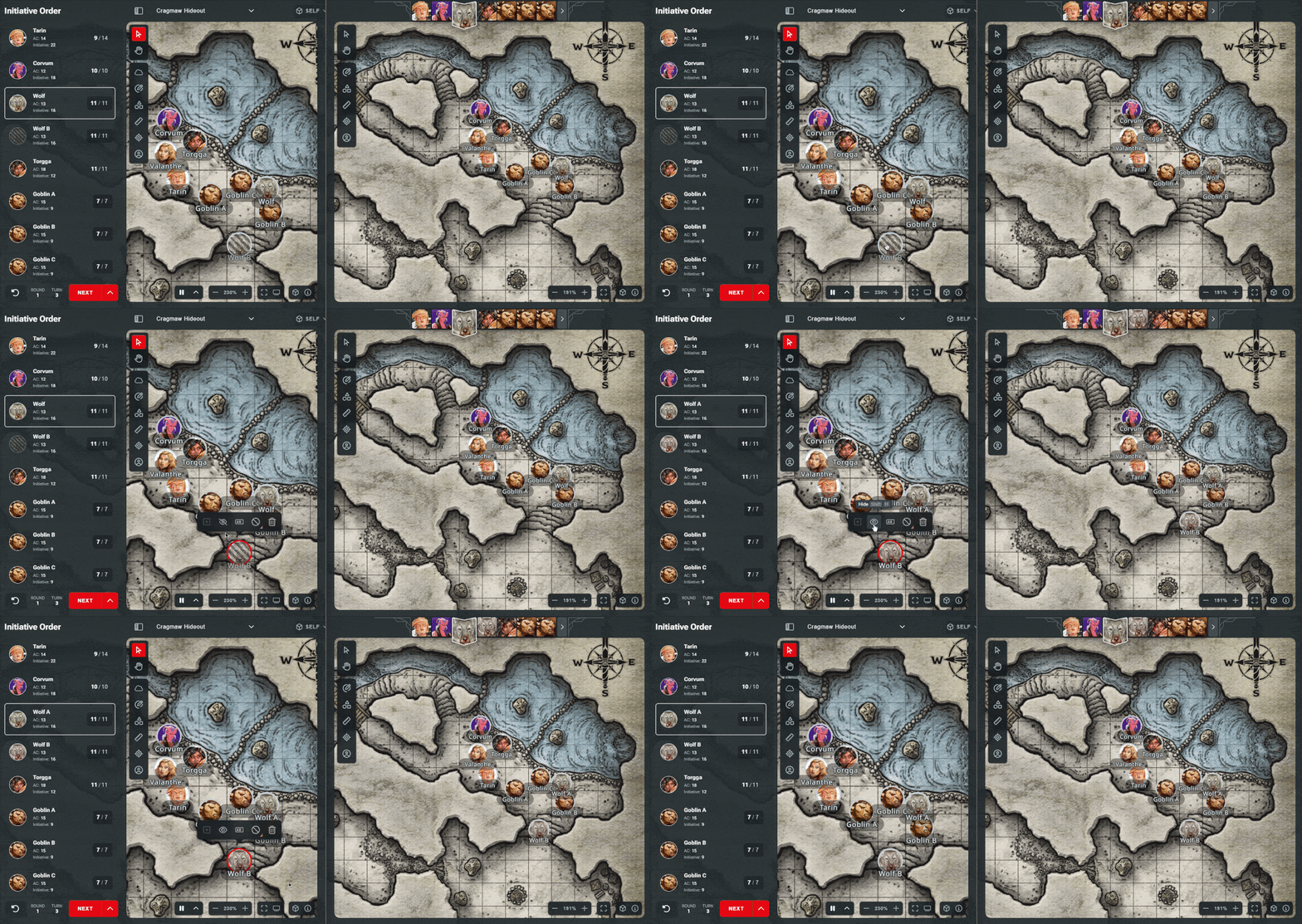
For DMs, the control layer is where Maps earns its keep. Fog of war is built in, monsters can stay hidden until they are revealed, and the interface is meant to reduce prep time rather than add another chore before game night.
Quickplay maps and the new creature comforts
The easiest way to see what Maps is trying to be is through its quickplay maps. Those come preloaded with monster tokens, fog of war, and stickers, which means a DM can open a session and start running without first building a whole scene from scratch. That is a genuine quality-of-life feature for groups that like a tactical setup but do not have time for map-making as a second hobby.
D&D Beyond has also added newer tools that make the tabletop feel more manageable during play. Those include draw tools, connected players, spectator view, shortcuts, filters, grouping, and the ability to lock map elements. Drag-and-drop support for stickers and tokens is another small but meaningful improvement, because it makes the interface feel less like a settings panel and more like a live table.
Those details may sound minor on paper, but they are exactly the kind of friction killers that matter when you are trying to keep initiative from bogging down. The best VTTs do not call attention to themselves, and Maps is clearly trying to stay in that lane.
What a free account gets you, and where Master Tier still matters
One of Maps’ biggest strengths is that access is not tightly gated. D&D Beyond says anyone with a free account can host game sessions in Maps, and it also frames the full potential of the VTT as available without a subscription. That lowers the barrier for DMs who are testing the waters or running a campaign for friends who do not want to subscribe just to join an encounter.
Master Tier subscribers still get a meaningful upgrade, though. D&D Beyond says they can upload custom maps and store up to 10GB of creations, and they can also use homebrew monsters. If your table relies on custom content, original battlemaps, or a steady stream of user-made encounters, that storage and flexibility can turn Maps from a convenient tool into a practical campaign hub.
The distinction is useful because it shows where Maps lives in the ecosystem. Free access makes it easy to start. Master Tier support makes it easier to stay.
How Maps fits next to Sigil
D&D Beyond is also careful to separate Maps from Sigil. Maps is the 2D tactical VTT, while Sigil is the immersive 3D option. That split matters because it clarifies what Maps is for: quick, readable encounters that serve the campaign instead of taking it over.
D&D Beyond says Maps will continue to be actively developed and supported, even as Sigil evolves. That gives DMs a useful signal. If you want the cleaner, lower-friction route, Maps is not a placeholder for a future product. It is the supported tactical option, and the platform is still building around it.
When Maps is enough, and when you will outgrow it
Maps is the simplest answer when your group wants tactical encounters without a steep setup cost. It is a strong fit if you already live in D&D Beyond, if your table includes both in-person and remote players, or if you want a browser-based VTT that can be explained in one session and used in the next. It is also the right call if your priority is speed: upload a map, add tokens, manage fog, run initiative, and move on.
You are more likely to outgrow it when your group wants deeper scene building, heavier automation, or a more immersive virtual-tabletop style that goes beyond a 2D tactical layer. If your campaign depends on elaborate custom workflows, complex visual effects, or the kind of long-term map management that makes storage limits start to matter, the platform’s simplicity can become a ceiling. In that sense, Maps is not trying to be the biggest VTT in the room. It is trying to be the one that lets your Dungeons & Dragons session begin on time, keep its pace, and still feel like everybody is at the same table.
This article was produced by Prism’s automated news system from verified source data, official records, and press releases, then run through automated quality and moderation checks before publishing. The system is built and supervised by the people who set the standards it runs under. Read our full AI policy.
Did this article answer your question?

