D&D Beyond spotlights seven Ravenloft subclasses in horror toolkit
Ravenloft: The Horrors Within turns D&D horror into seven playable build paths, from a Reanimator artificer to an Undead Patron warlock, ahead of its June 16 release.
D&D Beyond is using Ravenloft: The Horrors Within to sell a very specific fantasy: not just surviving the Mists, but stepping into them as the kind of character horror tables are built around. The 288-page toolkit lands June 16, 2026, and it arrives packed with seven subclasses, 11 feats, four backgrounds, four species, 17 one-shots, 68 monsters, 47 maps, and two magic items, all wrapped into the company’s 2026 Season of Horror.
That scope matters because Ravenloft is not being pitched as a vague atmospheric refresh. D&D Beyond says the book covers 16 Domains of Dread, including the new cosmic horror domain Innsmouth, and the bestiary adds 41 monstrosities and 10 domain denizens. It is a ready-to-run horror shelf, with enough character options to make the setting feel like a build choice at the table, not just a lore destination.
Reanimator artificer
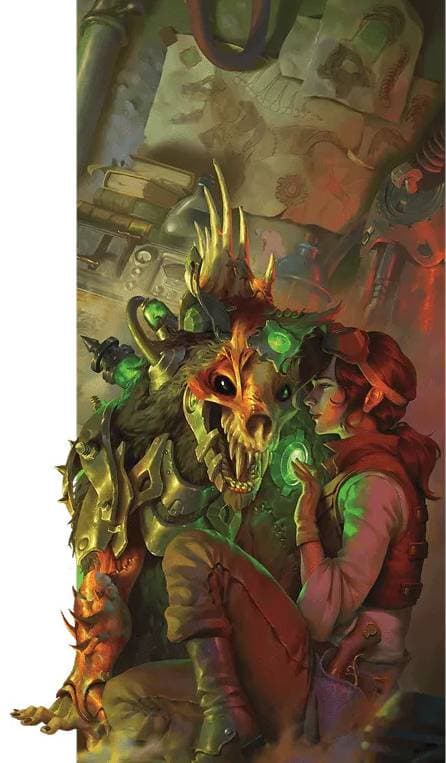
If one subclass makes the book feel like a merch-style reveal, it is the Reanimator. This artificer blends the biological with the mechanical and the necromantic with the scientific, giving players a grotesque inventor fantasy that sits right on Ravenloft’s fault line between genius and taboo. The centerpiece is the Reanimated Companion, a creature that can block opportunity attacks, soak lightning damage, and even burst apart in a death explosion when it falls.
As the class advances, it leans harder into body-horror tinkering with strange modifications, improved reanimation, macabre modifications, and the Life Transfer feature, which lets the artificer raise the dead and siphon remaining hit points from the companion. That is the kind of toolkit that instantly speaks to the player who wants to bring a mad scientist to a gothic table and still feel mechanically useful from level to level.
College of Spirits bard
College of Spirits fits the player who wants their bard to sound less like a tavern act and more like a conduit for ghost stories. The subclass already carries the kind of title that promises séance energy, folklore, and a performance style built around voices from beyond the veil. In a Ravenloft book, that fantasy lands cleanly, because the setting has always rewarded characters who can turn fear into story.
Its presence also shows how broad the horror pitch is. Ravenloft is not asking every character to become a corpse-touched bruiser, it is making room for the haunted storyteller who can walk into a domain, read the room like a curse, and make every conversation feel like the next bad omen.
Grave Domain cleric
Grave Domain is the cleric option for the player who wants to stand at the border between mercy and mortality. In Ravenloft, that is a particularly strong fit, because the setting’s constant pressure is not just death, but what comes after it and who gets to decide. The subclass’s name alone signals the fantasy of a priestly figure who understands the dead without becoming a monster.
That makes it one of the clearest “table-useful” horror picks in the book. It gives a party a divine anchor for campaigns built around rot, endings, and the stubborn hope that there is still something worth saving inside the nightmare.
Hollow Warden ranger
The Hollow Warden gives ranger players a horror-flavored path that feels made for the Mists. It is the subclass for the outdoorsy tracker who has spent too long in places where the woods watch back, the roads lead nowhere, and every trail seems to circle a grave. In a setting like Ravenloft, that kind of survival fantasy matters, because the danger is as much environmental as it is supernatural.
What makes it especially useful is its contrast with the Reanimator. One is the nightmare engineer, the other is the seasoned stalker of cursed lands, and together they show that The Horrors Within is not just about one spooky niche. It is about making multiple party roles feel like they belong in the same haunted expedition.
Phantom rogue
Phantom rogue is the cleanest fit for the player who wants death on the character sheet without giving up mobility or precision. It suggests a rogue whose talent comes wrapped in echoes, grave whispers, and the lingering presence of things that never quite moved on. That is a powerful Ravenloft fantasy, because the setting has always treated the dead as active participants in the story.
For a table, this is the subclass that turns stealth into something spectral. It supports the kind of character who slips through a domain like a rumor, then leaves behind the sense that the grave noticed the job being done.
Shadow Sorcery sorcerer
Shadow Sorcery is the obvious choice for players who want their magic to feel born from the dark rather than merely used against it. In Ravenloft, shadow is not just a visual style, it is part of the setting’s language, from the Mists to the Dark Powers pulling at the edges of every domain. That gives the subclass a strong identity even before dice hit the table.
This is the build for the caster who wants power with a stain on it. It belongs to the player who likes the idea that every spell comes with a little more gravity, and that the world itself seems to dim when they speak.
Undead Patron warlock
Undead Patron is the most overt pact option in the lineup, and it fits Ravenloft’s appetite for bargains that should never have been made. The subclass is built for the warlock fantasy of drawing power from something that should be entombed, not revered. In a setting full of Darklords, ancient curses, and the Mists of Ravenloft, that kind of arrangement feels right at home.
That final slot also completes the book’s pitch. With the Reanimator, Hollow Warden, and the revised horror favorites alongside it, Ravenloft: The Horrors Within is not simply giving horror fans a backdrop. It is handing the table seven ways to become part of the nightmare, and that is the sort of release that can change the shape of a session before initiative is ever rolled.
This article was produced by Prism’s automated news system from verified source data, official records, and press releases, then run through automated quality and moderation checks before publishing. The system is built and supervised by the people who set the standards it runs under. Read our full AI policy.
Did this article answer your question?

