D&D Beyond urges Dungeon Masters to make exploration a real pillar
Davyd Barker’s D&D Beyond guide treats exploration like an encounter, not filler, and shows DMs how to build it with node maps, pressure, and real choices.
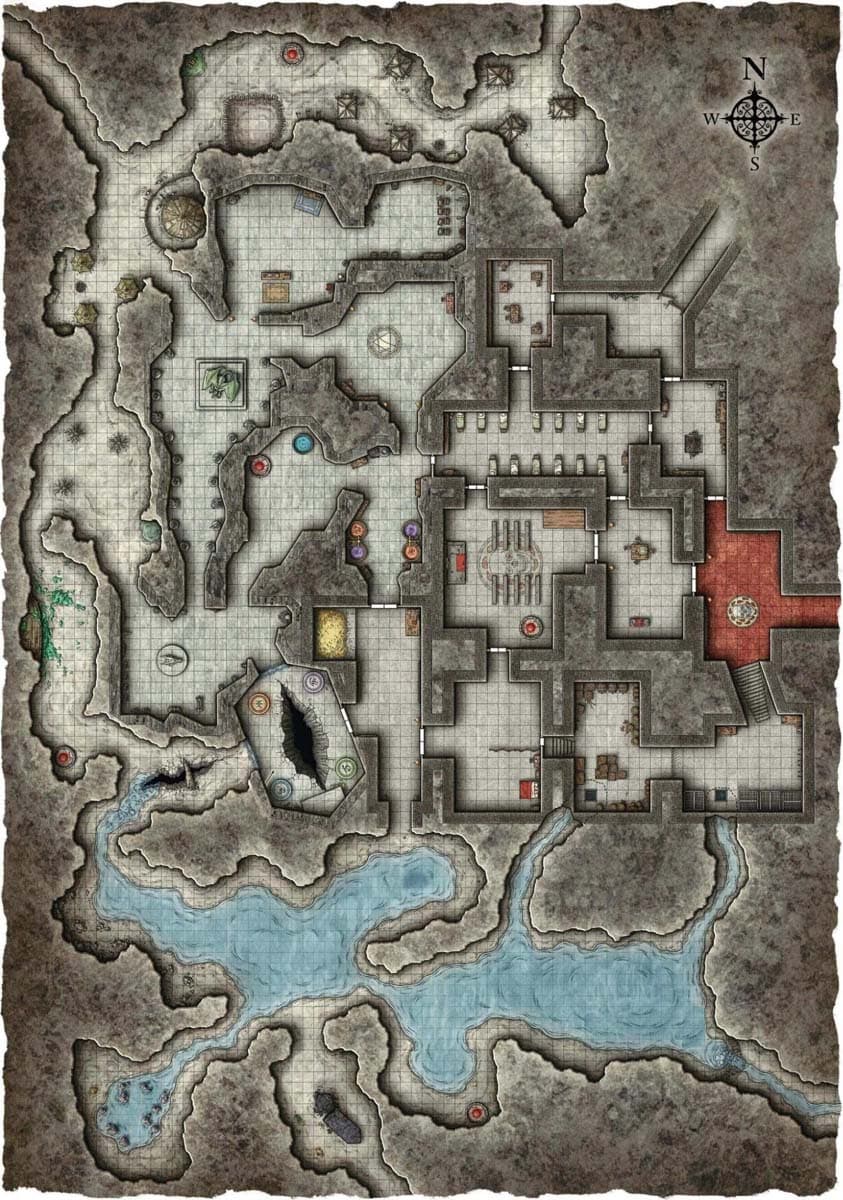
Exploration stops feeling like dead air the moment the map itself becomes the encounter. Davyd Barker’s D&D Beyond piece, published on January 18, 2024, argues that Dungeons & Dragons works best when combat, social interaction, and exploration all carry real weight at the table instead of letting travel serve as a blank space between set pieces.
Exploration belongs on the same footing as combat
Barker starts from the familiar three-pillar frame, then pushes hard against the habit of treating exploration as decorative connective tissue. In this version of the game, movement through a dungeon, a city, or the wilderness is not just a corridor to the next fight. It is where the party makes choices, risks resources, and learns something new about the world they are crossing.
That idea lines up with the 2024 D&D Basic Rules, which name social interaction, exploration, and combat as the three main pillars of play. Those rules also put the DM in the role of scene-setter, with the players deciding what to explore next. Once you take that seriously, exploration stops being a background effect and becomes part of the conversation at the table.
Dungeon-based design gives exploration a shape
The centerpiece of Barker’s article is a method he calls dungeon-based design. The core insight is simple: a classic dungeon is really a node map, a network of connected locations that the players move through and interpret. Once you see that structure clearly, you can apply it far beyond stone corridors and trapped doors.
That is where the article becomes especially useful for actual prep. A town can work like a dungeon if its streets, districts, and landmarks create meaningful routes and bottlenecks. A wilderness route can work the same way if camps, crossroads, ruins, rivers, and weather hazards function as nodes the party must decide how to engage with, not scenery to pass by on the way to the real content.
What changes in prep when exploration matters
If exploration is a true pillar, you prep it differently. You stop asking only what the party fights and start asking what stands between them and the next meaningful choice. Barker’s approach suggests building each stretch of travel or investigation around obstacles, discoveries, and decisions that alter how the next scene unfolds.

- A clear route with branches, shortcuts, and places where the party can meaningfully get lost or reroute.
- Obstacles that change behavior, such as weather, terrain, social tension, locked gates, or guarded borders.
- Discoveries that reward curiosity, including clues, lore, faction hooks, or resources that shift later scenes.
- Consequences that carry forward, so the party’s path through the map affects safety, timing, and available options later.
A DM can steal that structure immediately by designing:
That is the key difference between filler and exploration. Filler ends when the next combat begins; exploration should leave fingerprints on the fight, the negotiation, or the mystery that follows.
From towns to nations, the scale is the same
Barker also includes a section titled “From Towns to Nations: Scaling Time, Challenges, and Risks,” which signals that dungeon-based design is not limited to one underground complex. The same logic can stretch outward from a single settlement to an entire kingdom if the DM is willing to think in terms of time, distance, and escalating danger.
That matters because different campaign modes need different kinds of pressure. A city crawl can be built out of districts with their own gatekeepers and secrets. A borderland journey can be built out of weather, supply, and hostile territory. A national-scale campaign can turn roads, courts, and regional power centers into nodes that the party must navigate as deliberately as any trapped chamber.
The Basic Rules already point in this direction
The 2024 Basic Rules are important here because they do not treat exploration as a side note. They place it alongside combat and social interaction, then describe the DM as the one who frames the scene while the players choose what to investigate. That is a structural invitation to make the world itself interactive.
In practical terms, that means the DM does not need to script every mile of travel. The job is to present a scene with pressure and possibility, then let the players decide what matters. If the scene is a road, the choice may be whether to push through exhaustion, detour around danger, or stop and investigate something strange on the horizon. If the scene is a dungeon corridor, the choice may be whether to press on, search for secret space, or retreat before the environment turns against them.
Shawn Merwin’s older design notes show the same trend
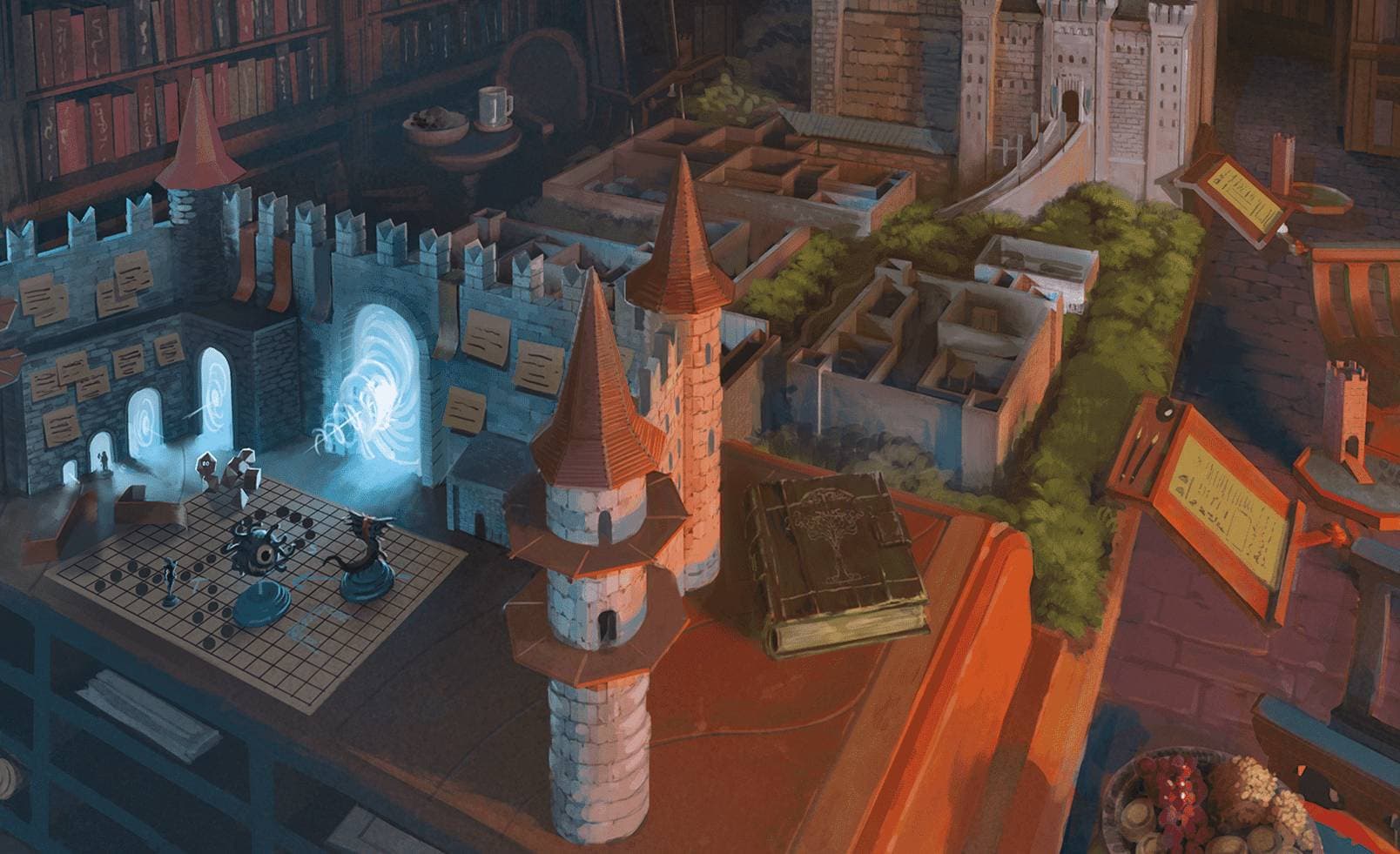
Barker’s argument also fits an earlier D&D Beyond piece from Shawn Merwin, who wrote in 2020 about how the early D&D Next design process kept coming back to the three pillars. Merwin’s point was not just that combat, exploration, and roleplaying existed as categories. It was that the designers wanted those pillars to live inside individual encounters, not only across the broader shape of an adventure.
That distinction matters for modern prep. An encounter is no longer just initiative order and hit points. A river crossing can be an encounter if the current, the weather, and the far bank create a real decision. A tense audience with a noble can be an encounter if the social terrain contains risks, leverage, and consequences. A ruined watchtower can be an encounter if the party has to decide how much time to spend searching it before something else finds them first.
How to use the idea at the table tonight
The cleanest way to borrow Barker’s approach is to build exploration scenes like mini-dungeons, even when no dungeon is present. Give the party a map with nodes, routes, and pressure. Then make sure every node offers at least one choice that changes what comes next.
For dungeon crawls, that can mean rooms that matter for more than treasure. For wilderness travel, it can mean landmarks that alter pace, supplies, or danger. For mystery-heavy campaigns, it can mean evidence that behaves like terrain, forcing the players to decide which lead to follow and which one to leave behind.
Exploration becomes a pillar when it makes the table lean in. Barker’s article is a reminder that the road to the next fight can carry stakes of its own, and once the map has teeth, the whole session starts to feel like one continuous crawl through something alive.
This article was produced by Prism’s automated news system from verified source data, official records, and press releases, then run through automated quality and moderation checks before publishing. The system is built and supervised by the people who set the standards it runs under. Read our full AI policy.
Did this article answer your question?

